A.G. Lafley
A.G. Lafley: The architect of Procter & Gamble's 21st-century resurgence, known for his consumer-centric approach, brand portfolio rationalization, and strategic focus on innovation and emerging markets.
Alan George 'A.G.' Lafley is an American businessman best known for his two tenures as CEO of Procter & Gamble (P&G). He served as CEO from 2000 to 2009 and again from 2013 to 2015. Under his leadership, P&G revitalized its brand portfolio, emphasizing consumer-led innovation and expanding significantly in developing markets. His strategic vision and operational discipline were instrumental in P&G's sustained growth and market leadership during the early 21st century.
Biography
Accomplishments
- 01Led Procter & Gamble's revenue to nearly double from $39 billion to $82 billion during his first CEO tenure (2000-2009), driving significant market share gains.
- 02Successfully executed the $57 billion acquisition of Gillette in 2005, integrating iconic brands like Gillette, Braun, and Duracell into P&G's portfolio, enhancing its global market position.
- 03Divested over 100 non-core brands during his second CEO tenure (2013-2015), including the sale of Duracell and the majority of P&G's beauty portfolio to Coty Inc., to sharpen P&G's strategic focus.
- 04Pioneered a consumer-centric innovation model, exemplified by products like the Swiffer, which addressed unarticulated consumer needs and created new categories.
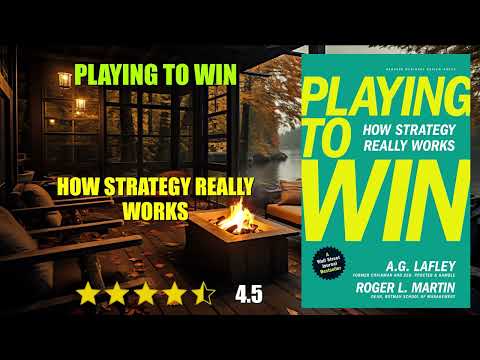
- 05Authored 'Playing to Win: How Strategy Really Works' (2012) with Roger Martin, which codified his strategic framework and became a widely recognized business text.
- 06Reversed declining market share during his second CEO tenure by accelerating portfolio simplification and renewing focus on P&G's most competitive categories.
- 07Expanded P&G's presence in developing markets, significantly increasing sales contribution from these regions, laying the groundwork for future global growth.
- 08Cultivated a culture of strategic clarity and disciplined execution, empowering brand teams while maintaining a unified corporate vision.
Lessons for Operators
Key Takeaways
Practical lessons distilled for operators, investors, C-levels, and capital allocators.
The 'Playing to Win' Framework
Lafley's seminal framework (with Roger Martin) emphasizes five interconnected choices: What is our winning aspiration? Where will we play? How will we win? What capabilities must be in place? What management systems are needed? This provides a robust, actionable template for strategic planning, urging leaders to make explicit choices rather than pursuing diffuse objectives. (Referenced in 'Strategic Management 6th Edition by Frank T. Rothaermel').
Consumer at the Core
Successful business transformation, particularly in consumer goods, hinges on an unparalleled understanding of the consumer. Lafley consistently demonstrated that deep consumer insights drive meaningful innovation and effective marketing. This means going beyond market research to 'live with' consumers, observing their behaviors and anticipating their unmet needs. This insight informed P&G's 'go-to-market' strategies and product development cycles.
Portfolio Rationalization as a Strategic Imperative
In an age of disruptive competition and rapid market shifts, continuous evaluation and pruning of brand and product portfolios are critical. Lafley's divestiture of over 100 brands in his second tenure underscores that 'less is more' when it allows for focused investment in high-potential categories, improving overall corporate agility and profitability. This practice aligns with principles of 'Zone to Win' by focusing on core businesses.
Innovation as a Business Model, Not Just R&D
Lafley transformed P&G's innovation model from internal R&D to 'Connect + Develop,' leveraging external partnerships and open innovation. This approach diversified P&G's innovation pipeline, reduced costs, and accelerated time-to-market for products like Olay Regenerist and Swiffer, demonstrating that innovation can be a network effect, not just an internal process.
Acquisition and Integration Mastery
The Gillette acquisition, one of the largest in corporate history, showcased Lafley's ability to integrate vast organizations and diverse cultures successfully, extracting significant synergies while preserving brand equity. This requires meticulous planning, clear communication, and a strategic vision for the combined entity, often emphasizing shared values and consumer focus. (Insights applicable to 'What They Don't Teach You at Harvard Business School').
The Value of an Experienced Hand in Crisis
Lafley's return as CEO in 2013 illustrated the enduring value of seasoned leadership during periods of corporate distress. His ability to quickly diagnose systemic issues, implement decisive action, and rally the organization around a clear strategic path demonstrated that profound experience combined with a fresh perspective can be pivotal for corporate turnarounds. This embodies the principle of 'Stop Excusing. Start Leading.'
Global Market Agility
Under Lafley, P&G made significant strides in adapting its strategies and products for emerging markets, understanding that 'one size does not fit all.' This involved localizing product development, supply chains, and marketing efforts, recognizing the unique needs and purchasing power of diverse global consumers. This expanded P&G's market reach and diversified revenue streams.
Brand Management as Strategic Asset Allocation
Lafley's tenure exemplified that brand management extends beyond marketing to encompass strategic resource allocation, innovation prioritization, and talent development. Treating brands as distinct businesses, each with its own P&L, allows for focused investment and accountability, driving sustained growth and competitive advantage. (Further insights can be found in HBR articles on brand management).
Frameworks & Principles
Named frameworks and strategic principles they popularized or embodied.
Playing to Win: Where to Play & How to Win
A five-step strategic framework developed by A.G. Lafley and Roger Martin, emphasizing explicit choices for competitive advantage. It asks: 1) What is our winning aspiration? 2) Where will we play? 3) How will we win? 4) What capabilities must be in place? 5) What management systems are needed?
When to useApplicable for any organization (startups to multinationals) developing or refining its core business strategy, entering new markets, or addressing significant competitive challenges. Ideal for leadership teams seeking clarity and alignment on strategic choices.
Connect + Develop (Open Innovation)
P&G's open innovation model, championed by Lafley, where the company actively seeks external ideas, partners, and technologies to accelerate innovation and reduce R&D costs. It involves sourcing ideas globally from a vast network of suppliers, startups, and individual inventors.
When to useSuitable for companies looking to boost innovation velocity, reduce internal R&D burden, access specialized expertise, or explore new market opportunities through collaborative external partnerships. Especially relevant for industries facing rapid technological change or high R&D costs.
Consumer is Boss
A cultural and strategic mindset where all business decisions, from product development to marketing, are driven by a deep understanding of consumer needs, preferences, and behaviors. It advocates for ethnographic research and a constant feedback loop from end-users.
When to useEssential for any business operating in a competitive market, particularly consumer-facing industries. It should be embedded into product design, marketing, sales, and service functions to ensure offerings genuinely resonate with the target audience and differentiate from competitors. (See also 'What They Don't Teach You at Harvard Business School').
Portfolio Simplification & Focus
A strategy of actively divesting non-core, underperforming, or strategically misaligned brands/products to concentrate resources (capital, talent, management attention) on the most profitable and high-growth categories. This enhances organizational agility and market competitiveness.
When to useCritical for large, diversified corporations experiencing stagnant growth, market share erosion, or over-extended resource allocation. Also valuable for startups and scale-ups needing to maintain focus as they grow, resisting the temptation to diversify prematurely.
Recent Appearances
Latest interviews, keynotes, and press from the past half year.
 youtube.com
 youtube.com
 youtube.com
 youtube.com
 youtube.com
 youtube.com
 youtube.com
 youtube.com
 youtube.com
![English Podcast of [ playing to win ] - YouTube](https://i.ytimg.com/vi/9ow7BfnZV-A/hqdefault.jpg) youtube.com
youtube.com youtube.com
 youtube.com
 youtube.com
 youtube.com
 youtube.com
 youtube.com
 youtube.com
 youtube.com
 youtube.com
 youtube.com
 youtube.com
 youtube.com
 youtube.com
 youtube.com
 youtube.com
 youtube.com
 youtube.com
 m.youtube.com
 youtube.com
 youtube.com
 youtube.com
 youtube.com
 youtube.com
 youtube.com
 youtube.com
 youtube.com
 youtube.com
 youtube.comyoutube.com
 youtube.com
 youtube.com
 youtube.com
 youtube.com
 youtube.comyoutube.com
 youtube.com
 youtube.com
 youtube.com
 youtube.com
 youtube.com
 youtube.com
 youtube.com
 youtube.com
 youtube.com
 youtube.com
 youtube.com
 youtube.com
 m.youtube.com
 youtube.com
 youtube.com
 youtube.com
 youtube.com
 youtube.com
 youtube.com
 youtube.com
 youtube.com
 m.youtube.com
 youtube.com
 youtube.com
 youtube.com
 youtube.comyoutube.com
 youtube.com
 youtube.com
 youtube.com
 youtube.com
 m.youtube.com
 youtube.com
 youtube.com
 youtube.com
 youtube.com
 youtube.com
 m.youtube.com
 youtube.com
 youtube.com
 youtube.com
 youtube.com
 youtube.com
 youtube.com
 youtube.com
 youtube.com
 youtube.com
 youtube.com
 youtube.com
 youtube.com
 youtube.com
 youtube.com
 youtube.com
 youtube.comm.youtube.com
 youtube.com
 youtube.com
Sources & Further Reading
Profiles, interviews, podcasts, and articles used to compile and verify this entry. Each link opens at the original publisher.
- interviewFormer Unilever CEO Paul Polman: The CEO As Systems Architectdeloitte.wsj.com→
- interviewDisney's CEO Sequel Isn't Having a Hollywood Ending - WSJwsj.com→
- interviewAsk the Amys: Sabotaging Bosses, Irritating Employees, and Morehbr.org→
- interviewAG Lafley, former CEO of Procter & Gamble, in close ... - Instagraminstagram.com→
- interviewBrand management - HBRhbr.org→
- interviewJugando para Ganar - YouTubem.youtube.com→
- podcastPlaying to Win by A.G. Lafley & Roger Martin | Book Summary Podcastyoutube.com→
- podcastPlaying to Win by A.G. Lafley & Roger L. Martin - YouTubeyoutube.com→
- podcastPlaying to Win: How Strategy Really Works by A.G. Lafley & Roger ...youtube.com→
- podcastPlaying to Win by A.G. Lafley and Roger L. Martin - YouTubeyoutube.com→
- podcastThe Biggest HR Strategy Mistake - And How to Fix It (with Dean ...youtube.com→
- podcastFrom Aspiration to Reality: The Bay Park's Journey of Transformationyoutube.com→
- podcastWhy Saying No Is the Most Powerful Move You'll Ever Make to take ...youtube.com→
- podcastPhilip Kotler: 'The Father of Modern Marketing' Returns - Spotifyopen.spotify.com→
- podcastA History of Marketing | Podcast on Spotifyopen.spotify.com→
- podcastThe Principal's Perspective | Podcast on Spotifyopen.spotify.com→
- podcastSam Parr's Post - LinkedInlinkedin.com→
- podcastPlaying to Play vs. Playing to Win w/ Mark Haas... LIVE ... - Instagraminstagram.com→
- podcastSe ha hablado mucho de esto por estos días… ¿Ustedes qué ...instagram.com→
- podcastFQLeaders - Instagraminstagram.com→
- podcastTim Sullivan - a16z cryptoa16zcrypto.com→
- podcast#openinnovation #thecorporateventuringpodcast #openinnovation ...linkedin.com→
- podcastStartup Resources - Sameer Babbarsameerbabbar.com→
- podcastNetflix co-CEO says he reads this book 'over and over'—it's 'the mostfacebook.com→
- podcastMost product management blogs focus on frameworks and tools, but ...facebook.com→
- podcastSAQ: buona la ......seconda! - radioelementiradioelementi.it→
- podcastCorporate sponsors of the Rededicate 250 event. These are the ...facebook.com→
- podcastCostco Podcast Summary with Ben Gilbert, David Rosenthalshortform.com→
- podcastTrader Joe's Podcast Summary with Ben Gilbert, David Rosenthalshortform.com→
- podcastPrukalpa Sankarprukalpa.com→
- podcastSAQ: buona la ......seconda! - radioelementiradioelementi.it→
- podcastPersoonlijke groei als ondernemer: 5 tips met boeken & podcastswolterskluwer.com→
- podcastLe développement personnel des entrepreneurs : 5 livres et podcastswolterskluwer.com→
- podcastEvent Marketers Earn Influence Through Strategy, Not Activitylinkedin.com→
- podcastEntrepreneurship Book Summaries | AudiobookHubaudiobookhub.net→
- podcastPodcast on Instagram: "El sueño americano es más complicado de ...instagram.com→
- podcastDetrás de cada empresa, hay personas que inspiran ... - Instagraminstagram.com→
- podcastFierce Healthcare's Women of Influence 2025fiercehealthcare.com→
- podcast[PDF] Digital Scale The Playbook You Need To Transform Your Companylan-portal.uob.edu.ly→
- podcastGreat leadership isn't built overnight, it's shaped through the right ...facebook.com→
- podcastArchive - Karl Gostnerkarlgostner.com→
- podcastTop 100 Must-Read Investment Books | PDF | Benjamin Grahamscribd.com→
- podcastThe Refractory Period - A Key to Emotional Intelligence and Culture ...strategicdiscipline.positioningsystems.com→
- podcastChange Begins with Self-Awareness – Attention and Intentionstrategicdiscipline.positioningsystems.com→
- podcastHardball: Are You Playing to Play of Playing to Win? ... - Instagraminstagram.com→
- podcast“Our culture is to sweat the small stuff ...linkedin.com→
- podcastDiary Of A CEO: w/ JL Collins on the Simple Path to Wealth ...singjupost.com→
- podcastBuild your mind, fuel your dreams! From life-changing habits to faith ...instagram.com→
- podcastYou don't need a perfect plan. You need the right people ... - Instagraminstagram.com→
- podcastWhat playbook for success? - Facebookfacebook.com→
- podcastWhat They Don't Teach You at Harvard Business School - Instagraminstagram.com→
- podcastIn a crowded market, how do you really stand out? Gaurav Khatri ...facebook.com→
- podcastProduct Management Framework, Coaching, and Tools ... - Facebookfacebook.com→
- podcastNYU HI Hub Incubator Resources | NYU SPSsps.nyu.edu→
- podcast34 Ramit Sethi Recommended Books (2026)mostrecommendedbooks.com→
- podcastPodcasts om business, iværksætteri, aktiehandel og marketingpodcastnews.dk→
- podcastStrategic Management 6th Edition by Frank T. Rothaermel - Studylibstudylib.net→
- podcastStop Excusing. Start Leading. - Strategic Discipline blogstrategicdiscipline.positioningsystems.com→
- podcastZone to Win: Organizing to Compete in an Age of Disrupt…goodreads.com→
- podcastHigh performance isn't about working harder it's about thinking steps ...instagram.com→
- podcastDon't mask strategic laziness with tactical hard work ... - Instagraminstagram.com→
- podcastSaying “I want success” isn't strategy — it's just a wish ... - Instagraminstagram.com→
- podcastUltimate Self-Help & Business Bestseller Book Set (Premium Quality)tamaam.pk→
Explore Related Titans
Other figures in the archive who share A.G. Lafley's domain, geography, or era.
More in Consumer & Retail







From United States




Contemporaries — born 1940s