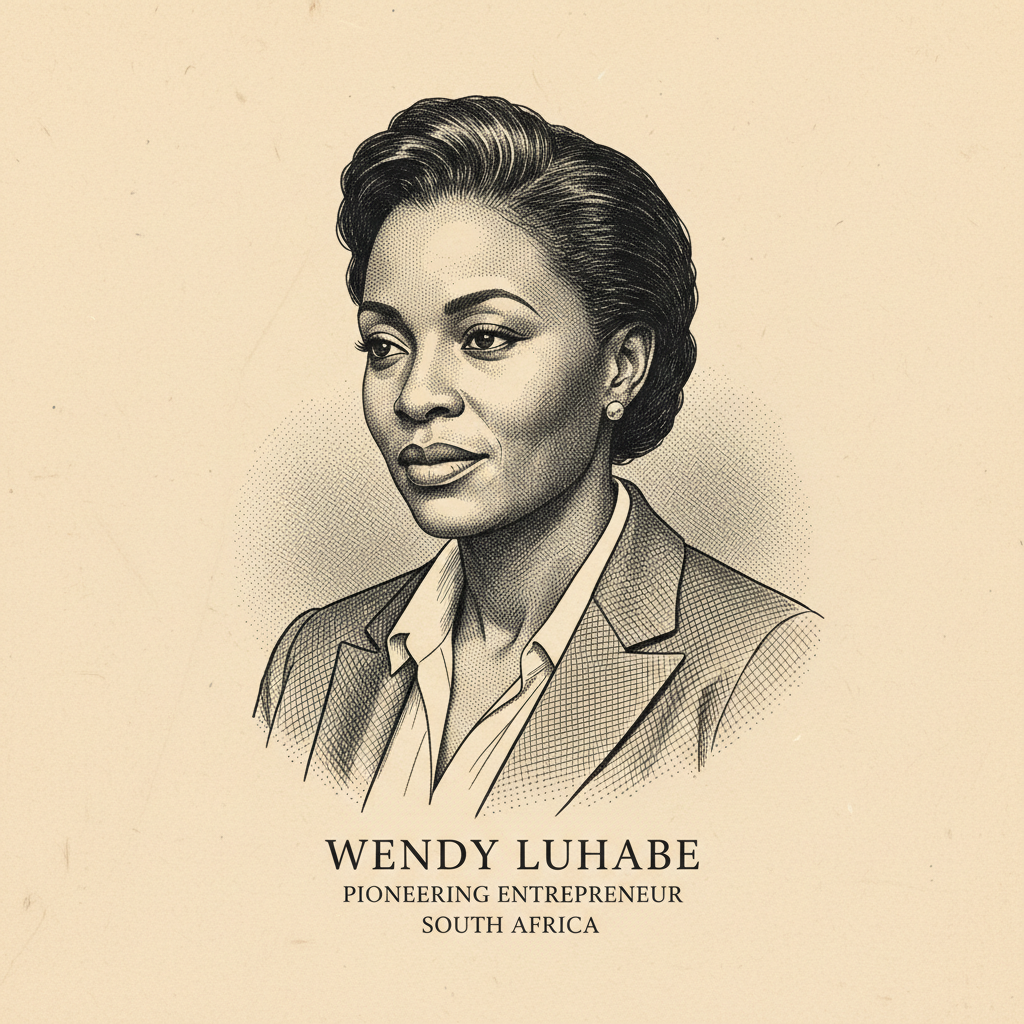
Wendy Luhabe
Pioneering South African entrepreneur, investor, and corporate governance advocate, instrumental in black economic empowerment and female financial inclusion.
Wendy Yvonne Nomathemba Luhabe is a South African entrepreneur, investor, and board director who has been a formidable force in post-apartheid economic development and corporate governance. She is recognized for her pioneering work in establishing Wiphold, South Africa's first women-only investment company, and her extensive board directorships across major corporations.
Biography
Accomplishments
- 01Co-founded Women Investment Portfolio Holdings (Wiphold) in 1994, South Africa's first women-only investment company, facilitating access to economic participation for thousands of black women.
- 02Founded Bridging the Gap in 1992, a human resources consulting firm specializing in developing black managerial talent in post-apartheid South Africa.
- 03Served on the Board of Directors for numerous prominent South African corporations, including the Industrial Development Corporation (IDC), Telkom, Tiger Brands, Oceana Group, and the JSE.
- 04Appointed Chancellor of the University of Johannesburg (2006-2017), contributing to academic governance and institutional leadership.
- 05Authored 'Defining Moments: My Journey from an Apprentice to a Corporate Board Member,' sharing insights on business leadership and personal development.
- 06Recipient of multiple accolades, including the Archbishop Tutu Baraka Award (2006), recognizing her significant societal contributions.
Lessons for Operators
Key Takeaways
Practical lessons distilled for operators, investors, C-levels, and capital allocators.
Activist Investing with Social Impact
Luhabe's career exemplifies how capital allocation can be a powerful tool for social and economic transformation. Operators should consider how their investment thesis can address significant societal inequities while delivering returns.
The Power of Group Economics
Wiphold's success in mobilizing capital from thousands of previously disenfranchised women underscores the potential for collective investment schemes to overcome barriers to entry and achieve scale. Fund managers should explore models that aggregate smaller capital pools for larger impact.
Governance as a Competitive Advantage
Her continuous commitment to board service and corporate governance highlights that strong oversight and ethical leadership are not merely compliance burdens but strategic assets that build long-term value and investor confidence. C-levels must prioritize robust governance frameworks.
Strategic Engagement with Policy
Luhabe adeptly navigated and contributed to South Africa's BEE policy environment. Enterprise leaders should understand how to engage with relevant government policies and regulations to open new markets and create strategic advantages, rather than viewing them solely as obstacles.
Building Human Capital is Key
Her founding of Bridging the Gap demonstrates the fundamental importance of human capital development in emerging markets. Investors assessing opportunities in growth economies should scrutinize how companies plan to build and retain skilled local talent.
Frameworks & Principles
Named frameworks and strategic principles they popularized or embodied.
Inclusive Investment Model
Designing investment vehicles that specifically target and empower underserved demographic groups, often leveraging collective ownership.
When to useWhen seeking to address market failures in capital access for specific groups, or when national policies incentivize broad-based ownership and empowerment (e.g., BEE schemes).
Human Capital Development for Market Entry
A strategic approach where an organization actively invests in upskilling and integrating local talent to meet business needs, particularly in nascent or transforming economies.
When to useWhen expanding into new markets with talent shortages, or in periods of significant economic transition requiring new leadership and technical skills.
Stakeholder-Centric Corporate Governance
A governance philosophy that extends beyond shareholder returns to consider the interests of a broader set of stakeholders, including employees, communities, and the environment.
When to useWhen operating in sensitive social or political environments, or when aiming to build a reputation for ethical leadership and sustainable value creation.
Sources & Further Reading
Profiles, interviews, podcasts, and articles used to compile and verify this entry. Each link opens at the original publisher.
Explore Related Titans
Other figures in the archive who share Wendy Luhabe's domain, geography, or era.
More in Finance & Investing










From South Africa





Contemporaries — born 1950s