Kevin Mandia
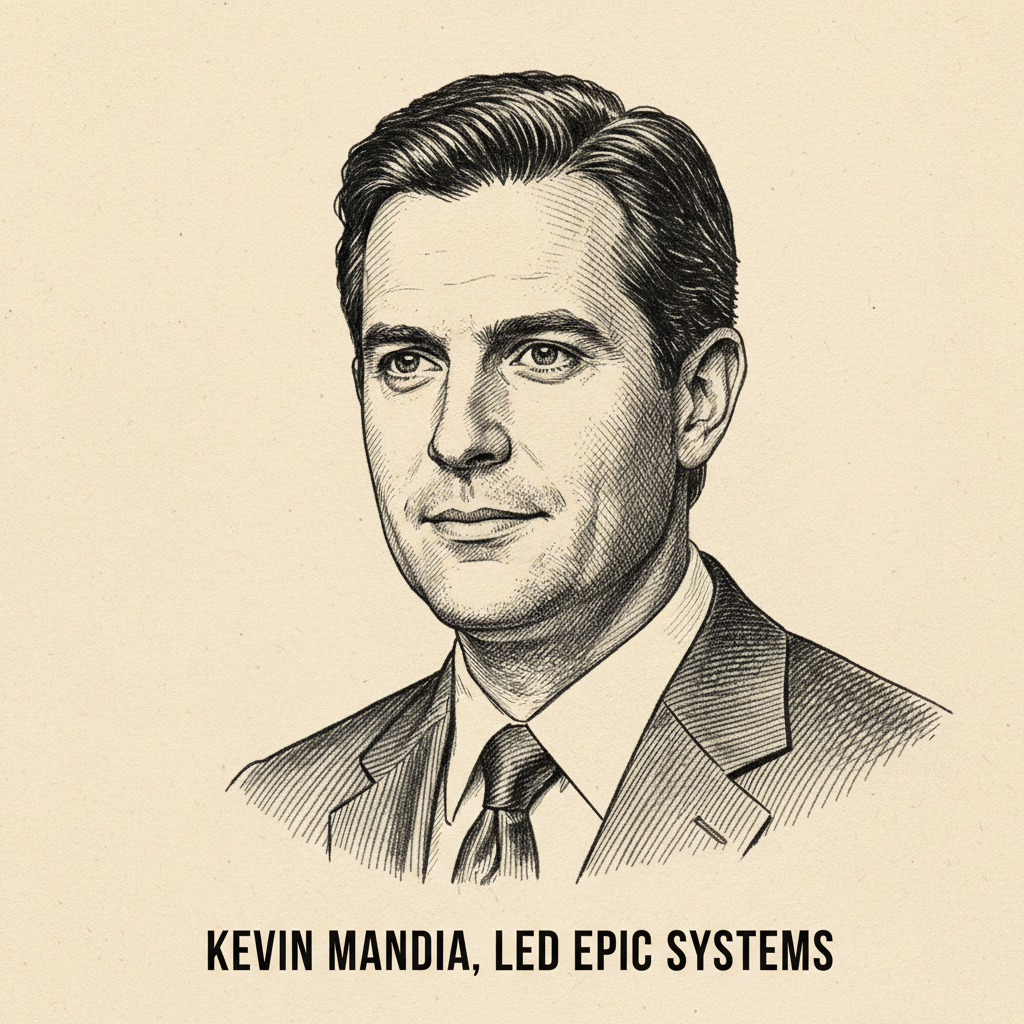
Pioneering cybersecurity leader, founder of Mandiant, and CEO of Mandiant/Google Cloud Security, known for incident response and threat intelligence.
Kevin Mandia is a prominent figure in the cybersecurity industry, best known as the founder of Mandiant, a company that became a global leader in incident response and threat intelligence. He served as CEO of Mandiant through its acquisition by FireEye in 2014, and subsequently led FireEye as CEO. Following the sale of FireEye's products business, he returned Mandiant to its roots as a pure-play threat intelligence and incident response firm, ultimately orchestrating its acquisition by Google in 2022. Mandia's career is marked by a deep expertise in combating advanced cyber threats.
Biography
Accomplishments
- 01Founded Foundstone in 1999, a cybersecurity consultancy that was acquired by McAfee in 2004, demonstrating early success in the industry.
- 02Established Mandiant in 2004, building it into a global leader in incident response and threat intelligence, particularly renowned for exposing state-sponsored cyber espionage.
- 03Authored the seminal 'APT1 report' in 2013, publicly attributing sophisticated cyber attacks to specific state actors, fundamentally shifting public and private sector understanding of nation-state threats.
- 04Orchestrated the strategic turnaround and rebranding of FireEye, culminating in the divestiture of its product business and the re-establishment of Mandiant as a pure-play threat intelligence and incident response firm in 2021.
- 05Led Mandiant through its $5.4 billion acquisition by Google in 2022, effectively integrating a leading cybersecurity firm into a major cloud provider, securing its long-term future and expanding its global reach.
Lessons for Operators
Key Takeaways
Practical lessons distilled for operators, investors, C-levels, and capital allocators.
Specialization builds defensible moats
Mandiant focused intensely on complex incident response and threat intelligence, an underserved but critical segment. This deep specialization created a reputation and capability set that was difficult for generalists to replicate, leading to premium valuations and strategic acquisitions.
Data and intelligence are strategic assets
Mandia understood that high-fidelity threat intelligence, derived from actual breach investigations, was more valuable than generic security products. This intelligence became the foundation for Mandiant's services and its competitive edge, influencing enterprise security strategies globally.
Adapt to market dynamics through restructuring
The evolution from Mandiant to FireEye, then back to a pure-play Mandiant, and finally to Google Cloud, shows a willingness to execute significant organizational and strategic shifts (e.g., divestitures, acquisitions) to stay relevant and maximize shareholder value in a rapidly changing industry.
Attribution creates accountability and market influence
Mandiant's pioneering work in publicly attributing cyber attacks (e.g., APT1) not only informed defensive strategies but also created geopolitical pressure, demonstrating how a private company can exert significant influence by providing verifiable insights into clandestine operations.
Customer trust is paramount in high-stakes environments
In cybersecurity, clients entrust companies with their most sensitive data and operational integrity. Mandia built Mandiant on a foundation of trust, expertise, and discretion, which is critical for securing repeat business and referrals in a sector where failure carries immense consequences.
Frameworks & Principles
Named frameworks and strategic principles they popularized or embodied.
Mandiant Attack Life Cycle Model
A framework developed by Mandiant to describe the typical stages of an advanced persistent threat (APT) attack, from initial compromise to exfiltration and persistence. It covers reconnaissance, weaponization, delivery, exploitation, installation, command-and-control, and actions on objectives.
When to useFor incident responders and security teams to understand, identify, and categorize attack phases, enabling more effective detection, containment, and eradication strategies. Useful for developing mitigation controls aligned with specific stages of an attack.
Intelligence-Driven Security Operations
An operational philosophy advocated by Mandia, emphasizing the use of high-fidelity threat intelligence to anticipate, detect, and respond to cyber threats. It means continuously integrating real-world adversary tactics, techniques, and procedures (TTPs) into security defenses rather than relying solely on signatures or static rules.
When to useFor CISOs and security leadership aiming to build proactive security programs. Apply when designing security architectures, prioritizing defenses, and training security operations center (SOC) teams to focus on adversary behaviors rather than just indicators of compromise (IOCs).
Breach Readiness and Response Planning
A structured approach to preparing for, detecting, and responding to cyber incidents. It involves developing playbooks, conducting tabletop exercises, establishing communication protocols, and assembling specialized teams to minimize the impact of a breach.
When to useEssential for any organization, particularly enterprises, to ensure business continuity and compliance. Implement before an incident occurs to establish clear roles, responsibilities, and procedures for an organized and effective response to a cyber attack.
Explore Related Titans
Other figures in the archive who share Kevin Mandia's domain, geography, or era.
More in Other









From United States










Contemporaries — born 1970s