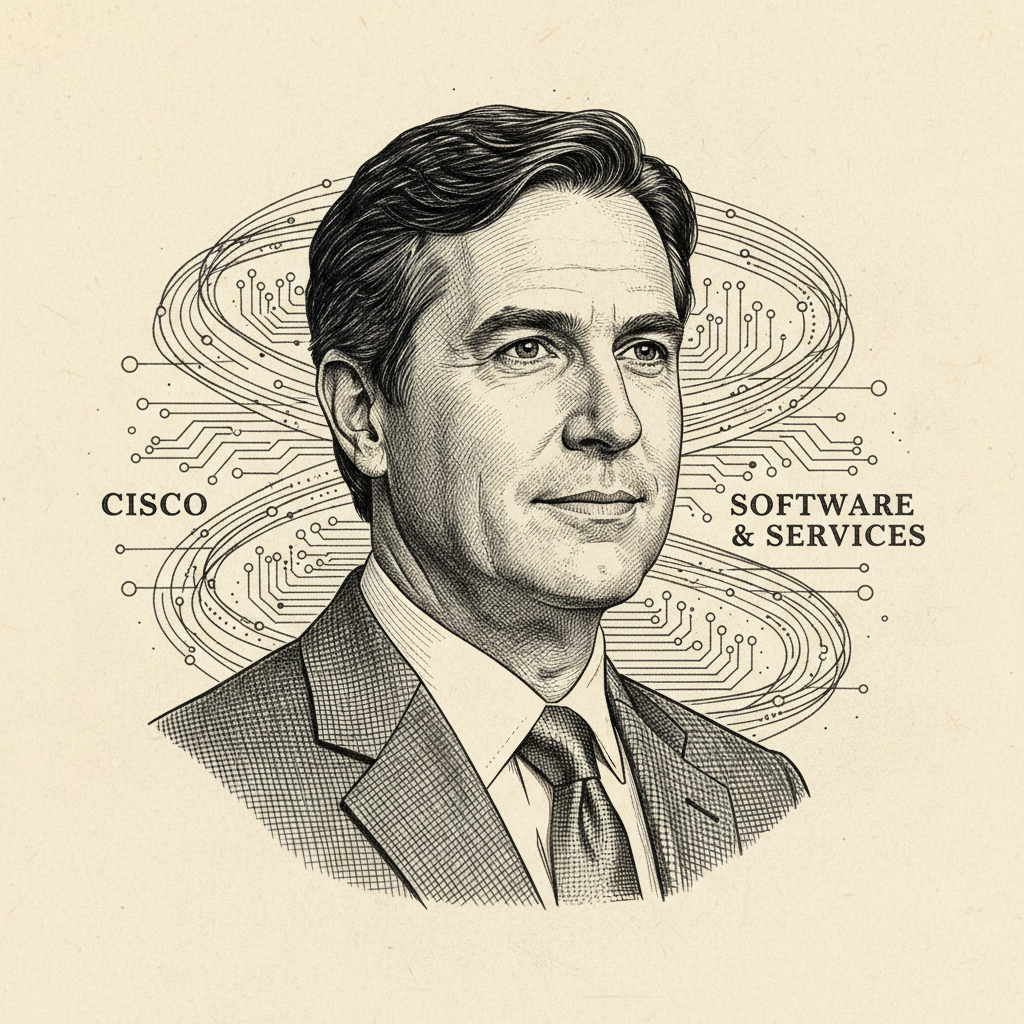
Julie Sweet
Architect of reinvention and digital transformation at scale.
Julie Sweet is the Chair and CEO of Accenture, a global professional services company. She spearheads its strategy of leading clients through digital transformation and has significantly grown its cloud, data, and AI capabilities while emphasizing skills development and inclusion.
Biography
Accomplishments
- 01Led Accenture's North America business to significant growth, contributing over 50% of the company's global revenue, from 2015-2019, by pivoting towards digital services.
- 02Successfully steered Accenture's 'Rotation to the New' strategy as CEO, significantly expanding capabilities in cloud, data, AI, and security, exemplified by strategic acquisitions like SolutionsIQ (agile transformation) and Cygni (cloud-native development).
- 03Navigated Accenture through the operational complexities and market shifts of the COVID-19 pandemic, maintaining strong financial performance and client engagement while prioritizing employee welfare.
- 04Accelerated Accenture's M&A strategy, completing over 70 acquisitions under her CEO leadership (as of FY2023) to build specialized capabilities in areas such as digital engineering (e.g., Imaginea, 2021), marketing content (e.g., Creative Drive, 2020), and industrial AI (e.g., umlaut, 2021).
- 05Championed Accenture's commitment to ESG, setting aggressive net-zero targets by 2025 across operations and supply chain, and significantly advancing diversity and inclusion initiatives within the global workforce.
- 06Orchestrated significant investment in upskilling and reskilling Accenture's 700,000+ global workforce to meet evolving client demands in advanced technologies.
Lessons for Operators
Key Takeaways
Practical lessons distilled for operators, investors, C-levels, and capital allocators.
Acquire for Capability, Not Just Capacity
Sweet's M&A strategy at Accenture shows that impactful acquisitions are those that add distinct, high-demand capabilities (e.g., cloud-native engineering, industrial AI) rather than merely expanding existing capacity. This allows for faster market penetration in critical, emerging domains.
Lead Through Reinvention
Accenture's 'Rotation to the New' under Sweet is a blueprint for continuous corporate reinvention. Leaders must proactively divest from declining areas and invest heavily in future-proof technologies and services to maintain market leadership, rather than reacting to shifts.
Integrate ESG as a Business Imperative
Sweet demonstrates that ESG commitments, such as aggressive net-zero targets and diversity initiatives, are not merely compliance exercises but strategic pillars that enhance brand value, attract talent, and resonate with increasingly conscious clients and investors.
The Power of Purpose-Driven Technology
Sweet consistently articulates technology's role in solving complex business and societal challenges. This narrative positions Accenture beyond a service provider, fostering deeper client relationships and attracting mission-aligned talent.
Skills are the New Currency
Accenture's massive investment in upskilling its global workforce underscores that in a rapidly evolving technological landscape, an adaptable and skilled employee base is the ultimate competitive advantage. Enterprises must prioritize continuous learning infrastructure.
Executive Transition from Legal to Operational Excellence
Sweet's journey from a corporate lawyer to CEO illustrates that a foundational understanding of corporate governance, M&A, and business structures can be a powerful launchpad for operational leadership, especially in M&A-heavy, transformation-driven industries.
Frameworks & Principles
Named frameworks and strategic principles they popularized or embodied.
Rotation to the New (Accenture's Strategy)
A strategic framework focused on proactively shifting investments, capabilities, and talent towards high-growth areas like cloud, data, AI, and cybersecurity, while optimizing traditional business lines. It's a continuous process of divesting from the old and investing in the new.
When to useWhen an organization needs to pivot significantly due to technological disruption or market shifts, requiring a structured approach to reallocate resources and develop new core competencies.
M&A for Strategic Capability Build
A refined M&A approach where acquisitions are primarily executed to acquire specific, cutting-edge technological capabilities (e.g., cloud engineering firms, AI specialists) or deep industry expertise that would be too slow or complex to build organically, rather than solely for market share.
When to useWhen an enterprise needs to quickly enter new technological domains, acquire specialized talent or proprietary technology, and accelerate its portfolio transformation in a competitive landscape.
Total Enterprise Reinvention
A holistic approach to transformation that integrates advanced technologies (cloud, data, AI) across all facets of a business—from operations and customer experience to talent and sustainability—aiming for step-change improvements in growth, efficiency, and resilience. It's not just digital transformation, but making digital pervasive for systemic change.
When to useWhen an organization faces the imperative for comprehensive, enterprise-wide transformation that goes beyond isolated digital projects, seeking to fundamentally redesign its processes, technology, and culture for a new era of competitiveness.
Recent Appearances
Latest interviews, keynotes, and press from the past half year.
 youtube.com
 youtube.com
 youtube.comyoutube.com
 youtube.com
 youtube.com
 youtube.com
 youtube.com
 youtube.com
 youtube.com
 youtube.com
 youtube.com
 youtube.com
 youtube.com
 youtube.com
 youtube.com
 youtube.com
 youtube.com
 youtube.com
 youtube.com
 youtube.com
 youtube.com
 youtube.com
 youtube.com
 youtube.com
 youtube.com
 youtube.com
Sources & Further Reading
Profiles, interviews, podcasts, and articles used to compile and verify this entry. Each link opens at the original publisher.
Explore Related Titans
Other figures in the archive who share Julie Sweet's domain, geography, or era.
More in Other









From United States









Contemporaries — born 1960s