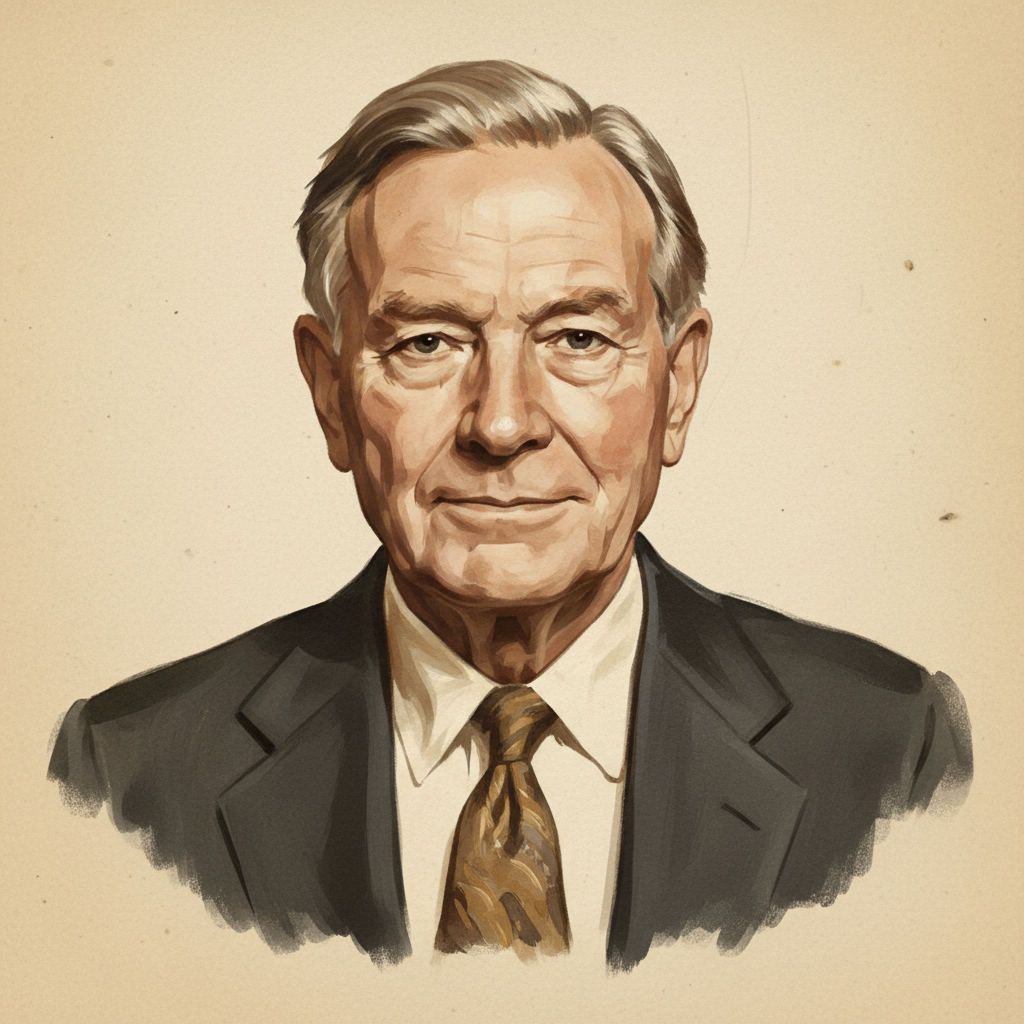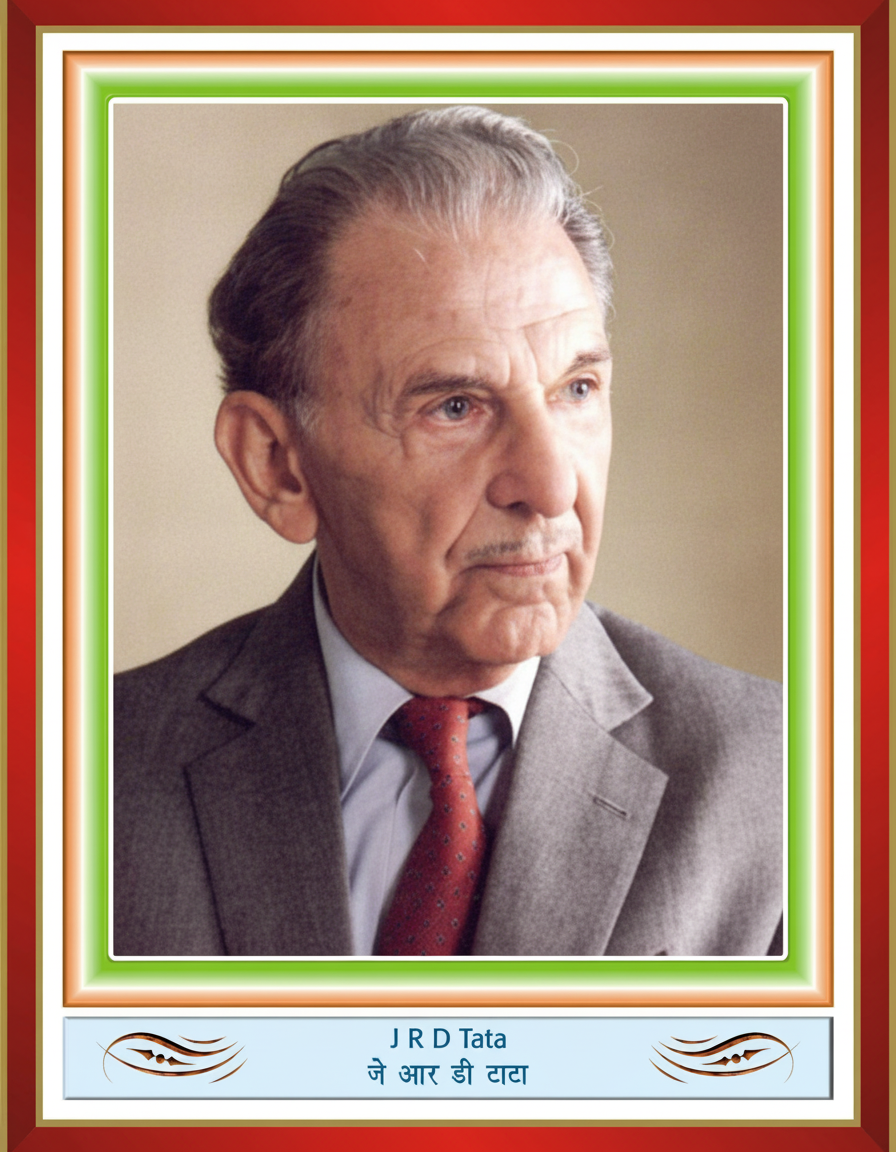
J. R. D. Tata
Architect of modern Indian enterprise who scaled the Tata Group from 14 to 95 companies and pioneered commercial aviation in South Asia.
Jehangir Ratanji Dadabhoy (J. R. D.) Tata served as Chairman of Tata Sons from 1938 to 1991, orchestrating a 53-year expansion that grew the conglomerate's assets from INR 620 million to over INR 100 billion. He founded India's first commercial airline, Tata Airlines (later Air India), pioneered critical industries including Tata Motors and Tata Consultancy Services (TCS), and established global benchmarks in corporate governance and labor welfare.
Biography
Accomplishments
- 01Pioneered civil aviation in the Indian subcontinent by founding Tata Airlines in 1932, serving as Chairman of nationalized Air India until 1978 and establishing its reputation for premier global service.
- 02Engineered the expansion of Tata Sons from 14 operational enterprises in 1938 to over 95 operating companies by 1991, multiplying group assets over 160-fold.
- 03Spearheaded the creation of foundational Indian industrial platforms, including Tata Engineering and Locomotive Company (TELCO, later Tata Motors) in 1945 and Tata Consultancy Services (TCS) in 1968.
- 04Pioneered humane labor governance by introducing an eight-hour working day, free medical aid, workers' provident funds, and accident compensation decades prior to national codification.
- 05Co-founded and funded premier national research and cultural institutions, notably the Tata Institute of Fundamental Research (TIFR) in 1945 and the National Centre for the Performing Arts (NCPA) in 1969.
Lessons for Operators
Key Takeaways
Practical lessons distilled for operators, investors, C-levels, and capital allocators.
Federated Leadership Architecture
J. R. D. Tata managed an sprawling multi-sector portfolio not through operational micromanagement, but by selecting exceptional CEOs (Moolgaokar, Seth, Kohli) and giving them autonomy, backing them during prolonged capital-expenditure phases.
Capital Allocation Under Regulatory Constraints
Faced with strict state controls, anti-trust restrictions (MRTP Act), and bureaucratic inertia, Tata directed capital into critical industrial gaps—heavy engineering, software services, and export-driven chemicals—that the state could not afford to block.
Corporate Social Responsibility as a Core Balance Sheet Strategy
Over 80 percent of the parent company Tata Sons was owned by philanthropic trusts created by the Tata family, insulating the Group from family infighting and reinvesting dividends into national education, science, and public health.
Obsessive Operational Perfectionism
Whether reviewing cabin layouts on Air India or inspecting precision metallurgy at Tata Steel, J. R. D. maintained that systemic attention to small operational details defines whether an organization achieves true global scale.
Frameworks & Principles
Named frameworks and strategic principles they popularized or embodied.
The Trust-Based Federation Model
A governance structure where the central holding entity acts as a custodian of ethics, capital allocation, and group brand identity, while granting near-total operational autonomy to sector-specific CEOs. Executive retention is achieved through long-term trust, equity-like status, and shared institutional values rather than aggressive centralized mandates.
When to useApplicable for diversified conglomerates or multi-business holding companies scaling across heavily differentiated industries requiring specialized technical expertise.
Stakeholder Primacy Welfare Compact
An operating philosophy that preemptively adopts social welfare and labor safety policies before legal mandates. By institutionalizing fair wages, worker representation, and community development, the enterprise preempts industrial action, secures social license to operate, and reduces long-term systemic operating costs.
When to useEssential for operators deploying high-risk, capital-intensive manufacturing, mining, or extraction projects in developing jurisdictions or politically complex environments.
Sources & Further Reading
Profiles, interviews, podcasts, and articles used to compile and verify this entry. Each link opens at the original publisher.
Explore Related Titans
Other figures in the archive who share J. R. D. Tata's domain, geography, or era.
More in Industrial & Manufacturing






From India


Contemporaries — 20th century