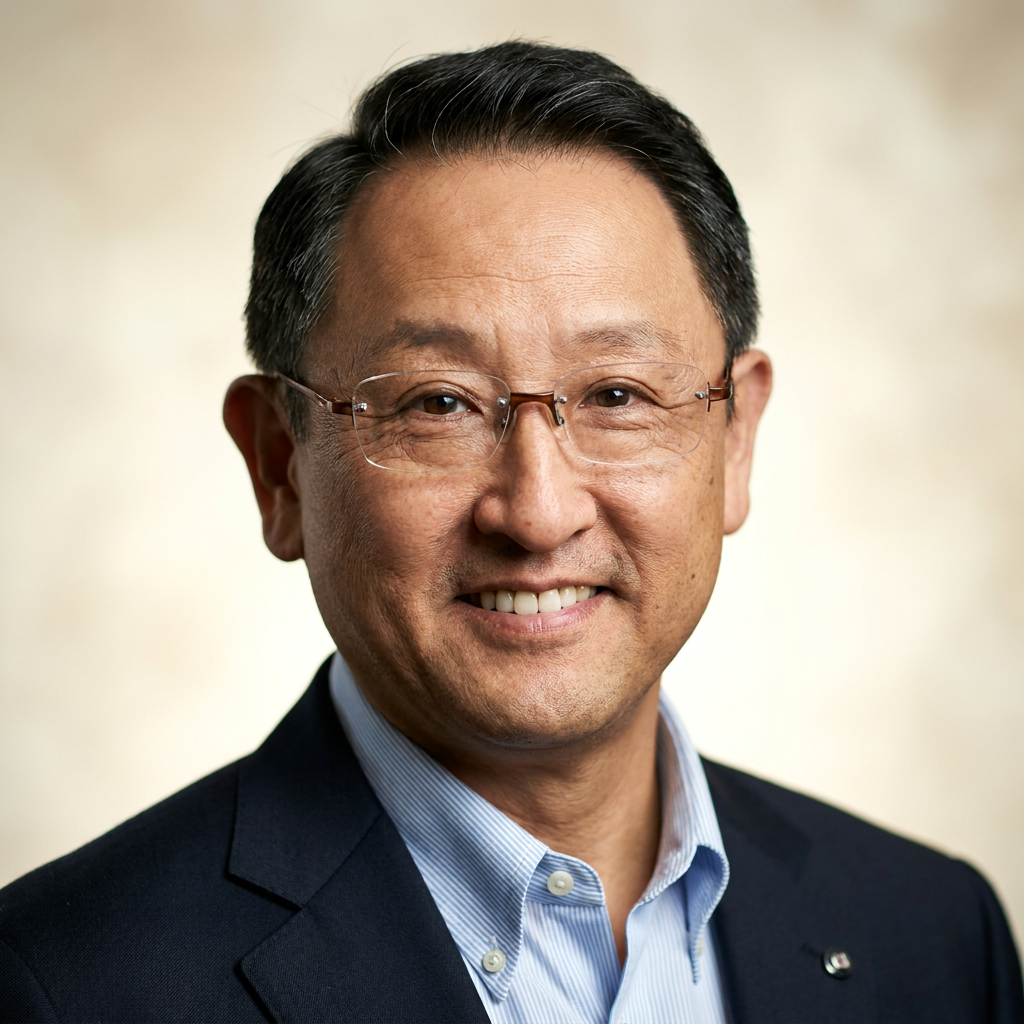
Akio Toyoda
Akio Toyoda: Architect of Automotive Resilience and Evolution. Navigating unprecedented industry shifts while preserving core values and driving future mobility.
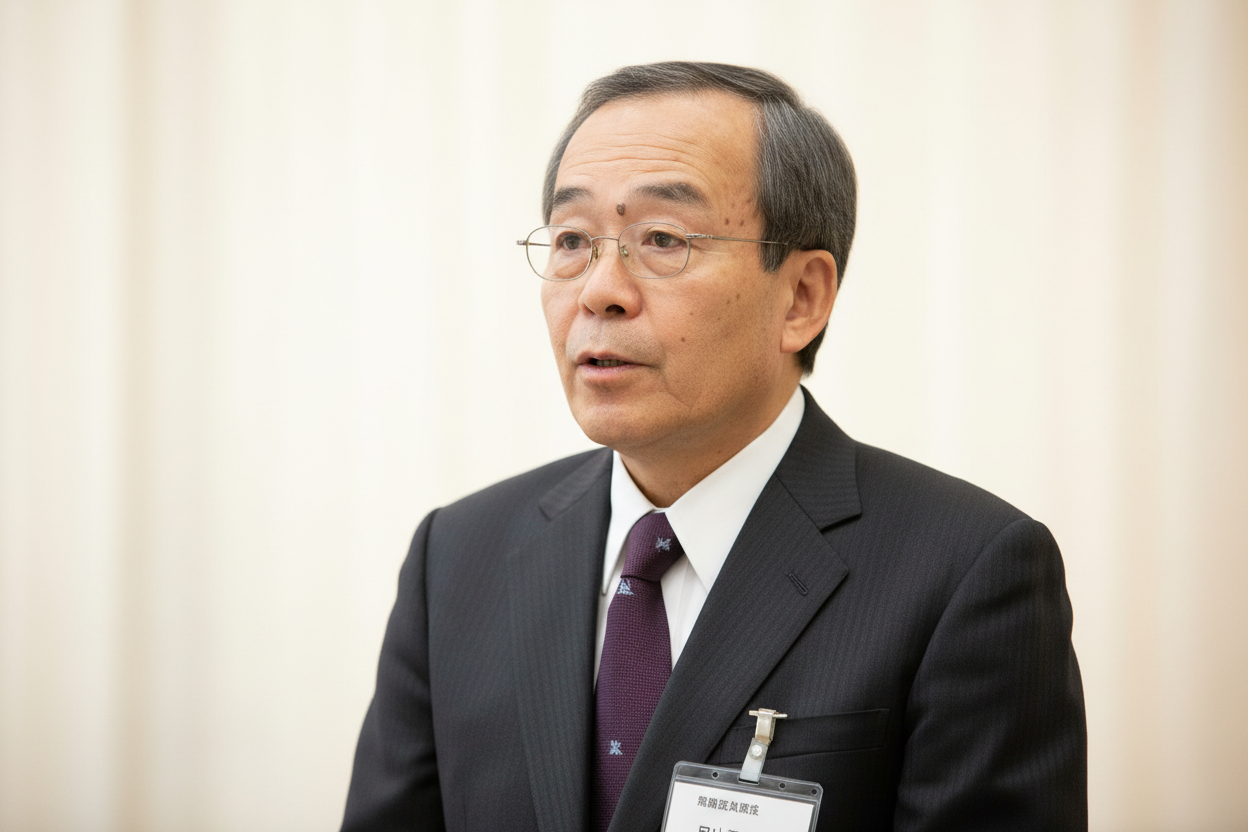
Akio Toyoda, the grandson of Toyota founder Kiichiro Toyoda, served as President and CEO of Toyota Motor Corporation from 2009 to 2023, and currently chairs its board. He inherited the leadership role during the 2008 global financial crisis and subsequently navigated a major recall crisis. Under his stewardship, Toyota diversified its powertrain strategy, emphasized software-defined vehicles, and significantly expanded into new mobility solutions, including hydrogen fuel cell technology and autonomous driving, while reinforcing the Toyota Production System principles.
Biography
Accomplishments
- 01Steered Toyota through the 2008-2009 global financial crisis and the 2009-2010 unintended acceleration recall crisis, restoring public trust and operational stability.
- 02Championed a 'multi-pathway' approach to vehicle electrification, investing in hybrids, plug-in hybrids, battery electric vehicles (BEVs), and hydrogen fuel cells (e.g., Mirai), ensuring diversified technological resilience.
- 03Initiated and oversaw the Woven City project, a prototype smart city in Japan, demonstrating Toyota's vision for connected, autonomous, and sustainable living and mobility solutions.
- 04Led significant investments in future mobility technologies, including autonomous driving via the formation of Woven Planet Holdings (later Woven by Toyota) and collaborations with partners like Denso and Aisin.
- 05Reinforced the Toyota Production System (TPS) and 'Genchi Genbutsu' principles, focusing on direct observation and continuous improvement, driving operational excellence and quality enhancements.
- 06Expanded Toyota's global market share and profitability, achieving record sales and revenues during various periods of his CEO tenure, demonstrating effective market strategy and product portfolio management.
- 07Fostered a culture of 'customer first' and direct engagement, personally test-driving numerous vehicles and participating in motorsport to infuse passion and user perspective into product development.
- 08Implemented a robust organizational restructuring to empower regional operations and streamline decision-making, improving agility in diverse global markets.
Lessons for Operators
Key Takeaways
Practical lessons distilled for operators, investors, C-levels, and capital allocators.
Crisis as a Catalyst for Cultural Reinforcement
Toyoda used the recall crisis to re-emphasize Toyota's foundational principles of 'Customer First' and 'Genchi Genbutsu.' By directly engaging with the crisis, he not only managed public perception but also reinforced internal commitments to quality and accountability, transforming a significant challenge into an opportunity for cultural strengthening.
Strategic Resilience through Diversified Technology Portfolio
Toyota's 'multi-pathway' electrification strategy under Toyoda (spanning hybrids, PHEVs, BEVs, and FCEVs) demonstrates a pragmatic approach to long-term technological evolution. This avoids premature commitment to a single, unproven solution, offering flexibility and resilience in a rapidly changing automotive landscape, crucial for capital allocators evaluating future-proof investments.
Integrated Mobility Ecosystem Vision
The Woven City project exemplifies a shift from merely producing vehicles to envisioning and building entire integrated mobility ecosystems. This strategic expansion suggests that future automotive value may lie beyond individual vehicles, encompassing data, services, and smart infrastructure, providing new avenues for growth and revenue for enterprise leaders.
Operational Excellence as a Competitive Differentiator
Toyoda consistently championed the Toyota Production System (TPS) and 'making better cars' as core tenets. This relentless focus on quality, efficiency, and continuous improvement (Kaizen) remained a critical competitive advantage, enabling Toyota to navigate market shifts while maintaining profitability and brand integrity, a key consideration for C-level executives.
Leadership by Direct Involvement and Passion
Toyoda's 'Master Driver' persona and active participation in vehicle development and testing underscore the importance of passionate, hands-on leadership. This approach instills a culture of product excellence and innovation, ensuring that strategic decisions are grounded in direct experience and a deep understanding of the product and customer.
Balancing Legacy and Innovation
While driving radical innovation in electrification and smart cities, Toyoda simultaneously reinforced Toyota's historical values and manufacturing principles. This blend of respecting heritage and aggressively pursuing future technologies creates a stable yet dynamic organizational culture, essential for long-term sustainable growth.
Software and Data as the New Automotive Core
Recognizing the accelerating shift towards software-defined vehicles, Toyoda's tenure saw significant investments in internal software development (e.g., Woven by Toyota) and strategic partnerships. This highlights that future automotive success is equally dependent on software capabilities and data monetization as it is on hardware manufacturing.
Decentralized Decision-Making for Global Responsiveness
The restructuring to empower regional leadership demonstrates an understanding that a global company must be locally responsive. Granting more autonomy to regional teams allows for faster adaptation to diverse market conditions, regulatory environments, and consumer preferences, optimizing global strategy execution.
Frameworks & Principles
Named frameworks and strategic principles they popularized or embodied.
Multi-Pathway Electrification Strategy
This framework involves pursuing multiple parallel technological approaches for vehicle electrification (e.g., hybrids, plug-in hybrids, battery electric, hydrogen fuel cell) rather than committing exclusively to one. It acknowledges the uncertainty of future market demand, infrastructure development, and regulatory landscapes.
When to useApplicable when operating in industries undergoing significant technological transition with high uncertainty regarding dominant future standards or consumer preferences. Use when capital allows for diversification and competitive advantage can be gained from readiness across various future scenarios.
Genchi Genbutsu (Go and See for Yourself)
A core principle of the Toyota Production System emphasizing that problems are best understood and solved by going to the actual place (genchi) where work is performed and observing the actual situation (genbutsu). It promotes deep understanding over theoretical analysis or secondhand information.
When to useEssential for any operational problem-solving, process improvement, or decision-making in complex environments. Highly effective for identifying root causes, developing practical solutions, and fostering a culture of direct engagement and continuous improvement (Kaizen) among all levels of management.
Ecosystem-Centric Innovation (Woven City Model)
This framework shifts focus from developing isolated products to designing and integrating comprehensive, interconnected ecosystems. The Woven City, for instance, aims to test and develop autonomous vehicles, robotics, personal mobility, smart homes, and AI in a real-world environment, creating synergistic value beyond individual components.
When to useEmploy when envisioning new growth opportunities in industries converging with technology (e.g., automotive + smart cities, healthcare + AI). Useful for long-term strategic planning where value creation is expected from the interplay of multiple services and technologies rather than singular product sales.
Customer First (with Master Driver embodiment)
A leadership approach where the CEO or top executives directly engage with product development, quality assessment, and even competitive performance (e.g., motorsport), to embody and reinforce a 'customer first' philosophy. This ensures product decisions are deeply informed by user experience and market feedback.
When to useEffective for organizations where product quality, user experience, and brand reputation are paramount. Ideal for fostering a culture where every employee feels accountable for the customer's satisfaction. Particularly relevant in competitive product-driven industries where leadership's direct involvement can visibly elevate product standards.
Recent Appearances
Latest interviews, keynotes, and press from the past half year.
 youtube.com
 youtube.com
 youtube.com
![[New Year's Greetings] Akio Toyoda on Inherited Dreams ... - YouTube](https://i.ytimg.com/vi/omPb97eg0GA/hqdefault.jpg) youtube.com
youtube.com youtube.com
 youtube.com
 youtube.com
 youtube.com
 youtube.com
 youtube.com
 youtube.com
 youtube.com
 youtube.com
 youtube.com
![The Reasons for Their Success [Cambrian Palace] - YouTube](https://i.ytimg.com/vi/_NVUbSd_hAA/hqdefault.jpg) youtube.com
youtube.com youtube.com
 youtube.com
 youtube.com
 youtube.com
 youtube.com
 youtube.com
 youtube.com
 youtube.com
 youtube.com
 youtube.com
 youtube.com
 youtube.com
 youtube.com
 youtube.com
 youtube.com
 youtube.com
 youtube.com
 youtube.com
 youtube.com
 youtube.com
 youtube.com
 youtube.com
 youtube.com
 youtube.com
 youtube.com
 youtube.com
 youtube.com
 youtube.com
 youtube.com
 youtube.com
 youtube.com
 youtube.com
 youtube.com
 youtube.com
 youtube.com
 youtube.com
 youtube.com
 youtube.com
 youtube.com
 youtube.com
 youtube.com
 youtube.com
 youtube.com
 youtube.com
 youtube.com
 youtube.com
 youtube.com
 youtube.com
 youtube.com
 youtube.com
 youtube.com
 youtube.com
 youtube.comm.youtube.com
 youtube.com
 youtube.com
 youtube.com
 youtube.com
 youtube.com
 youtube.com
 youtube.com
 youtube.com
 youtube.com
 youtube.com
 youtube.com
 youtube.com
 youtube.com
 youtube.com
 youtube.com
 youtube.com
 m.youtube.com
 youtube.com
 m.youtube.comm.youtube.com
 m.youtube.com
 youtube.com
![[Surprising] Creating Fall Items on a Loom Over 100 Years Old! A Fateful ...](https://i.ytimg.com/vi/R5UPLzdN308/hqdefault.jpg) youtube.com
youtube.com youtube.com
 youtube.com
 youtube.com
![[Reality] CEOs of Stagnant Companies Are All the Same](https://i.ytimg.com/vi/hTLiCv8zjAQ/hqdefault.jpg) youtube.com
youtube.com![[Management DX that Tripled Operating Profit Margin] BOTANIST ...](https://i.ytimg.com/vi/r2jIQzDCsIo/hqdefault.jpg) youtube.com
youtube.com youtube.com
 youtube.com
 youtube.com
![[F1LIFE TALKING] Chairman Akio Toyoda visits Suzuka! Is ... - YouTube](https://i.ytimg.com/vi/FTicVZ5lMvY/hqdefault.jpg) youtube.com
youtube.com youtube.com
 youtube.com
 youtube.com
 youtube.com
 youtube.com
Sources & Further Reading
Profiles, interviews, podcasts, and articles used to compile and verify this entry. Each link opens at the original publisher.
Explore Related Titans
Other figures in the archive who share Akio Toyoda's domain, geography, or era.
More in Transportation & Logistics

From Japan
Contemporaries — born 1950s