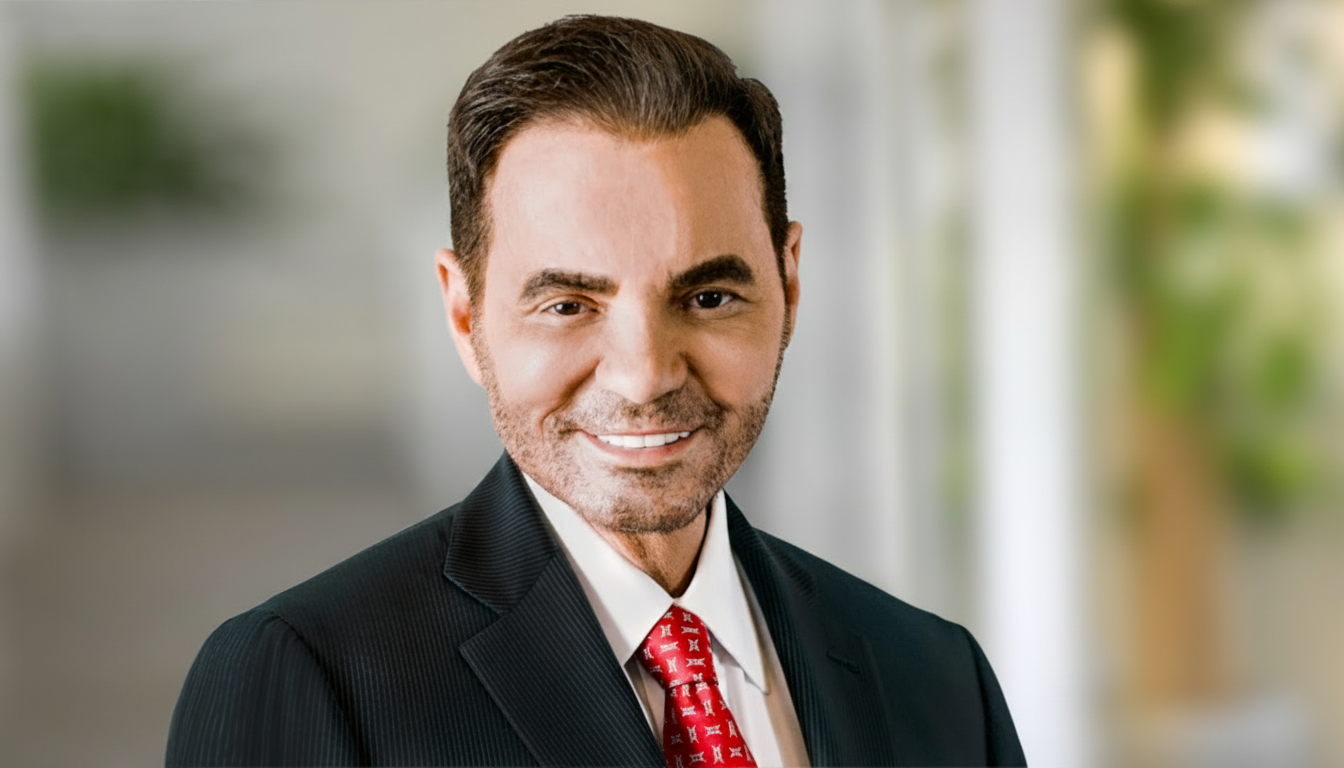
Richard Gonzalez
Architect of AbbVie's independence and growth, navigating patent cliffs and orchestrating strategic portfolio expansion.
Richard A. Gonzalez is the Chairman of the Board and Chief Executive Officer of AbbVie, a global biopharmaceutical company he helped establish as an independent entity in 2013 following its spin-off from Abbott Laboratories. He has been instrumental in shaping AbbVie's strategic direction, particularly in managing the patent expiration of its flagship drug, Humira, and diversifying its product pipeline through significant acquisitions.
Biography
Accomplishments
- 01Successfully led the spin-off of AbbVie from Abbott Laboratories in 2013, establishing its independent identity and strategic direction.
- 02Orchestrated the $21 billion acquisition of Pharmacyclics in 2015, bolstering AbbVie's oncology portfolio with Imbruvica and reducing reliance on Humira.
- 03Spearheaded the $63 billion acquisition of Allergan in 2020, significantly diversifying AbbVie's therapeutic areas into aesthetics, neuroscience, and eye care, post-Humira patent expiration.
- 04Managed the strategic transition and sustained growth of AbbVie through the impending and actual patent expiry of Humira, maintaining revenue stability and future growth trajectory via pipeline expansion and new product launches (e.g., Skyrizi, Rinvoq).
- 05Grew AbbVie's market capitalization and established it as a leading global biopharmaceutical company post-spin and through its major acquisition strategy.
- 06Cultivated a robust R&D pipeline that continues to deliver novel therapies across immunology, oncology, neuroscience, and other key therapeutic areas.
Lessons for Operators
Key Takeaways
Practical lessons distilled for operators, investors, C-levels, and capital allocators.
Anticipate Disruption
Gonzalez's prescient recognition of Humira's upcoming patent expiration was the catalyst for AbbVie's transformation strategy. Companies must constantly scan the horizon for potential disruptions (technological, regulatory, competitive) and initiate countermeasures years in advance, rather than reactively.
Execute Transformative M&A
The acquisitions of Pharmacyclics and Allergan were not incremental but transformative. These deals shifted AbbVie's foundational revenue streams, demonstrating that sometimes only bold, large-scale M&A can fundamentally reset a company's trajectory and secure its future in a rapidly changing industry.
Balance Growth with Risk Management
While pursuing aggressive growth through acquisitions, AbbVie also focused on disciplined capital allocation and integration. Each deal was strategically designed to mitigate the impending revenue loss from Humira, demonstrating a calculated approach to risk rather than unbridled expansion.
Build a Resilient Portfolio
AbbVie's strategy under Gonzalez was to construct a portfolio resilient to individual product lifecycles. This entailed diversifying across therapeutic areas, drug modalities, and market stages, ensuring that no single product failure or patent cliff could catastrophically impact the enterprise.
Lead Through Change
Gonzalez not only envisioned AbbVie's future post-Humira but effectively communicated and executed this complex vision to investors, employees, and the market. Leadership during significant strategic pivots requires clarity of purpose, unwavering commitment, and strong organizational alignment.
Frameworks & Principles
Named frameworks and strategic principles they popularized or embodied.
Portfolio Diversification Strategy (PDS)
A deliberate approach to expand a company's product offerings across multiple therapeutic areas or market segments to reduce dependency on a single product or revenue stream. This often involves organic R&D and strategic M&A.
When to useApplicable when a company faces significant revenue concentration risk (e.g., from a 'blockbuster' drug nearing patent expiration) or seeks to achieve broader market presence and stability. Gonzalez employed this extensively with AbbVie's post-Humira strategy.
Strategic Spin-off / De-merger
The separation of a division or subsidiary into a new, independent company, typically to unlock shareholder value by allowing each entity to pursue distinct strategic objectives and capital structures more effectively.
When to useUseful when a diversified conglomerate has disparate business units that would benefit from greater focus, independent capital allocation, and tailored management. Gonzalez oversaw AbbVie's spin-off from Abbott, enabling the new entity to focus solely on biopharmaceuticals.
Inorganic Growth through Transformative M&A
Acquiring large, strategically valuable companies or assets to rapidly gain new market share, technologies, or therapeutic areas, fundamentally altering the acquirer's business profile and competitive position.
When to useAppropriate when organic growth alone cannot meet strategic objectives or when facing an imminent threat (like a patent cliff). Gonzalez utilized this with Pharmacyclics and Allergan to pivot AbbVie's revenue base.
Explore Related Titans
Other figures in the archive who share Richard Gonzalez's domain, geography, or era.
More in Healthcare & Biotech






From United States







Contemporaries — born 1950s