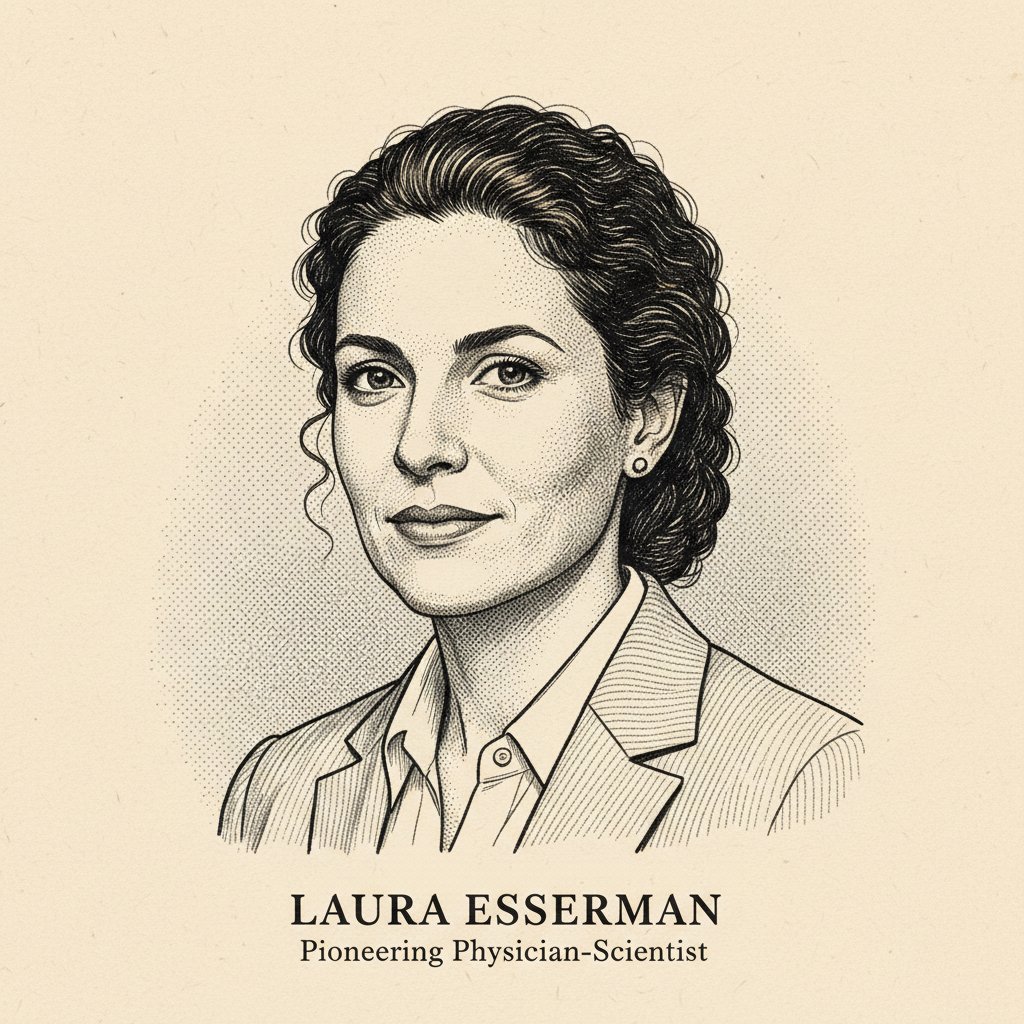
Laura Esserman
Pioneering surgeon-scientist driving transformative change in breast cancer treatment and early detection.
Dr. Laura Esserman is a distinguished surgeon and breast cancer oncologist, renowned for her leadership in optimizing breast cancer treatment and screening protocols. As the Director of the Carol Franc Buck Breast Care Center at the University of California, San Francisco (UCSF) School of Medicine, she champions innovative, adaptive clinical trial designs and a 'less is more' approach to cancer diagnostics and therapy. Her work significantly impacts clinical practice and public health policy.
Biography
Accomplishments
- 01Director, Carol Franc Buck Breast Care Center at UCSF School of Medicine, establishing a leading institution for breast cancer care and research.
- 02Principal investigator for the I-SPY adaptive clinical trial series (e.g., I-SPY 2, I-SPY P1), which significantly advanced the paradigm of rapid drug evaluation for breast cancer.
- 03Founder and leader of the Athena Breast Health Network, a multi-campus, integrated research and clinical care system for breast health.
- 04Lead investigator of the WISDOM study, a large-scale randomized trial evaluating the effectiveness of personalized breast cancer screening strategies.
- 05Inductee in the Giants of Cancer Care, 2018, for Cancer Diagnostics, acknowledging her profound influence on diagnostic practices and the 'less is more' approach.
- 06Co-creator and performer in the show 'Audacity,' demonstrating innovative approaches to public engagement and communication in healthcare.
- 07Instrumental in shifting paradigms in breast cancer management towards de-escalation of therapy for low-risk disease and personalized treatment strategies for high-risk disease.
Lessons for Operators
Key Takeaways
Practical lessons distilled for operators, investors, C-levels, and capital allocators.
Adaptive Design in Action
Esserman's I-SPY trials showcase adaptive clinical trial methodology, allowing for real-time adjustments based on early data. This accelerates drug development and minimizes patient exposure to ineffective treatments. Action: Implement adaptive experimentation in product development, marketing, and operational workflows to learn faster and optimize resource deployment.
Disrupting Paradigms with Data
Her 'less is more' philosophy challenges status quo medical practice, advocating for de-escalation of therapy and personalized screening based on robust evidence from trials like WISDOM. Action: Encourage data-driven disruption within your organization, continuously questioning and validating established 'best practices' with rigorous analysis.
Ecosystem Building for Impact
The Athena Breast Health Network demonstrates the strategic value of creating integrated ecosystems that bridge research, clinical care, and patient engagement across multiple entities. Action: Invest in building synergistic partnerships and networks that extend your organization's reach and multidisciplinary capabilities.
The Power of Patient Advocacy
Esserman's dual role as a surgeon-scientist and patient advocate (including her 'singing surgeon' approach) highlights a deep connection to patient needs and well-being. Action: Ensure patient or customer voice is central to your innovation and strategy development, fostering trust and loyalty through genuine engagement.
Innovating Beyond the Clinic
Her participation in 'Audacity' underscores the importance of unconventional methods for education and advocacy, reaching broader audiences. Action: Explore non-traditional channels and creative storytelling to communicate your vision, engage stakeholders, and build brand resonance.
Frameworks & Principles
Named frameworks and strategic principles they popularized or embodied.
Adaptive Clinical Trial Design (I-SPY Model)
A methodology allowing for modifications to a clinical trial's design and analysis based on accumulating data, without undermining the trial's validity and integrity. It enables faster identification of effective treatments and more efficient allocation of resources.
When to useApplicable for R&D, product development, or any iterative process where early data can inform and optimize subsequent stages. Useful for accelerating learning and reducing time-to-market for innovations under uncertainty.
'Less Is More' Healthcare Philosophy
An approach advocating for the reduction of unnecessary medical interventions, diagnostics, and treatments that may cause more harm than good, focusing instead on targeted, evidence-based care. It emphasizes patient benefit over volume of services.
When to useWhen evaluating existing service lines, product features, or operational complexities. Apply when seeking to optimize resource expenditure, reduce waste, and improve net outcomes by eliminating non-essential components.
Integrated Research & Clinical Network Model (Athena Network)
A collaborative framework that links multiple clinical sites or institutions to standardize data collection, integrate research protocols with patient care, and facilitate large-scale studies. It enables the rapid translation of research findings into practice.
When to useIdeal for enterprises seeking to accelerate innovation, improve data quality, and foster knowledge sharing across a distributed network of operations or partners. Useful for large-scale data collection and collaborative R&D.
Sources & Further Reading
Profiles, interviews, podcasts, and articles used to compile and verify this entry. Each link opens at the original publisher.
Explore Related Titans
Other figures in the archive who share Laura Esserman's domain, geography, or era.
More in Healthcare & Biotech








From United States