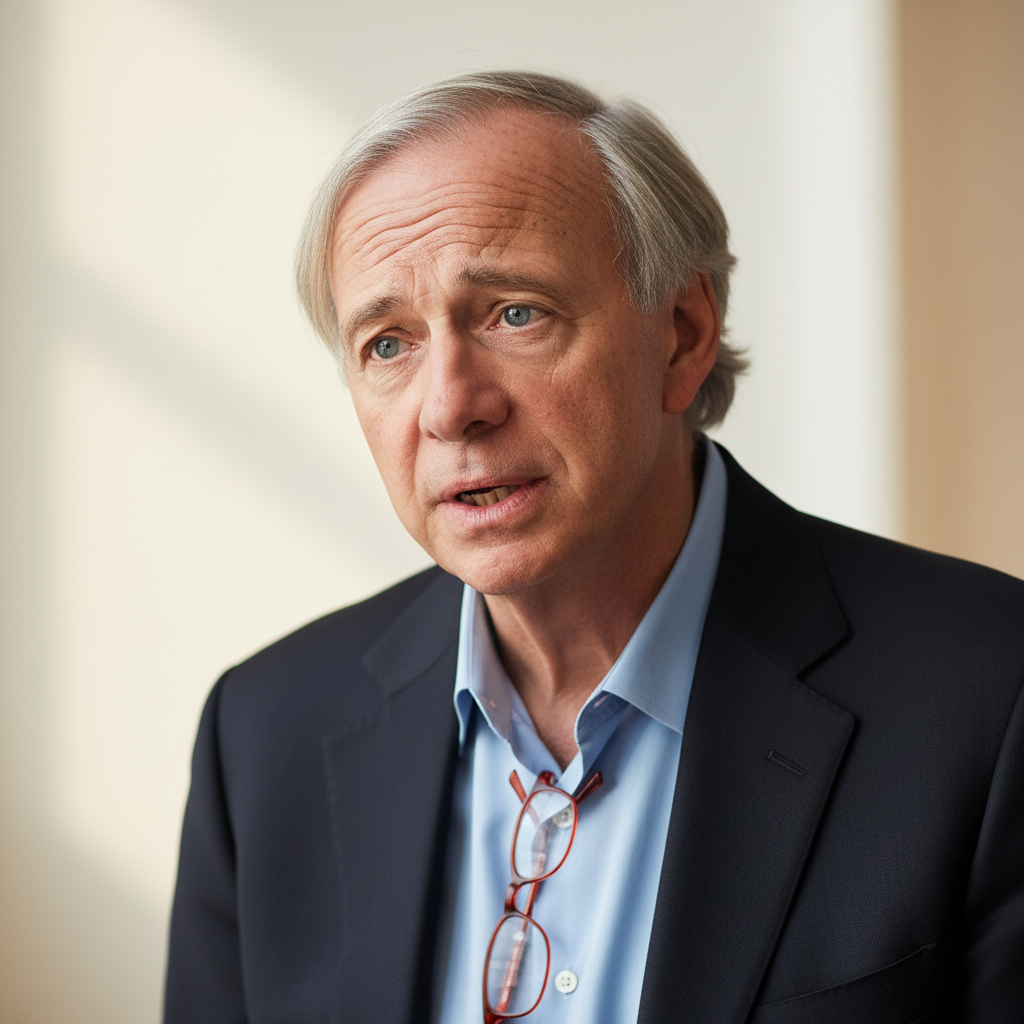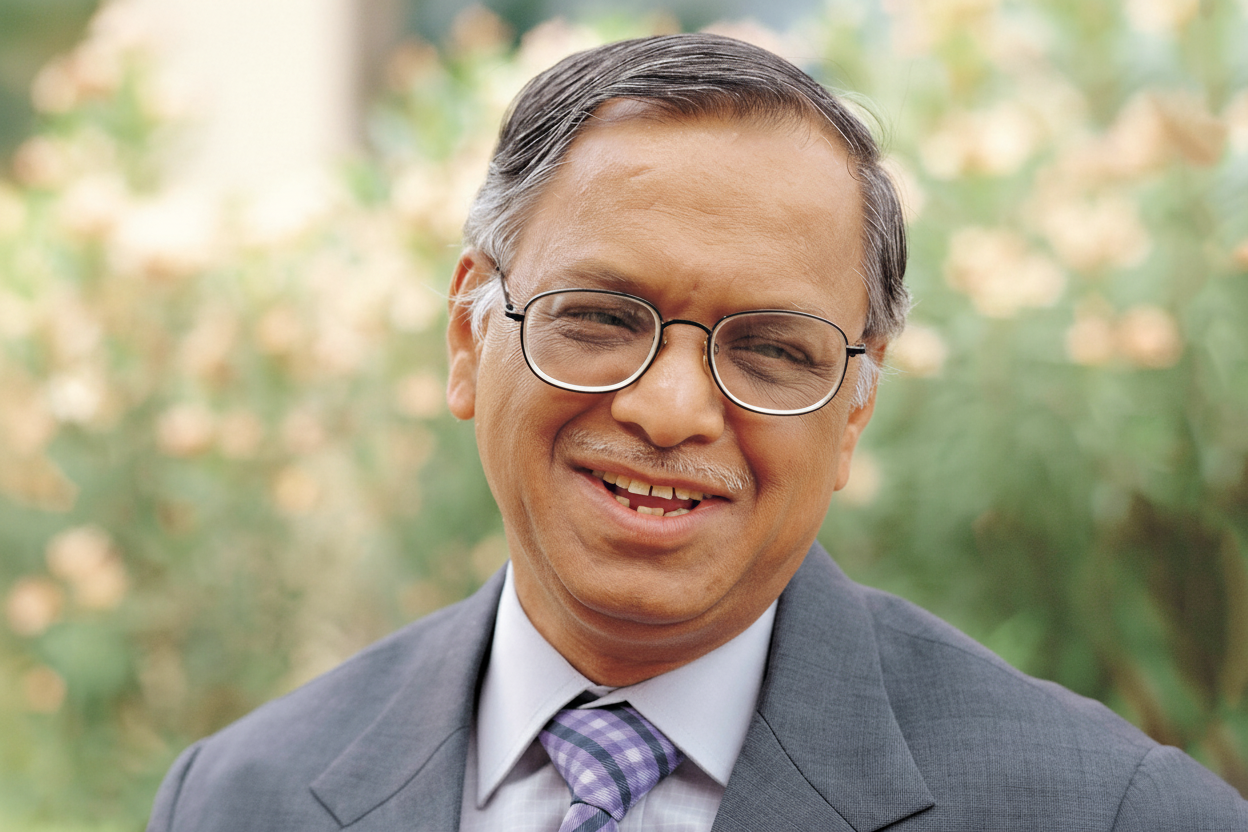
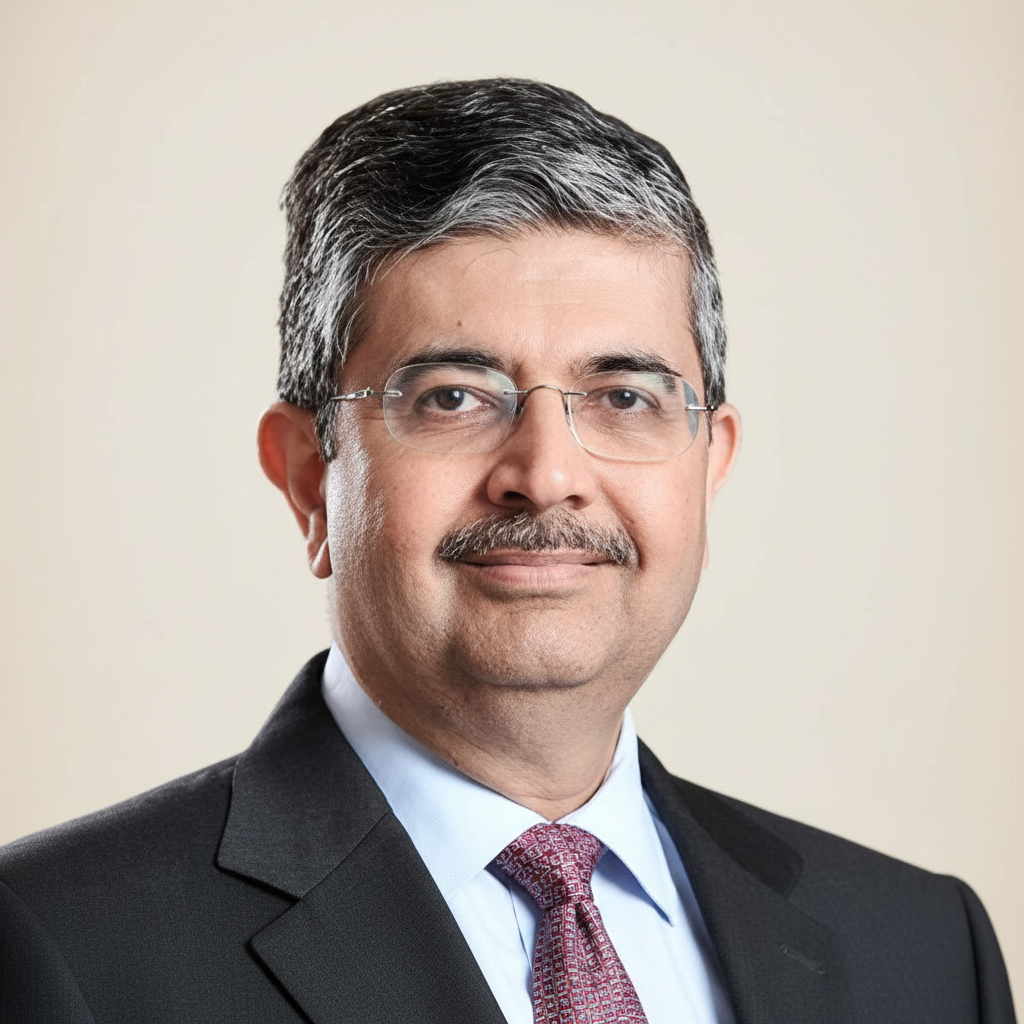
N. R. Narayana Murthy
Architect of India's IT services revolution and pioneer of the Global Delivery Model.
N. R. Narayana Murthy is an Indian industrialist who co-founded Infosys in 1981 with 10,000 rupees and built it into a multi-billion-dollar IT services juggernaut. He pioneered the Global Delivery Model, distributed equity broadly via early ESOP programs, and set new benchmarks for Indian corporate governance by taking Infosys to a NASDAQ listing in 1999.
Biography
Accomplishments
- 01Co-founded Infosys in 1981 and scaled it from a $250 startup into an enterprise exceeding $18 billion in annual revenues.
- 02Formulated and scaled the Global Delivery Model (GDM), fundamentally reshaping international enterprise IT cost structures and delivery lifecycles.
- 03Took Infosys public on the Bombay Stock Exchange in 1993 and on NASDAQ in 1999 (ticker: INFY), opening global institutional capital channels for Indian technology.
- 04Established one of India's earliest and most expansive ESOP programs, distributing equity value to thousands of engineers, drivers, and support personnel.
- 05Drafted and championed corporate governance benchmarks in emerging markets, serving as Chairman of SEBI's Committee on Corporate Governance in 2003.
- 06Founded Catamaran Ventures in 2010, deploying proprietary capital into tech-enabled ventures, consumer brands, and deep tech.
Lessons for Operators
Key Takeaways
Practical lessons distilled for operators, investors, C-levels, and capital allocators.
Institutionalize Corporate Governance Early
Adopting the highest common denominator in disclosure—such as US GAAP alongside local standards—attracts top-tier global institutional investors and establishes trust in volatile emerging-market cycles.
Decouple Value Delivery from Geography
The Global Delivery Model established that high-end knowledge work can be distributed across continents through clear interfaces, tight scope definition, and resilient telecommunication infrastructure.
Align Incentives Through Equity Dispersion
Distributing wealth through stock options converts employee mindset from transient contract laborers to long-term institutional custodians, reducing talent attrition in high-churn industries.
Address Adverse News Rapidly
Murthy popularized the maxim that bad news should travel fast while good news can take the elevator, proving that executive transparency under stress insulates brand equity.
Frameworks & Principles
Named frameworks and strategic principles they popularized or embodied.
Global Delivery Model (GDM)
An operational and staffing architecture that bifurcates knowledge projects into onshore and offshore components. Onshore teams manage client stakeholder relations, requirements scoping, and integration testing, while offshore teams execute coding, architectural builds, quality assurance, and maintenance in low-cost time-shifted environments, delivering 24-hour development throughput at reduced marginal costs.
When to useUse when scaling labor-intensive technical or back-office operations where clear deliverables can be modularized and transmitted digitally across non-overlapping time zones.
Predictable-Sustainable-Profitable-Derisked (PSPD) Principle
A strategic management rubric used by Infosys executive teams to evaluate business lines and enterprise client accounts. Growth must satisfy four concurrent constraints: predictability of future cash flows, sustainability across market cycles, industry-leading profitability margins, and conscious de-risking via customer/geographic diversification caps (e.g., no single client accounting for over 10% of revenue).
When to useUse during enterprise sales pipeline reviews, budget allocations, and portfolio management to avoid margin erosion and concentration risk.
Sources & Further Reading
Profiles, interviews, podcasts, and articles used to compile and verify this entry. Each link opens at the original publisher.
Explore Related Titans
Other figures in the archive who share N. R. Narayana Murthy's domain, geography, or era.
More in Technology








From India



Contemporaries — born 1940s