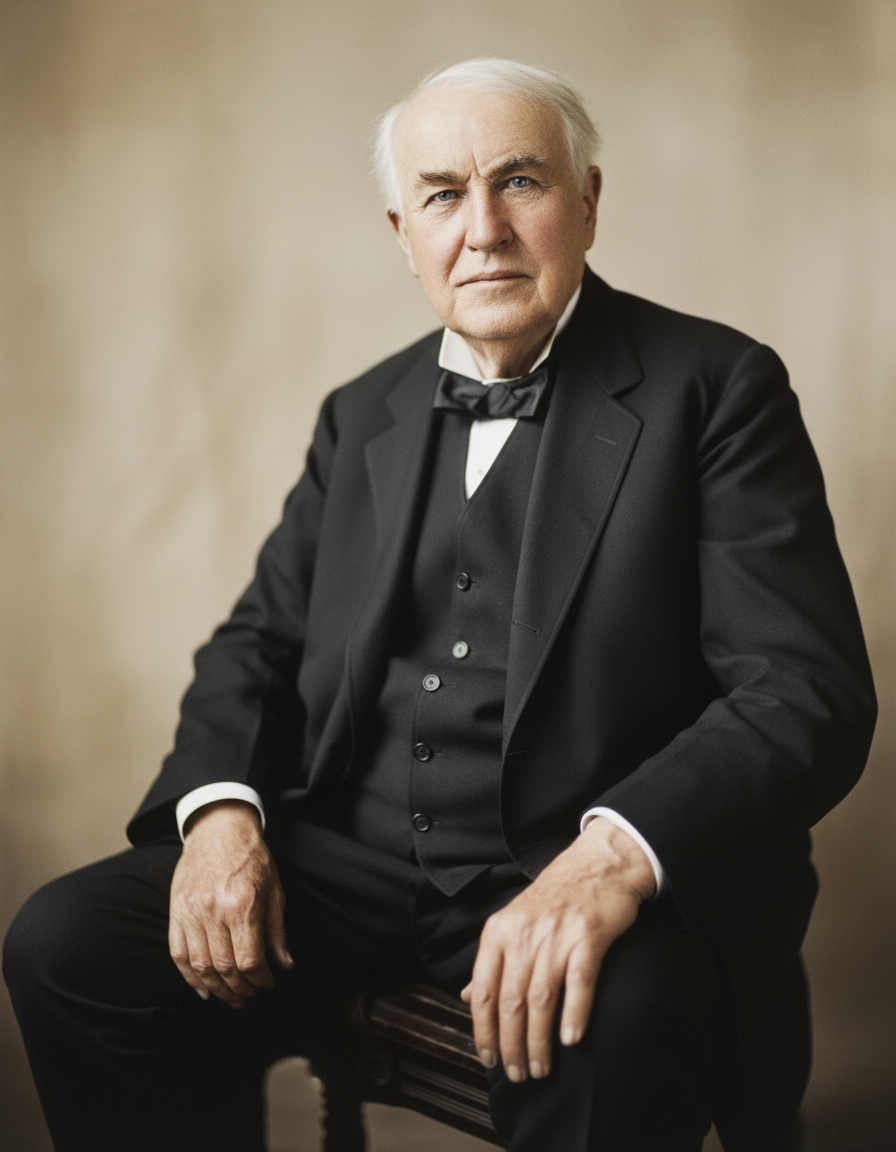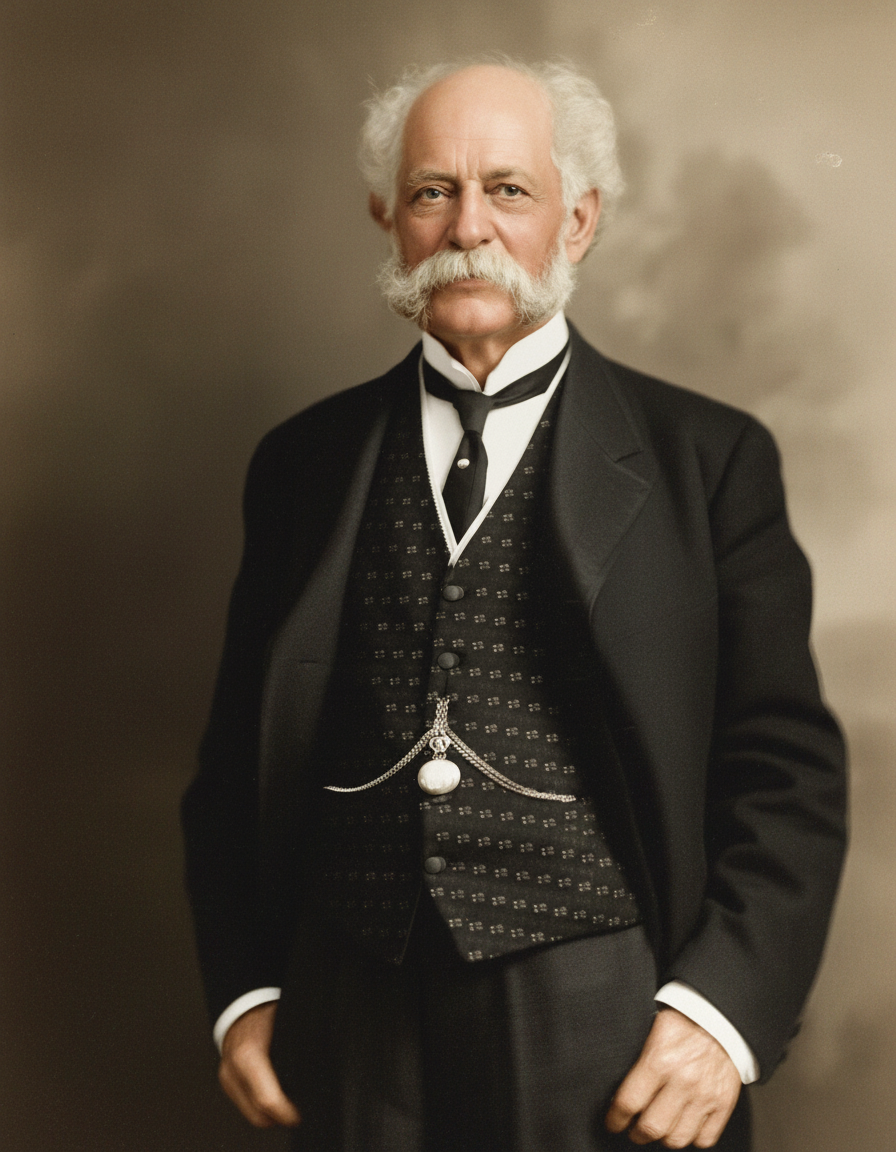
Leland Stanford
Co-founder of the Central Pacific Railroad, Governor of California, U.S. Senator, and founder of Stanford University.
Leland Stanford was a quintessential 19th-century American entrepreneur, leveraging strategic vision, political influence, and audacious capital deployment to build one of the nation's most critical infrastructure projects, the Central Pacific Railroad. His political career culminated in the governorship of California and a U.S. Senate seat, while his enduring legacy is the founding of Stanford University.
Biography
Accomplishments
- 01Co-founded and served as President of the Central Pacific Railroad (1861-1893), a critical component of the First Transcontinental Railroad, culminating in its completion on May 10, 1869.
- 02Successfully lobbied the U.S. Congress for crucial federal land grants and bond subsidies (Pacific Railway Acts) that facilitated the financing and construction of the Central Pacific Railroad.
- 03Served as the 8th Governor of California (1861-1863), a period during which he navigated the state through the early years of the Civil War.
- 04Elected U.S. Senator from California, serving two terms from 1885 until his death in 1893, influencing national policy, particularly regarding railroads and land use.
- 05Co-founded and generously endowed Leland Stanford Junior University (Stanford University) in 1885, transforming a personal tragedy into an enduring institution of higher learning with a focus on practical education and research.
Lessons for Operators
Key Takeaways
Practical lessons distilled for operators, investors, C-levels, and capital allocators.
Integrated Strategy: Business and Political Influence
Stanford maximized his entrepreneurial success by seamlessly integrating business strategy with political engagement. His roles as railroad president and a politician allowed for direct shaping of the regulatory and funding environments essential for his ventures. Investors and operators should recognize that market success often requires navigating, and at times influencing, the political landscape.
The Power of Infrastructure Investment
The Central Pacific Railroad was a massive, long-term infrastructure play that transformed the American economy. Stanford's foresight in identifying national connectivity as a critical future need, despite the immense capital and logistical risks, led to unprecedented wealth creation. This highlights the enduring value of investing in foundational infrastructure, whether physical or digital.
Philanthropy as Strategic Capital Deployment
Stanford University was endowed with a significant portion of Stanford's fortune, transforming private capital into public good. This wasn't merely charity; it was a strategic investment in human capital and knowledge generation that continues to pay dividends globally. For ultra-high-net-worth individuals, structuring philanthropic initiatives as strategic entities can yield long-term societal impact and legacy.
Building Through Adversity
The construction of the Central Pacific involved monumental engineering feats, labor challenges (e.g., reliance on Chinese immigrant labor), and fierce competition. Stanford's leadership exemplified resilience and resourcefulness in scaling an enterprise despite extreme operational hurdles. High-growth enterprises should develop robust contingency planning and foster a culture of problem-solving for unforseen challenges.
Frameworks & Principles
Named frameworks and strategic principles they popularized or embodied.
The 'Pioneer' Infrastructure Playbook
This involves identifying fundamental, unmet societal or economic needs that require massive capital and have significant barriers to entry (e.g., railroads, telecommunications, energy grids). Success hinges on securing government support (land grants, subsidies), strategic partnerships to pool resources ('The Big Four'), and overcoming unprecedented engineering and logistical challenges.
When to useApplicable when evaluating opportunities for large-scale, transformative projects that involve significant public good, require long development cycles, and can fundamentally reshape economic geography or industries. Requires strong lobbying capabilities and long-term capital commitment.
Integrated Public-Private Value Creation
A framework where a business leader actively participates in politics to align public policy with private enterprise objectives. This involves leveraging political office or influence to secure advantageous legislation, funding, or regulatory environments that directly benefit the business venture, creating a symbiotic relationship between economic growth and political stability.
When to useUtilize when operating in heavily regulated industries, or when undertaking ventures that inherently require significant governmental approval, land use, or large-scale public investment. Requires ethical considerations regarding conflicts of interest, but recognizes the practical realities of large-scale development.
Sources & Further Reading
Profiles, interviews, podcasts, and articles used to compile and verify this entry. Each link opens at the original publisher.
Explore Related Titans
Other figures in the archive who share Leland Stanford's domain, geography, or era.
More in Technology









From United States




Contemporaries — 19th century