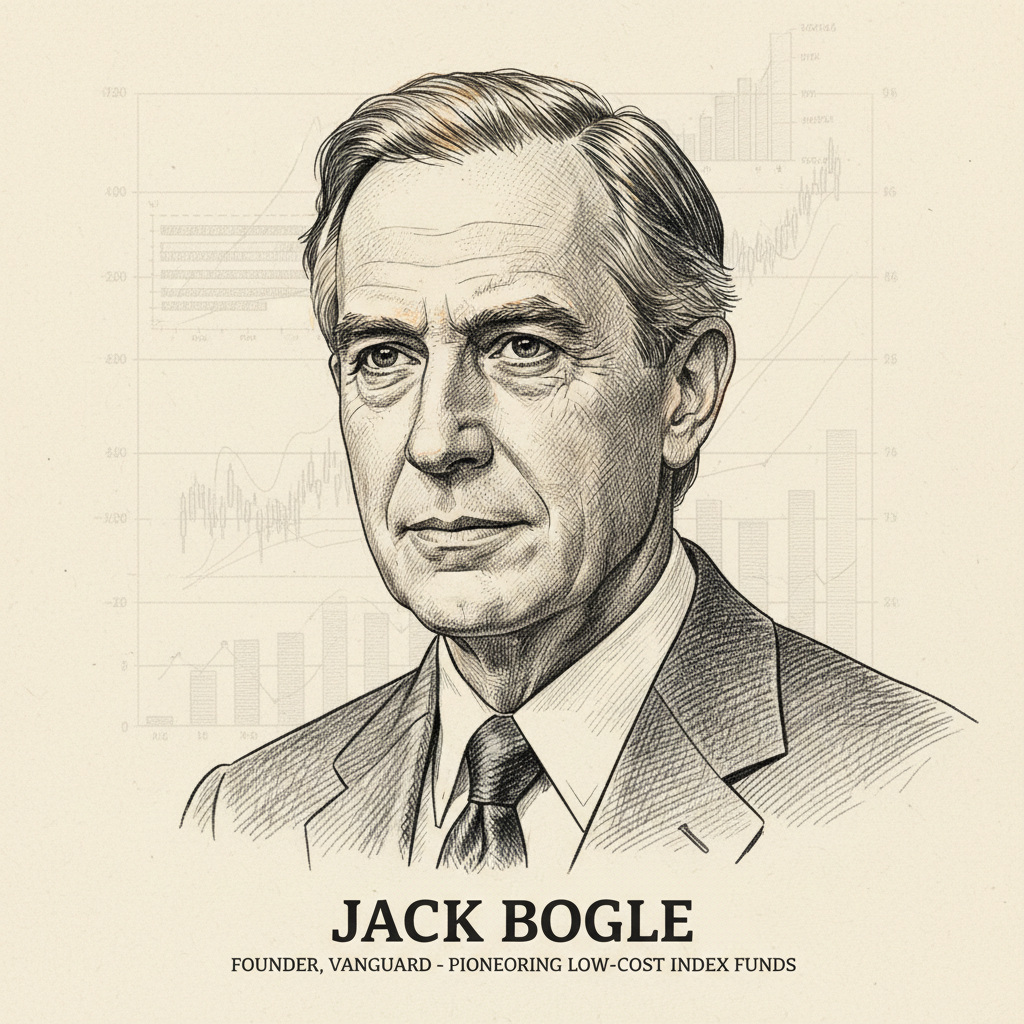
Jack Bogle
The architect of low-cost indexing and advocate for the individual investor.
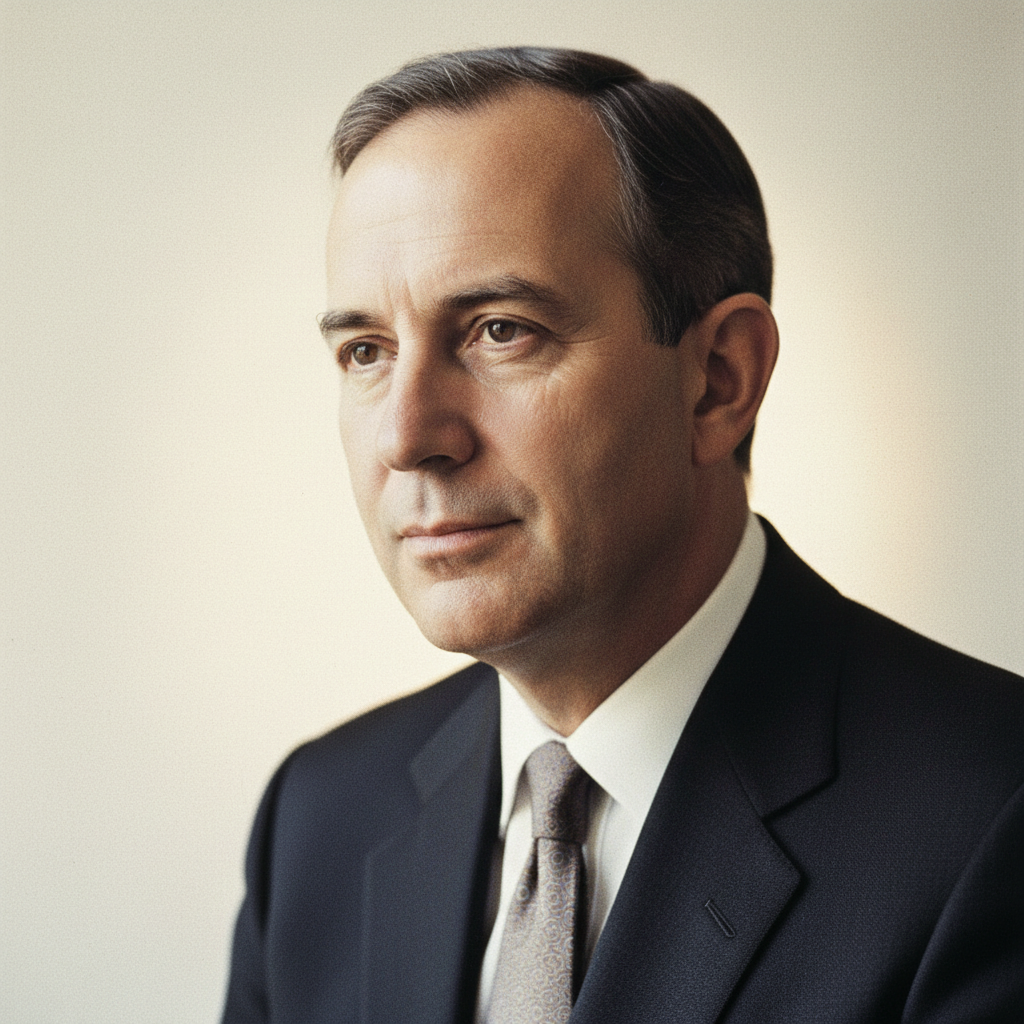
John Clifton 'Jack' Bogle was an American investor, business magnate, and philanthropist. He was the founder and CEO of The Vanguard Group, and is credited with creating the first index fund available to individual investors in 1976.
Biography
Accomplishments
- 01Founded The Vanguard Group in 1975, establishing a client-owned structure where the funds own the management company.
- 02Launched the First Index Investment Trust (Vanguard 500 Index Fund) in 1976, the first index fund available to individual investors, democratizing access to market-beating returns.
- 03Pioneered the low-cost investment philosophy, dramatically reducing fees and expense ratios across the mutual fund industry.
- 04Authored 'Common Sense on Mutual Funds' (1999), a definitive guide to passive investing and a critique of active management.
- 05Transformed the asset management industry by shifting focus from actively managed, high-fee products to low-cost, broad-market index funds, directly benefiting millions of investors.
- 06Built Vanguard into one of the largest asset managers globally, with trillions in assets under management, predominantly through index funds and ETFs.
Lessons for Operators
Key Takeaways
Practical lessons distilled for operators, investors, C-levels, and capital allocators.
Low Cost, High Impact
Minimizing fees and expense ratios is paramount. Bogle demonstrated that even small percentages compound significantly over time, allowing investors to retain a larger share of market returns. Fund managers and allocators should rigorously scrutinize all costs.
The Power of Indexing
For most investors, attempting to 'beat the market' through active management is a losing proposition after fees and taxes. Broad-market index funds offer diversified, low-cost exposure that reliably captures market returns. This principle informs strategic asset allocation.
Fiduciary Duty Above All
Bogle's foundational principle was that investment firms should operate solely for the benefit of their clients. This ethical stance, embodied in Vanguard's structure, builds enduring trust and aligns incentives, a crucial lesson for enterprise leadership.
Long-Term Perspective
Resist the urge to react to short-term market fluctuations or chase performance. Bogle advocated for a 'buy and hold' strategy with diversified, low-cost index funds, emphasizing patience and consistency for long-term wealth creation. This is critical for capital allocators.
Operational Efficiency
Vanguard's success was not just philosophical; it was operational. By streamlining processes and keeping overhead low, they delivered competitive products. Leaders should consistently seek efficiencies that directly benefit their customers or stakeholders.
Conviction and Perseverance
Bogle's vision for indexing was initially mocked. His unwavering belief, backed by data, allowed him to overcome skepticism and fundamentally reshape an industry. This illustrates the importance of conviction in driving innovation and strategic change.
Frameworks & Principles
Named frameworks and strategic principles they popularized or embodied.
Bogle's Four Simple Rules for Investing
1. Select low-cost funds. 2. Consider carefully the added costs of advice. 3. Don't overdo past performance (it's often fleeting). 4. Don't underrate the power of diversification (diversify across many sectors and asset classes).
When to useApplicable for individual investors, fund managers constructing portfolios for clients, and capital allocators evaluating investment options. It serves as a foundational checklist for prudent investment decisions.
The Index Fund Hypothesis
The premise that, over the long term, a broadly diversified, low-cost index fund will outperform the vast majority of actively managed funds, especially after accounting for fees, expenses, and taxes. This is due to market efficiency and the compounding drag of costs.
When to useUsed by capital allocators to justify passive strategies, by fund selectors to evaluate active manager performance against benchmarks, and by enterprise leaders to understand broad market dynamics and cost structures in financial vehicles.
Client-Owned Structure (The Vanguard Model)
A unique corporate structure where the constituent mutual funds own the management company (The Vanguard Group). This eliminates the conflict of interest inherent in publicly traded or privately owned fund companies, as profits are returned to investors in the form of lower costs.
When to useRelevant for new ventures considering innovative corporate governance models, for financial service firms seeking to align shareholder and client interests, and for strategic leaders exploring alternative ownership structures that foster customer loyalty and reduce agency costs.
Sources & Further Reading
Profiles, interviews, podcasts, and articles used to compile and verify this entry. Each link opens at the original publisher.
Explore Related Titans
Other figures in the archive who share Jack Bogle's domain, geography, or era.
More in Finance & Investing








From United States







Contemporaries — born 1920s