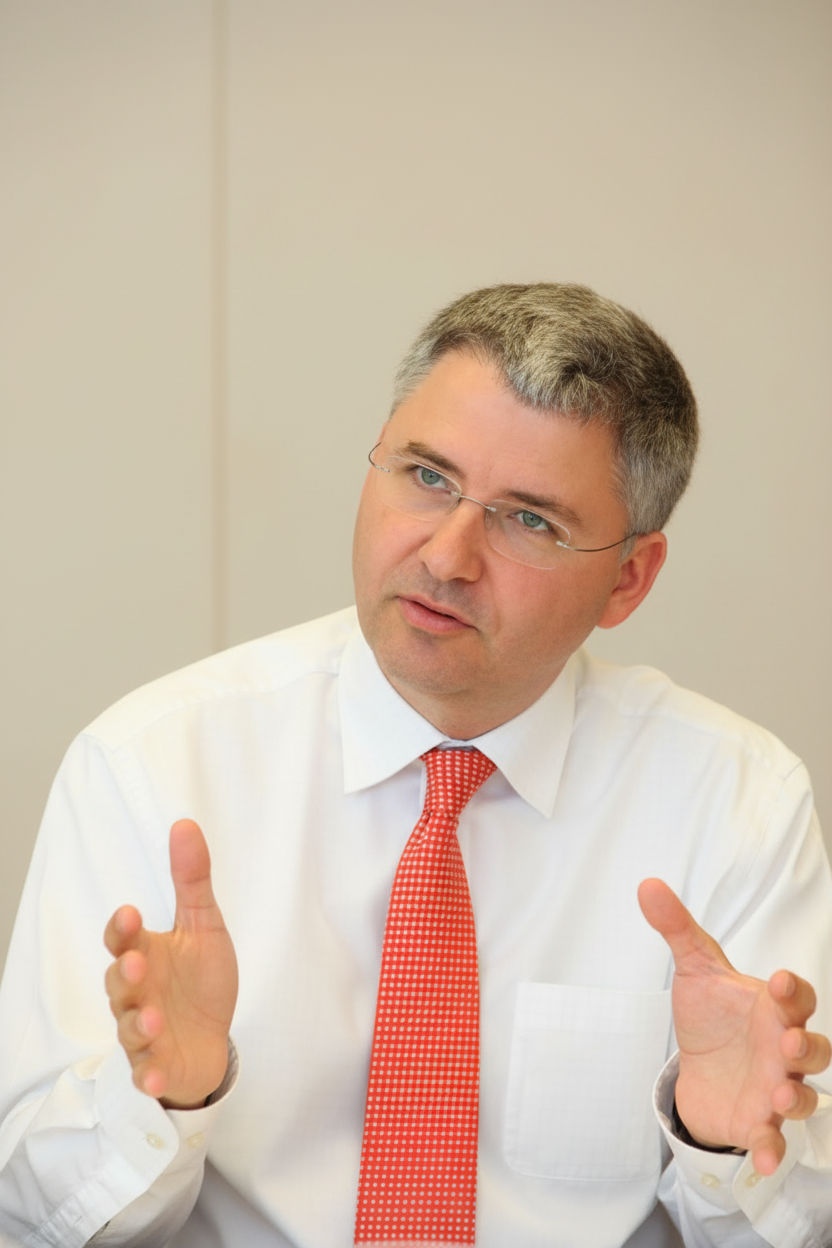
Gautam Adani
Indian billionaire businessman, founder and chairman of the Adani Group, a multinational conglomerate.
Gautam Shantilal Adani is an Indian billionaire businessman who founded the Adani Group in 1988, which has diversified into port development and operations, energy, mining, aerospace, and defense. As of June 2026, he is ranked as India's second richest person and 24th globally, with a net worth of $89.6 billion. In 2022, Time magazine recognized him among the 100 most influential people worldwide.
Biography
Accomplishments
- 01Founded Adani Group in 1988, transforming it from a trading firm into a multinational conglomerate spanning multiple critical sectors.
- 02Developed Mundra Port into India's largest private sector port, initiating his significant foray into infrastructure development in 1995.
- 03Expanded Adani Group into a diversified entity with interests in power generation, coal mining, renewable energy, airports, data centers, and cement.
- 04Achieved significant market cap growth, positioning the Adani Group as one of India's largest business houses.
- 05Ranked as the second richest person in India and 24th globally with a net worth of $89.6 billion as of June 2026.
- 06Included in Time Magazine's 100 most influential people in the world in 2022.
- 07Successfully acquired Ambuja Cements and ACC Limited in 2022, becoming India's second-largest cement manufacturer.
Lessons for Operators
Key Takeaways
Practical lessons distilled for operators, investors, C-levels, and capital allocators.
Integrated Infrastructure Play
Adani's strategy focuses on building integrated infrastructure ecosystems. For C-levels and investors, this means identifying sectors where horizontal and vertical integration can create significant barriers to entry and sustained competitive advantage. Consider how multiple assets can reinforce each other, as ports, power, and logistics do for Adani.
Capital Allocation for Growth
Adani's aggressive growth, particularly through large-scale acquisitions (e.g., cement, airports), demonstrates a high-conviction capital allocation strategy. Fund managers should analyze a company's ability to finance such growth, project future cash flows, and manage associated debt, assessing if the enterprise has the operational prowess to integrate and extract value from large assets.
Risk and Leverage Management
The Adani Group has utilized significant debt to fuel its expansion. Operators and enterprise leaders must understand that while leverage can accelerate growth, it amplifies risk. A deep dive into debt covenants, repayment schedules, and contingent liabilities is crucial for investors and allocators when evaluating highly leveraged entities in capital-intensive sectors.
Government and Policy Alignment
Many of Adani's ventures benefit from infrastructure development policies. Operators and investors should identify emerging markets or sectors where government priorities align with large-scale projects, as this can de-risk investments and unlock growth opportunities. Regulatory scrutiny and geopolitical factors remain critical considerations.
Diversification Around Core Strengths
Adani’s expansion, while broad, often revolves around foundational strengths in infrastructure development, resource management, and logistics. This approach indicates that successful diversification isn't random but builds upon existing expertise, allowing companies to enter new markets with established operational capabilities. Operators should seek adjacency opportunities.
Frameworks & Principles
Named frameworks and strategic principles they popularized or embodied.
Ecosystem Build-Out Strategy
Focuses on creating interlinked assets and services that provide mutual support and capture multiple points in a value chain, leading to a synergistic business ecosystem rather than standalone ventures.
When to useWhen entering capital-intensive industries or markets with significant infrastructure gaps; applicable for operators planning long-term, integrated growth strategies across related sectors like energy, logistics, or digital infrastructure.
Opportunistic Acquisition & Growth Financing
Involves identifying significant growth opportunities, particularly asset-heavy ones, and aggressively pursuing them through substantial capital outlays, often financed by debt, with a focus on rapidly increasing scale and market share.
When to useFor fund managers and capital allocators assessing companies in rapid expansion phases, requiring a detailed understanding of debt service capacity, asset integration capabilities, and market power accretion. For operators, when market consolidation or strategic asset acquisition is a core growth lever.
State-Aligned Development Model
A business strategy that prioritizes investments and projects closely aligned with national economic development plans and governmental infrastructure initiatives, often benefiting from policy support and reduced regulatory friction.
When to useApplicable for enterprise leaders and investors evaluating ventures in emerging economies or regulated industries where government policy plays a significant role in market dynamics and project feasibility. Requires understanding national development blueprints and political landscapes.
Recent Appearances
Latest interviews, keynotes, and press from the past half year.
 youtube.com
 youtube.com
 youtube.com
 youtube.com
 youtube.com
 youtube.com
 youtube.com
 youtube.com
 youtube.com
 youtube.com
 youtube.com
 youtube.com
 youtube.com
 youtube.com
 youtube.com
 youtube.com
 youtube.com
 youtube.com
 youtube.com
 youtube.com
 youtube.com
 youtube.com
 youtube.com
 youtube.com
 youtube.com
 youtube.com
 youtube.com
 youtube.com
 youtube.com
 youtube.com
 youtube.com
 youtube.com
 youtube.com
 youtube.com
 youtube.com
Sources & Further Reading
Profiles, interviews, podcasts, and articles used to compile and verify this entry. Each link opens at the original publisher.
Explore Related Titans
Other figures in the archive who share Gautam Adani's domain, geography, or era.
More in Other









From India



Contemporaries — born 1960s