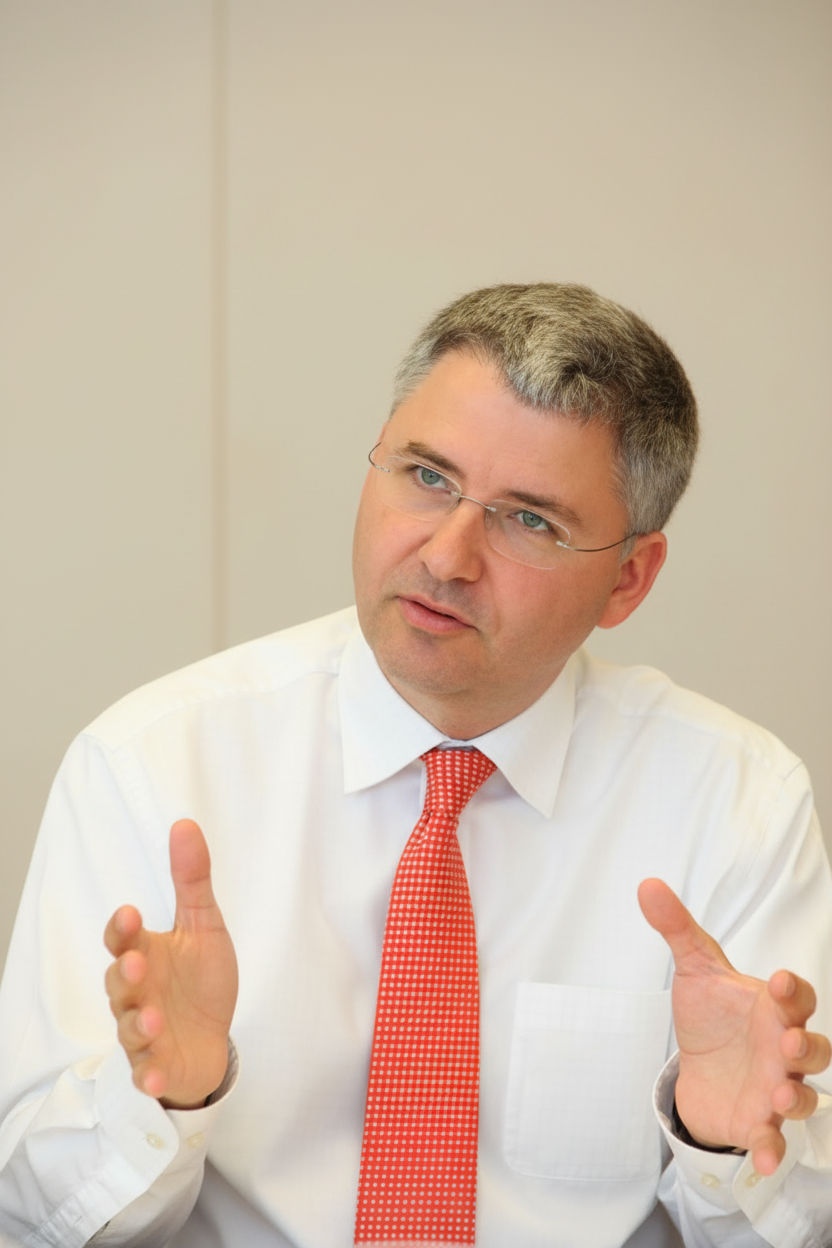
Eric Trappier
Eric Trappier: The architect of Dassault Aviation's global expansion and technological sovereignty in a volatile aerospace market.
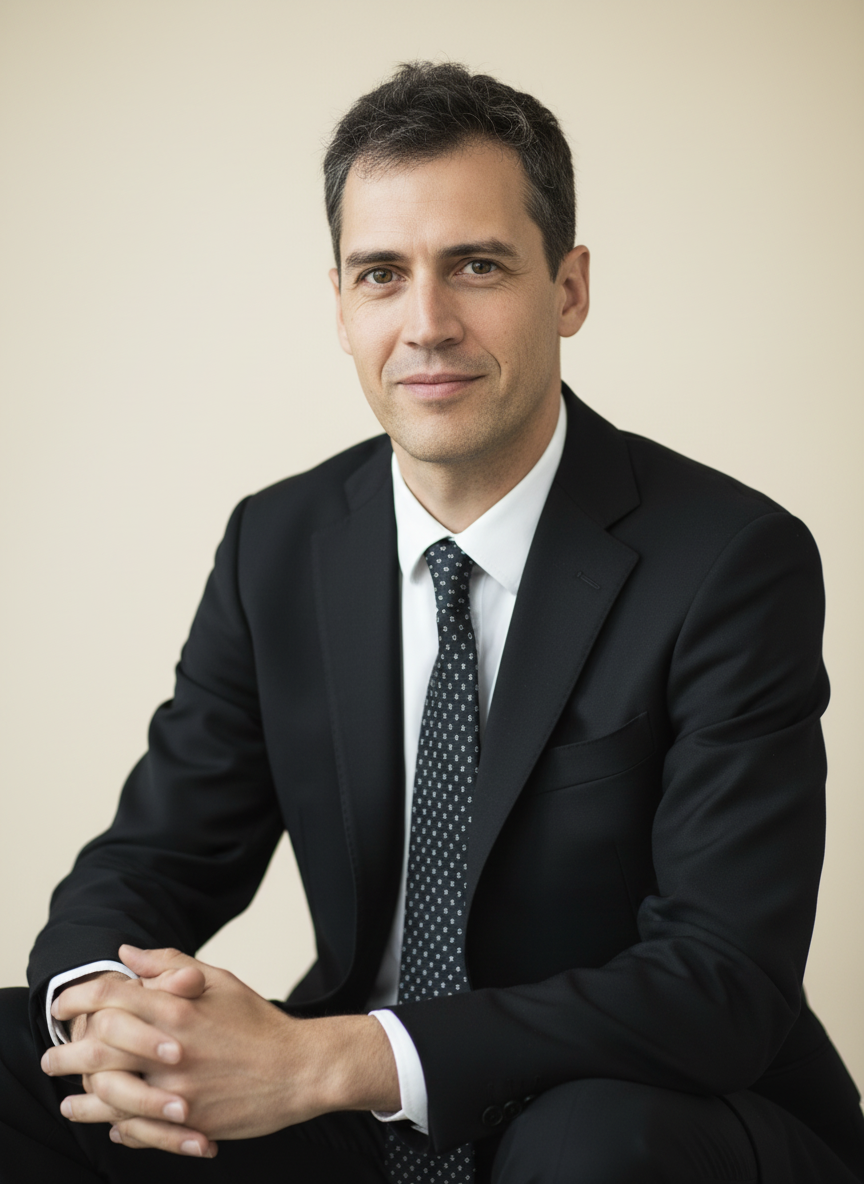
Eric Trappier has served as the Chairman and CEO of Dassault Aviation since January 2013. A graduate of Télécom Paris, he joined the company in 1994, steadily rising through the ranks. His tenure is marked by significant international Rafale export successes and a commitment to maintaining Dassault's independent technological capabilities amidst increasing global competition.
Biography
Accomplishments
- 01Secured the first international export contract for the Rafale fighter jet with Egypt in 2015, followed by significant additional orders in 2021.
- 02Successfully negotiated and executed a substantial Rafale order from Qatar in 2015, and an additional batch in 2017.
- 03Finalized the contentious 36-aircraft Rafale deal with India in 2016, following extensive negotiations and political complexities.
- 04Spearheaded Dassault Aviation's involvement in the Future Combat Air System (FCAS) program, fostering European collaboration for next-generation aerial capabilities.
- 05Maintained and enhanced Dassault's technological independence and innovation capabilities, particularly through R&D investments in areas like stealth technology and interconnected combat systems.
- 06Diversified Dassault's revenue streams through continued expansion of the Falcon business jet family and MRO services, mitigating reliance on defense cycles.
- 07Navigated geopolitical complexities and fierce international competition to secure multi-billion dollar defense contracts, elevating Dassault's global market share.
- 08Achieved significant financial stability and profitability for Dassault Aviation throughout his tenure, demonstrating robust business model resilience.
Lessons for Operators
Key Takeaways
Practical lessons distilled for operators, investors, C-levels, and capital allocators.
Strategic Patience in Defense Exports
Trappier demonstrated that 'overnight success' in defense exports often follows decades of platform development and perseverance. The Rafale's initial export struggles were overcome by a relentless, long-term sales strategy, proving that the right product with sustained backing can eventually find its market.
Balancing Collaboration and Sovereignty
His approach to programs like FCAS highlights the delicate act of cooperating on large European defense projects while robustly defending national industrial capacities and intellectual property. This maintains a strategic advantage and leverage in future negotiations.
The Power of Customer-Centric Diplomacy
Securing Rafale deals with India, Egypt, and Qatar involved more than just selling an aircraft; it required building deep government-to-government relationships, understanding intricate geopolitical motivations, and offering bespoke industrial offsets and support packages tailored to each nation's strategic needs.
Beyond Product: A Systems Integrator Mindset
Dassault under Trappier is not just an aircraft manufacturer but a complex systems integrator, offering full combat solutions, training, maintenance, and technological transfer. This full-spectrum capability is critical for winning complex, multi-decade defense contracts.
Diversification as a Buffer
The balance between the cyclical defense sector and the business jet market (Falcon) provides Dassault with financial resilience. This strategy smooths revenue volatility and allows for sustained R&D investments even during defense downturns.
Innovation as a Continuous Imperative
Despite the long development cycles in aerospace, Trappier has consistently emphasized internal R&D to maintain a technological edge in areas like digital design, advanced materials, and networked warfare, ensuring Dassault remains a leader in future air combat.
Navigating Political-Industrial Complexities
Leading a company like Dassault requires adept navigation of national defense priorities, EU industrial policy, and inter-government political dynamics. His ability to manage these complex stakeholder relationships is central to his success.
Operational Excellence in Execution
From initial concept to delivery and through-life support, Trappier’s leadership ensures high standards of engineering precision and project execution, which are non-negotiable in the aerospace and defense sector where failures have catastrophic consequences.
Frameworks & Principles
Named frameworks and strategic principles they popularized or embodied.
Long-Term Program Management (LTPM)
A strategic framework for developing and sustaining multi-decade, high-capital projects, focusing on continuous R&D, iterative improvements, and sustained customer engagement from concept to end-of-life.
When to useApplicable for industries with long product lifecycles, high development costs, and critical performance requirements, such as aerospace, infrastructure, and energy projects. Emphasizes endurance over short-term gains.
Dual-Market Strategy (Defense & Civil)
Leveraging core competencies (e.g., aerodynamics, manufacturing) across distinct but related markets (military aviation and business jets) to balance revenue streams and mitigate sector-specific risks.
When to useSuitable for companies with highly specialized technical capabilities that can be adapted to multiple markets with different demand drivers, promoting business resilience and cross-subsidization of R&D.
Strategic Sovereignty in Collaborative Ventures
A framework for participating in international collaborative projects while rigorously protecting national interests, critical intellectual property, and industrial capabilities to maintain strategic autonomy.
When to useEssential when engaging in cross-border partnerships in sensitive or strategic industries (e.g., defense, critical technology), where shared development must not compromise core competitive advantages or national security.
Total Solution Selling (TSS)
Moving beyond selling a standalone product to offering a comprehensive ecosystem of services, training, maintenance, and technological transfer, becoming a strategic partner to the customer.
When to useIdeal for high-value B2B sales in complex sectors (e.g., defense, enterprise software, industrial equipment) where the product's effectiveness is highly dependent on integrated support and strategic alignment.
Sources & Further Reading
Profiles, interviews, podcasts, and articles used to compile and verify this entry. Each link opens at the original publisher.
Explore Related Titans
Other figures in the archive who share Eric Trappier's domain, geography, or era.
More in Transportation & Logistics









From France






Contemporaries — born 1960s