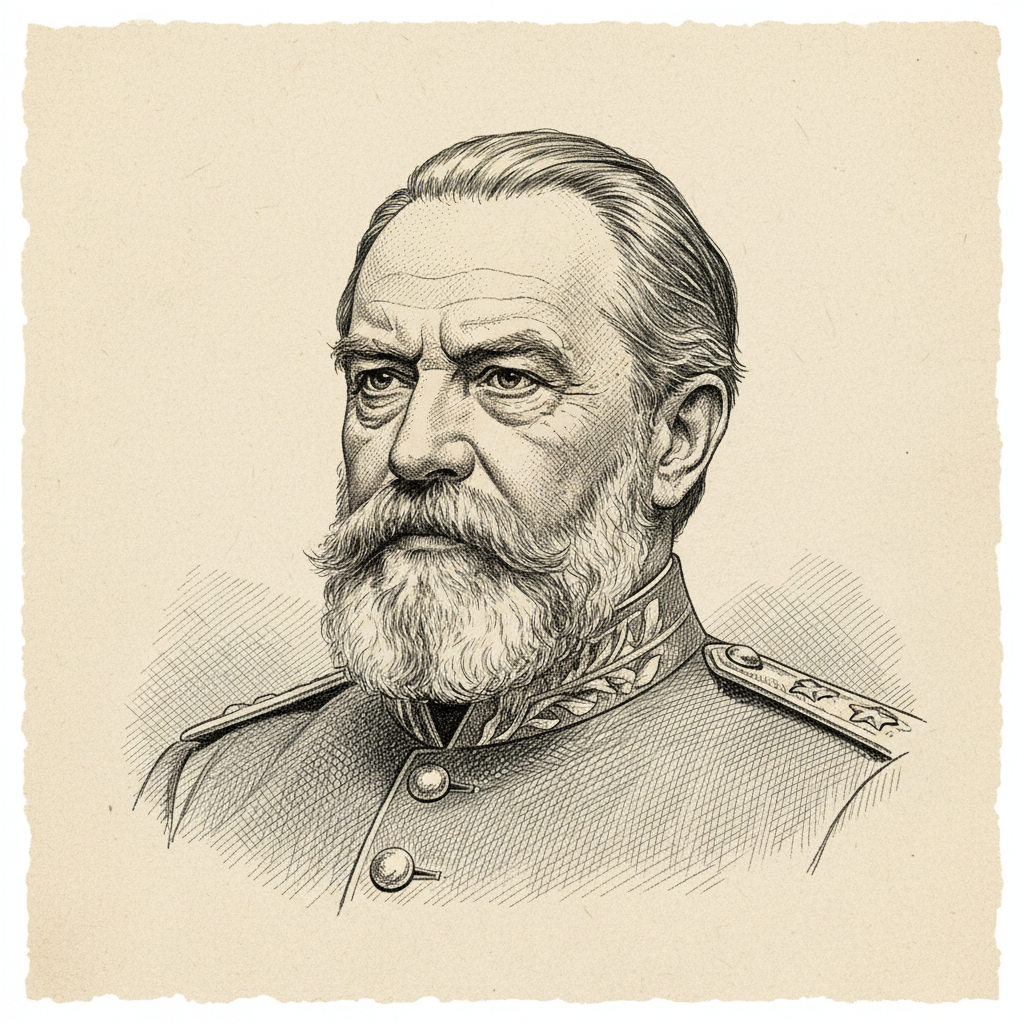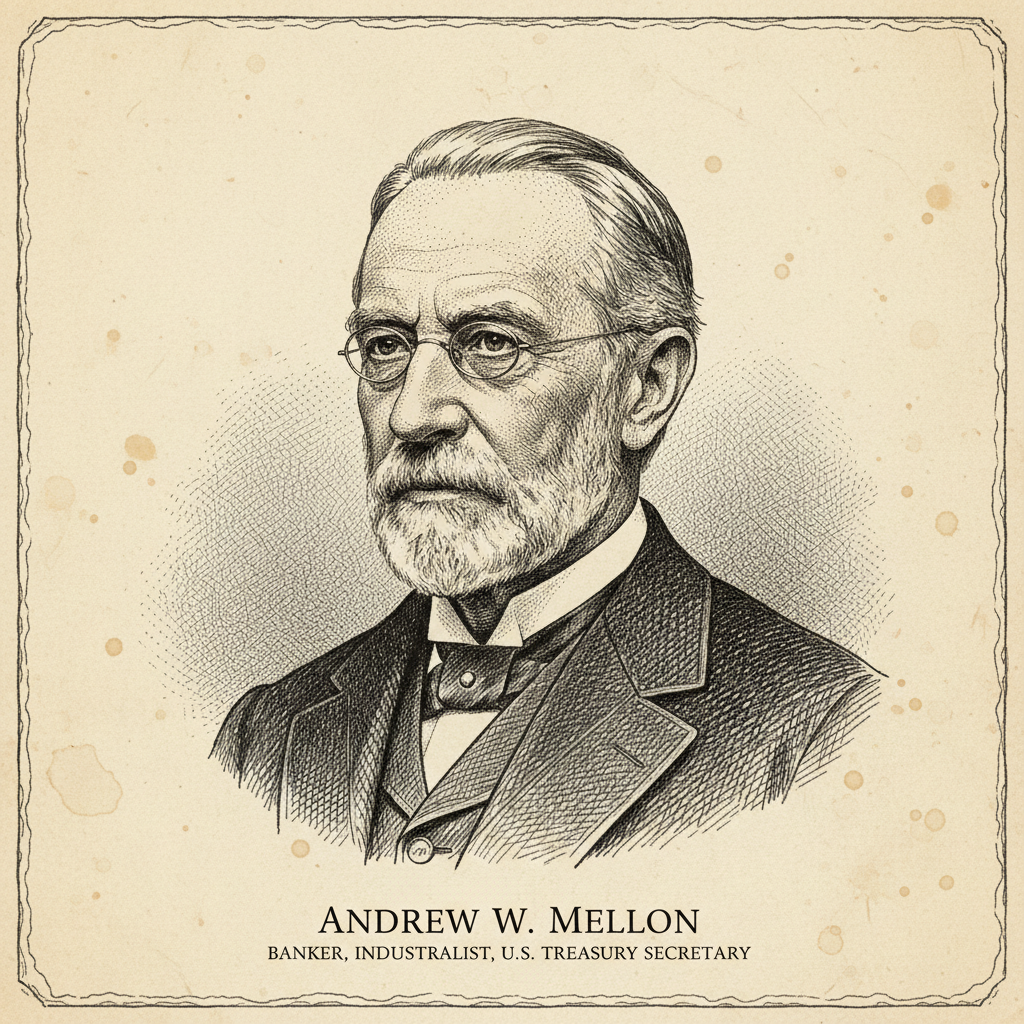
Andrew W. Mellon
The architect of industrial empires and American finance during the Gilded Age and the Roaring Twenties.
Andrew W. Mellon was an American banker, industrialist, philanthropist, and art collector. From a family of prominent bankers, he built a vast industrial empire spanning coal, coke, oil, steel, and aluminum, and served as the U.S. Secretary of the Treasury from 1921 to 1932, significantly influencing American economic policy.
Biography
Accomplishments
- 01Transformed a regional banking firm into a national financial and industrial power, including founding or consolidating industries like Alcoa (Aluminum Company of America, 1888) and Gulf Oil (1901).
- 02Successfully served three U.S. Presidents (Harding, Coolidge, Hoover) as Secretary of the Treasury from 1921 to 1932, implementing supply-side economic policies that reduced federal debt by over one-third and lowered income tax rates across all brackets.
- 03Funded and directed the growth of the Mellon Institute of Industrial Research (established 1913), a pioneering institution for applied scientific research and industrial innovation, contributing to the R&D capabilities of American industry.
- 04Formed and strategically merged vital corporate entities, including Union Trust Company (1889) and Union Savings Bank (1902), providing crucial capital infrastructure for industrial development.
- 05Orchestrated complex financial maneuvers, including the recapitalization of companies like Koppers Company (1912) and the creation of vertically integrated operations across diverse sectors.
- 06Pioneered a model of 'venture capital' ahead of its time, providing seed funding and strategic guidance to early-stage industrial enterprises, often taking majority stakes and hands-on management roles.
- 07Donated his significant art collection and a substantial endowment to establish the National Gallery of Art (1937), fundamentally shaping America's cultural landscape.
- 08Maintained vast personal wealth and influence through multiple economic cycles, demonstrating resilient portfolio management and strategic asset allocation.
Lessons for Operators
Key Takeaways
Practical lessons distilled for operators, investors, C-levels, and capital allocators.
Industrial Symbiosis
Mellon's success stemmed from systematically investing in interdependent industries. His banking provided capital for his industrial ventures (oil, aluminum, coal), which in turn generated wealth to be managed and reinvested by his financial institutions. This created a self-reinforcing ecosystem of capital and production.
Proactive Capital Allocation
He was an early adopter of what resembles modern venture capital, identifying and funding nascent technologies and companies (e.g., Alcoa, Gulf Oil) before their widespread recognition. His capital was not merely passive but came with strategic guidance and a governance role.
Macro-Economic Influence
As Treasury Secretary, Mellon demonstrated how a business leader could translate private sector financial principles and expertise into national economic policy, advocating for and implementing tax cuts and debt reduction policies that he believed spurred capital formation and economic growth. This illustrates a direct linkage between private sector experience and public policy outcomes.
Enduring Institutional Legacy
Beyond accumulating personal wealth, Mellon focused on establishing enduring institutions. The Mellon Institute demonstrated his belief in systematic R&D, while the National Gallery of Art secured his cultural impact, illustrating that building institutions can be as significant as building corporations.
Value Creation Through Consolidation
Mellon often financed or orchestrated the consolidation of smaller, disparate entities into larger, more efficient industrial combines. This aggregation strategy created economies of scale and market dominance, a hallmark of Gilded Age industrialists.
Risk Mitigation via Diversification & Control
While taking significant risks on new ventures, Mellon mitigated these through diversification across multiple industries and, critically, by taking controlling stakes that allowed him direct influence over management and strategic direction.
The Power of Patience and Persistence
Many of his ventures (like Alcoa) required sustained investment and development over many years before yielding substantial returns. His ability to deploy patient capital was a competitive advantage.
Frameworks & Principles
Named frameworks and strategic principles they popularized or embodied.
Industrial Conglomerate Model
A strategic approach where a parent company owns and manages a diverse group of subsidiary businesses operating in distinct industries, leveraging shared financial resources and management expertise, and often benefiting from internal capital markets. Mellon's empire spanned banking, oil, aluminum, and coal.
When to useApplicable when seeking to diversify risk across uncorrelated assets, achieve economies of scale in finance and management, or when leveraging excess capital from one division to fund growth in another. Requires strong central governance and capital allocation discipline.
Vertical Integration Strategy
Control over multiple stages of a supply chain, from raw materials to distribution. Examples include Gulf Oil's ownership of wells, refineries, and pipelines.
When to useEffective when seeking to reduce costs, enhance quality control, secure supply, or capture greater profit margins across the value chain. Requires significant capital investment and management expertise across diverse operations.
Supply-Side Economic Policy (Mellonism)
Economic theory arguing that economic growth can be most effectively fostered by lowering taxes (especially on corporations and the wealthy) and decreasing regulation, which encourages production and investment. Mellon's policies as Treasury Secretary exemplify this.
When to useRelevant for policymakers designing tax codes to stimulate investment and job creation, but also for business leaders to understand the potential impact of such policies on capital availability and business expansion.
Institutional Philanthropy as Strategic Legacy
Utilizing significant personal wealth to establish and endow public institutions (e.g., museums, research centers) with a mandate for long-term societal benefit, often after a successful business career.
When to useApplicable for high-net-worth individuals or family offices seeking to create a lasting public legacy, influence cultural or scientific development, and establish a multi-generational impact beyond direct commercial endeavors. Can also serve as a form of reputation management and value creation.
Recent Appearances
Latest interviews, keynotes, and press from the past half year.
 youtube.com
 youtube.com
 youtube.com
 youtube.com
 youtube.com
 youtube.com
 youtube.com
 youtube.com
 youtube.com
 youtube.com
 youtube.com
 youtube.com
 youtube.com
 youtube.com
 youtube.com
 youtube.com
 youtube.com
 youtube.com
 youtube.com
 youtube.com
 youtube.com
 youtube.com
![Jessie Cox - Sonic Cartographies [2022] | International ... - YouTube](https://i.ytimg.com/vi/3PkAn6quzwM/hqdefault.jpg) youtube.com
youtube.com youtube.com
 youtube.com
 youtube.com
 youtube.com
 youtube.com
 youtube.com
 youtube.com
 youtube.com
 youtube.com
 youtube.com
 youtube.com
 youtube.com
 youtube.com
 youtube.com
 youtube.com
 youtube.com
 youtube.com
 youtube.com
 youtube.com
 youtube.com
 youtube.com
 youtube.com
 youtube.com
 youtube.com
![Andrew Mellon: America's Secret Banker [Outliers] - YouTube](https://i.ytimg.com/vi/2by7xk8DjPQ/hqdefault.jpg) youtube.com
youtube.com youtube.com
 youtube.com
 youtube.com
 youtube.com
 youtube.com
 youtube.com
 youtube.com
 youtube.com
 youtube.com
 youtube.com
 youtube.com
 youtube.com
 youtube.com
 youtube.com
 youtube.com
 youtube.com
 youtube.com
 youtube.com
 youtube.com
 youtube.com
 youtube.com
 youtube.com
 youtube.com
 youtube.com
 youtube.comm.youtube.com
 youtube.comyoutube.com
 youtube.com
 youtube.com
 youtube.com
 youtube.com
 youtube.com
 youtube.com
 youtube.com
 youtube.com
 youtube.com
 youtube.com
 youtube.com
 youtube.com
 youtube.com
 youtube.com
 youtube.com
 youtube.com
 youtube.com
 youtube.com
 youtube.com
 youtube.com
 youtube.com
 youtube.com
 youtube.com
 youtube.com
 m.youtube.com
 youtube.com
 youtube.com
 youtube.com
 youtube.com
 youtube.com
 youtube.com
 m.youtube.com
 youtube.com
 youtube.comyoutube.com
 m.youtube.com
 youtube.com
 youtube.com
 youtube.com
 youtube.com
 youtube.com
 youtube.com
 youtube.com
 youtube.com
 youtube.com
 youtube.com
 youtube.com
 youtube.com
 youtube.com
 youtube.com
 youtube.com
 youtube.com
 youtube.com
 youtube.com
 youtube.com
 youtube.com
 youtube.comyoutube.com
 m.youtube.com
 youtube.com
 m.youtube.com
 youtube.com
 youtube.com
 youtube.com
 youtube.com
 youtube.com
 youtube.comyoutube.com
 youtube.com
 youtube.com
 youtube.com
 youtube.com
Sources & Further Reading
Profiles, interviews, podcasts, and articles used to compile and verify this entry. Each link opens at the original publisher.
Explore Related Titans
Other figures in the archive who share Andrew W. Mellon's domain, geography, or era.
More in Finance & Investing









From United States






Contemporaries — 19th century