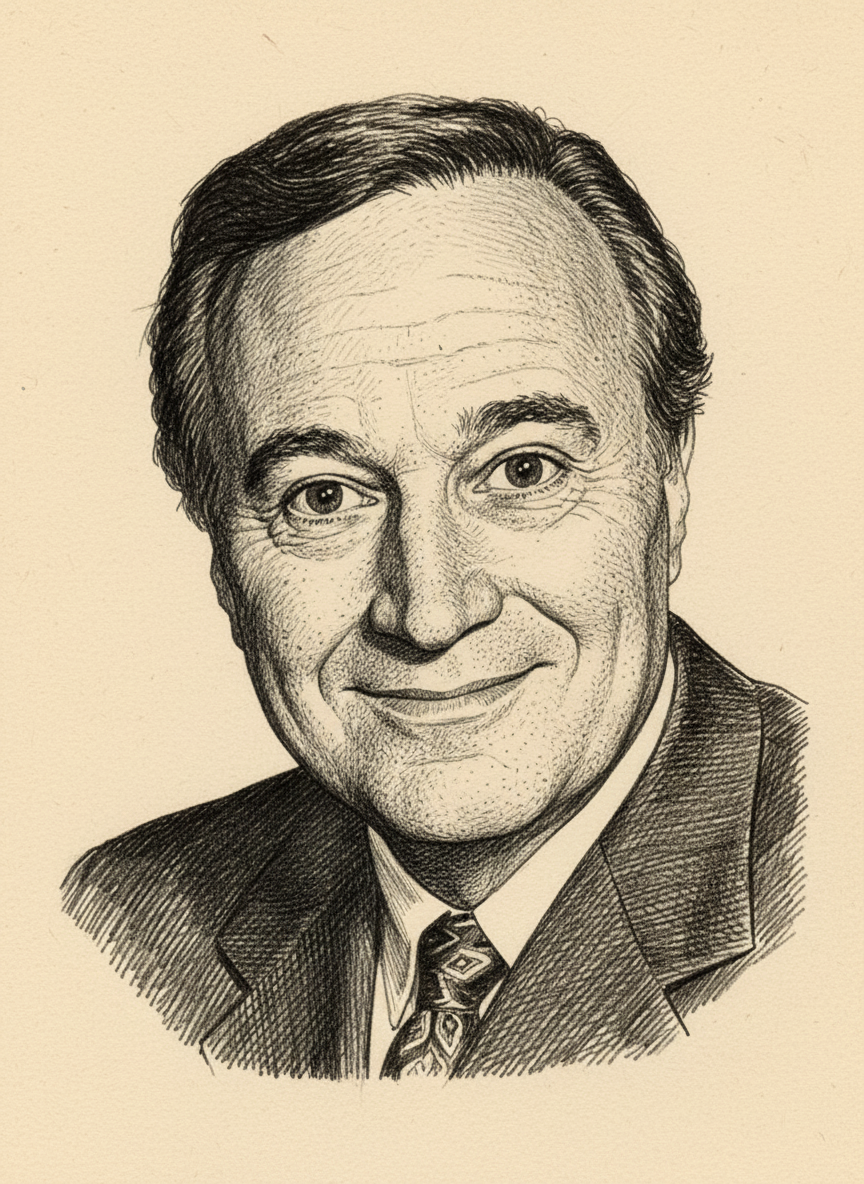
Alfred Lerner
Alfred Lerner transformed the financial services landscape through strategic acquisitions, innovative retail banking, and a relentless focus on customer relationships, leaving a legacy of value creation.
Alfred Lerner was an American businessman and philanthropist best known for his transformative leadership in the financial services sector. He built MBNA Corporation into a leading credit card issuer and restored the Cleveland Browns NFL franchise. His career was marked by a disciplined approach to growth, customer-centric innovation, and astute capital allocation.
Biography
Accomplishments
- 01Co-founded MBNA Corporation in 1982 and built it into the world's largest independent credit card issuer by 2002 through innovative affinity marketing strategies.
- 02Led MBNA's IPO in 1991, valuing the company at over $1.5 billion, and consistently delivered strong shareholder returns, with the stock appreciating approximately 30-fold by 2002.
- 03Acquired the Cleveland Browns NFL franchise in 1998 for $530 million, successfully returning the team to its city after its prior relocation, and served as its owner until his death.
- 04Engineered the successful acquisition and turnaround of Equitable Bancorp, ultimately divesting its credit card operations to create MBNA, demonstrating astute M&A and corporate restructuring skills.
- 05Established a highly distinctive corporate culture at MBNA, characterized by strict ethical guidelines, employee empowerment, and a relentless focus on customer service.
- 06Significantly contributed to philanthropy, particularly through the Lerner Foundation, supporting medical research, education, and the arts, including major endowments to the Cleveland Clinic.
Lessons for Operators
Key Takeaways
Practical lessons distilled for operators, investors, C-levels, and capital allocators.
Niche Dominance through Affinity Marketing
MBNA's breakthrough was not just offering credit cards, but offering them through exclusive partnerships with thousands of organizations (e.g., universities, professional associations, sports teams). This 'affinity' strategy provided a low-cost customer acquisition channel, built-in trust, and superior customer loyalty, proving that targeted market segmentation can yield outsized returns over mass-market approaches.
Culture as a Strategic Asset
Lerner meticulously crafted MBNA's corporate culture, emphasizing honesty, diligence, efficiency, and a commitment to 'getting it right the first time.' This ethos permeated all levels, leading to high employee morale, low turnover, and a consistent delivery of superior customer service, directly translating into competitive advantage and financial performance.
Mastery of Financial Operations
Lerner possessed a deep understanding of the economics of his businesses. At MBNA, this meant rigorous credit underwriting, efficient processing, and shrewd management of interest rate risk. For operators, this highlights the necessity of not just strategic vision, but also a granular command of unit economics and operational levers.
Disciplined Growth and Capital Deployment
Rather than chasing every trend, Lerner's growth at MBNA was deliberate and disciplined, focused on profitable niches. His acquisition of the Cleveland Browns also showcased his ability to identify undervalued assets and commit significant capital with a clear vision for restoration and future value, demonstrating effective capital allocation.
Entrepreneurial Spirit in Large Organizations
Even after MBNA became a large, publicly traded company, Lerner maintained an entrepreneurial ethos, encouraging innovation, swift decision-making, and a focus on customer needs. This prevented bureaucratic inertia and kept the organization agile and responsive to market changes.
The Power of Reputation and Trust
Lerner built a reputation for integrity and fairness in his dealings, whether with customers, partners, or employees. This bedrock of trust was essential for securing and maintaining the vast network of affinity partnerships that fueled MBNA's growth, and for stabilizing the Cleveland Browns franchise.
Frameworks & Principles
Named frameworks and strategic principles they popularized or embodied.
Affinity Marketing Model
A strategy focused on partnering with organizations (e.g., alumni associations, professional groups, sports teams) to offer co-branded products or services to their members. This leverages the organization's existing trust and relationship with its members for customer acquisition.
When to useWhen entering competitive markets, seeking cost-effective customer acquisition, or targeting specific, loyal customer segments. Applicable across financial services, retail, and subscription-based businesses to build a strong, loyal customer base and differentiate offerings.
Customer-Centric Operational Excellence
An operational philosophy where every process, policy, and employee interaction is designed to maximize customer satisfaction and loyalty. It involves empowering frontline staff, investing in superior service infrastructure, and continuously soliciting and acting on customer feedback.
When to useEssential for businesses in highly competitive industries where products/services are easily commoditized. Crucial for building brand loyalty, reducing churn, and justifying premium pricing. Relevant for all service industries and product-oriented businesses seeking differentiation.
Value-Based Acquisition and Integration
A strategic approach to mergers and acquisitions focused on identifying targets with inherent, often underestimated, value (e.g., market position, customer base, operational efficiencies) and then integrating them to unlock that value. It involves rigorous due diligence, clear post-merger integration plans, and often, a willingness to divest non-core assets.
When to useWhen an organization seeks inorganic growth, aims to gain market share, or needs to acquire specific capabilities. Applicable for identifying and executing M&A opportunities that go beyond simple revenue consolidation, focusing on strategic fit and long-term value creation.
Recent Appearances
Latest interviews, keynotes, and press from the past half year.
 youtube.com
 youtube.com
 youtube.com
 youtube.com
 youtube.com
 youtube.com
 youtube.com
 youtube.com
 youtube.com
 youtube.com
 youtube.com
 youtube.com
 youtube.com
 youtube.com
 youtube.com
 youtube.com
 youtube.com
 youtube.com
 youtube.com
 youtube.com
 youtube.com
 youtube.com
 youtube.com
 youtube.com
 youtube.com
 youtube.com
 youtube.com
 youtube.com
 youtube.com
 youtube.com
 youtube.com
 youtube.com
 youtube.com
 youtube.com
 youtube.com
 youtube.com
 youtube.com
 youtube.com
 youtube.com
 youtube.com
![[PSO2] (SHIP 2) - YouTube](https://i.ytimg.com/vi/LHriHkMhgno/hqdefault.jpg) youtube.com
youtube.com youtube.com
 youtube.com
 youtube.com
 youtube.com
 youtube.com
 youtube.com
 youtube.com
 youtube.com
 youtube.com
 youtube.com
 youtube.com
 youtube.com
 youtube.com
 youtube.com
 youtube.com
 youtube.com
 youtube.com
 youtube.com
 m.youtube.com
 youtube.com
 youtube.comyoutube.com
Explore Related Titans
Other figures in the archive who share Alfred Lerner's domain, geography, or era.
More in Finance & Investing









From United States






Contemporaries — born 1930s