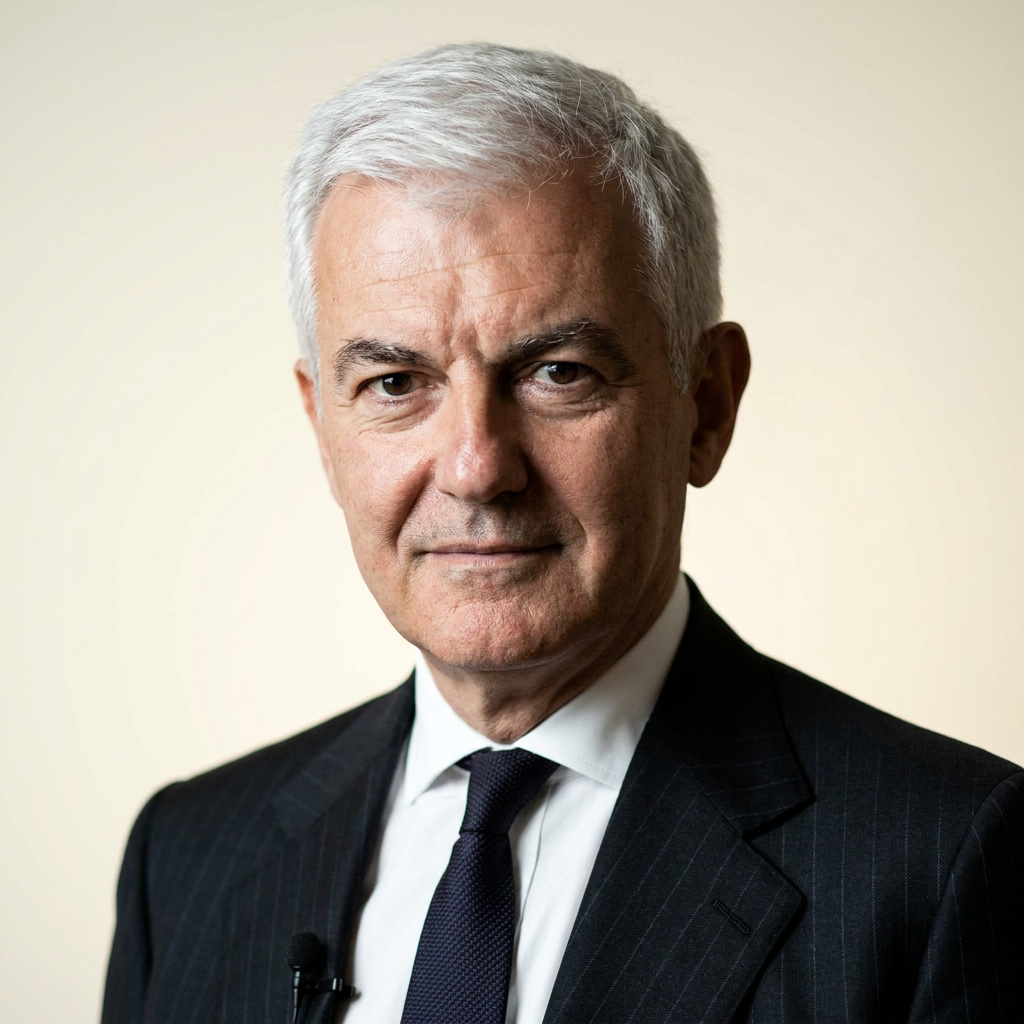
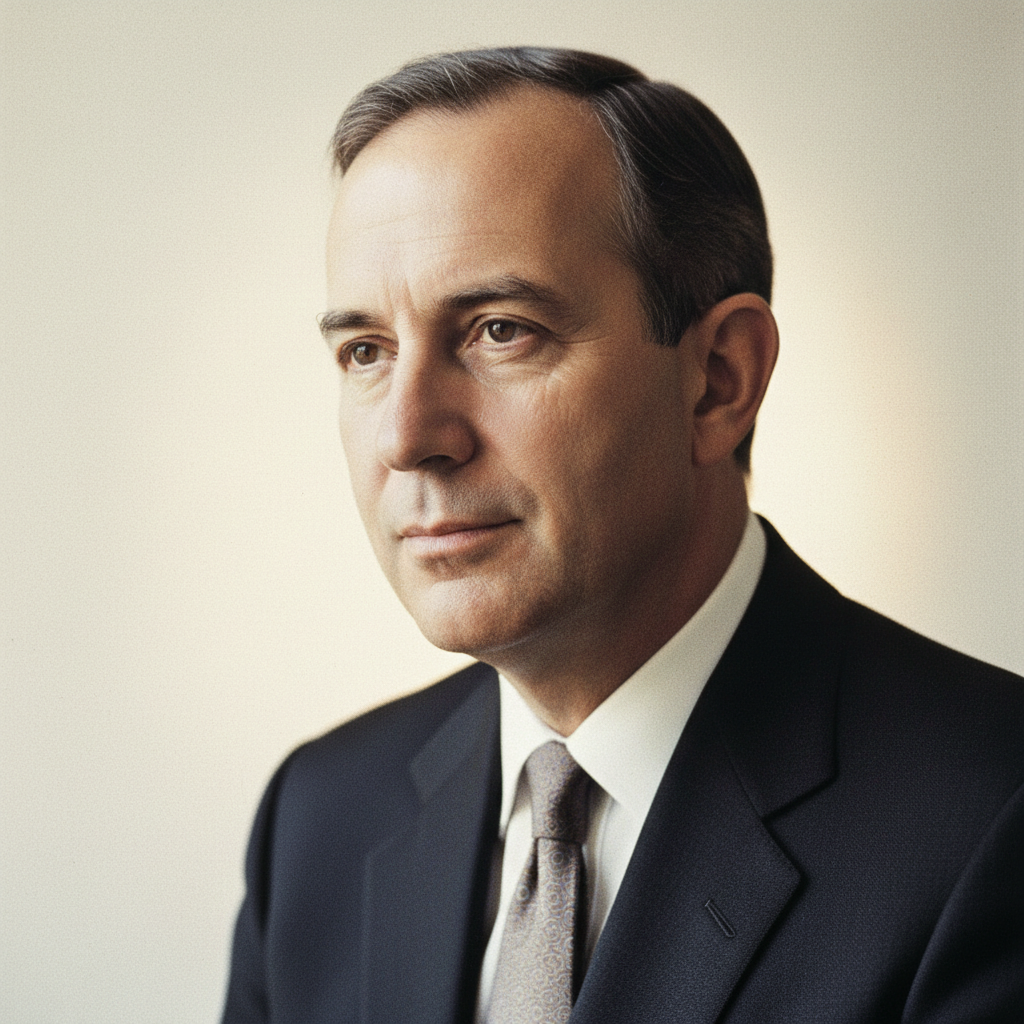
Alessandro Profumo
A leading figure in European banking and aerospace, known for navigating complex restructurings and international mergers.
Alessandro Profumo is an Italian business executive with a distinguished career in banking and aerospace. He is best known for his transformative leadership as CEO of UniCredit (1998-2010) and later as CEO of Leonardo S.p.A. (2017-2023), where he orchestrated significant strategic overhauls and international expansion. His career demonstrates a consistent ability to manage large-scale financial institutions and complex industrial groups through periods of change.
Biography
Accomplishments
- 01Transformed UniCredit from a domestic Italian bank into a leading European banking group through strategic mergers, including HVB (2005) and Capitalia (2007).
- 02Successfully integrated diverse banking cultures and operations across multiple European countries, establishing a significant presence in Central and Eastern Europe for UniCredit.
- 03Led UniCredit through the 2008 global financial crisis, maintaining its stability and avoiding direct government bailouts.
- 04Implemented a strategic industrial plan at Leonardo S.p.A. (2017-2023) focused on core business rationalization, debt reduction, and technological innovation in aerospace, defense, and security.
- 05Improved Leonardo's financial performance, achieving increased profitability and order intake through enhanced operational efficiency and strategic portfolio management.
- 06Navigated significant restructuring challenges as Chairman of Monte dei Paschi di Siena (2012-2015), attempting to stabilize the beleaguered institution.
- 07Diversified Leonardo's international footprint and strengthened its position in strategic defense and cybersecurity markets.
- 08Managed complex stakeholder relationships, including governments, regulators, and large institutional investors, throughout his career in both banking and industry.
Lessons for Operators
Key Takeaways
Practical lessons distilled for operators, investors, C-levels, and capital allocators.
Master of Mergers & Integrations
Profumo's defining trait is his ability to execute and integrate large, cross-border mergers, as seen with UniCredit's expansion. This requires deep financial acumen, operational planning, and cultural sensitivity.
Resilience in Crisis
His leadership through the 2008 financial crisis at UniCredit and his efforts at Monte dei Paschi underscore his capability to steer complex organizations through severe economic turbulence with strategic foresight.
Strategic Portfolio Management
At Leonardo, Profumo demonstrated that successful leadership involves continuously optimizing the business portfolio, shedding non-core assets, and focusing investments on high-growth, strategic areas to maximize long-term value.
Cross-Industry Leadership
Transitioning from finance to aerospace highlights a rare adaptability and a strong grasp of fundamental business principles that can be applied effectively across diverse, complex industries.
Government & Regulatory Savvy
Operating at the helm of systemically important financial institutions and a state-controlled defense contractor requires exceptional skill in managing complex political, governmental, and regulatory landscapes.
Operational Excellence Driver
Beyond strategy, Profumo consistently focused on improving operational efficiency, cost rationalization, and technological integration as core levers for enhancing profitability and competitiveness in both banking and industrial sectors.
Capital Markets Acumen
His background in finance provided a strong foundation for managing capital allocation, investor relations, and financing strategies crucial for the growth and stability of the large, publicly traded companies he led.
Visionary Expansionist
Profumo's tenure at UniCredit exemplified aggressive, yet calculated, expansion into new markets, particularly Central and Eastern Europe, demonstrating a clear vision for growth and market dominance.
Frameworks & Principles
Named frameworks and strategic principles they popularized or embodied.
Post-Merger Integration (PMI) Playbook
A structured approach to integrating two or more organizations after a merger or acquisition. It covers strategic alignment, cultural integration, operational harmonization, and financial consolidation to realize synergy targets.
When to useCrucial for any M&A activity, particularly when combining large, complex entities with distinct operational models and cultures, as exemplified by UniCredit's multi-national bank integrations.
Portfolio Optimization & Rationalization Matrix
A framework to evaluate business units or product lines based on their strategic fit, market attractiveness, competitive position, and financial contribution. It informs decisions on investment, growth, hold, or divestiture.
When to useApplicable for diversified conglomerates or companies seeking to refine their strategic focus, like Leonardo's efforts to divest non-core assets and concentrate on defense and aerospace specialties.
Stakeholder Engagement & Alignment Model
A systematic process for identifying, analyzing, prioritizing, and engaging key internal and external stakeholders. It aims to build consensus, manage expectations, and mitigate risks by ensuring broad support for strategic initiatives.
When to useEssential for any leader in highly regulated industries or organizations with significant government oversight, such as banking or defense, where political and regulatory buy-in is paramount for major strategic shifts.
Recent Appearances
Latest interviews, keynotes, and press from the past half year.
 youtube.com
 youtube.com
 youtube.com
 youtube.com
 youtube.com
 youtube.com
 youtube.com
 youtube.com
 youtube.com
 youtube.com
 youtube.com
 youtube.com
 youtube.com
 youtube.com
 youtube.com
 youtube.com
 youtube.com
 youtube.com
 youtube.com
 youtube.com
 youtube.com
 youtube.com
 youtube.com
 youtube.com
 youtube.com
 youtube.com
 youtube.com
 youtube.com
 youtube.com
 youtube.com
 youtube.com
 youtube.com
 youtube.com
 youtube.com
 youtube.com
 youtube.com
 youtube.com
 youtube.com
 youtube.com
 youtube.com
 youtube.com
 youtube.com
 youtube.com
 youtube.com
 youtube.com
 youtube.com
 youtube.com
![IL PROFUMO DEI PAPAVERI | Episodio 2 [Le Luci di Tombstone]](https://i.ytimg.com/vi/8IG8EvCz-oo/hqdefault.jpg) youtube.com
youtube.com youtube.com
 youtube.com
 youtube.com
 youtube.com
 youtube.com
 youtube.com
 youtube.com
 youtube.com
 youtube.com
 youtube.comm.youtube.com
 youtube.com
 youtube.com
 youtube.com
 youtube.com
 youtube.com
 youtube.com
 youtube.com
 youtube.com
 youtube.com
 youtube.com
 m.youtube.com
 m.youtube.com
 youtube.com
Sources & Further Reading
Profiles, interviews, podcasts, and articles used to compile and verify this entry. Each link opens at the original publisher.
Explore Related Titans
Other figures in the archive who share Alessandro Profumo's domain, geography, or era.
More in Finance & Investing






From Italy




Contemporaries — born 1950s