Alan Greenspan
The 'Maestro' of the Federal Reserve, who navigated the US economy through two decades of significant growth, crises, and technological transformation, shaping global monetary policy.
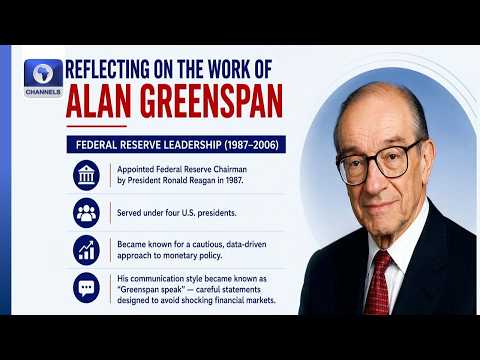
Alan Greenspan served an unprecedented 18-and-a-half years as Chairman of the Federal Reserve, from 1987 to 2006, under four U.S. Presidents. A former consultant and proponent of Ayn Rand's objectivism, Greenspan transitioned from private sector economics to the pinnacle of global monetary policy, influencing economic stability and growth through periods of significant market volatility, technological innovation, and asset bubbles. His tenure is characterized by a flexible, pragmatic approach to interest rate management, often termed 'Greenspan put,' aimed at propping up markets during downturns.
Biography
Accomplishments
- 01Steered the U.S. economy through the Black Monday stock market crash of October 1987, providing immediate liquidity to prevent systemic collapse.
- 02Presided over the 'Great Moderation' — a period of reduced macroeconomic volatility, stable growth, and low inflation from the mid-1980s to the mid-2000s.
- 03Successfully managed the transition of monetary policy into the information age, navigating the dot-com boom and subsequent bust without triggering a deep recession.
- 04Implemented a proactive monetary policy strategy, often described as 'risk management,' to address potential economic threats, including the 9/11 attacks aftermath and various international financial crises.
- 05Oversaw significant deregulation of financial markets, believing in market-based solutions and limited government intervention, particularly regarding complex financial instruments.
- 06Championed transparency at the Federal Reserve, increasing public communication and clarity regarding policy decisions, though his personal communication style remained famously opaque.
Lessons for Operators
Key Takeaways
Practical lessons distilled for operators, investors, C-levels, and capital allocators.
The 'Greenspan Put'
This concept refers to the market perception that the Federal Reserve, under Greenspan, would intervene with interest rate cuts to support asset prices during downturns. While beneficial for short-term stability, it created a moral hazard, potentially encouraging excessive risk-taking by investors and financial institutions, as they anticipated a central bank safety net.
Risk Management Approach to Monetary Policy
Greenspan's philosophy was to identify the greatest risks to the economy and adjust policy to mitigate them, even if it meant being preemptive or reacting swiftly. This often involved lowering interest rates aggressively during perceived threats to growth, a strategy credited with extending economic expansions but also criticized for potentially fueling asset bubbles.
The Paradox of Transparency
While Greenspan increased the Fed's public communication, his personal speaking style was famously circumlocutory, allowing him to convey policy signals without explicitly stating them, preserving optionality. This 'Greenspan-speak' was an art of deliberate ambiguity that allowed markets to interpret, rather than react to, definitive statements, offering a form of strategic flexibility.
Influence of Financial Deregulation
A staunch believer in free markets, Greenspan oversaw and supported significant financial deregulation, especially regarding derivatives and complex financial instruments. He argued that markets were self-correcting. This approach, while fostering innovation, is retrospectively viewed by some as a contributing factor to the buildup of systemic risk that culminated in the 2008 financial crisis.
The Role of Productivity and Technology
Greenspan was a keen observer of the impact of technological advancements, particularly information technology, on productivity and inflation. He correctly identified that new technologies were boosting productivity, allowing the economy to grow faster without triggering inflationary pressures, a key insight during the dot-com era.
Frameworks & Principles
Named frameworks and strategic principles they popularized or embodied.
Risk Management Approach to Monetary Policy
This framework involves actively assessing potential economic threats (e.g., recession, inflation, financial instability) and adjusting interest rates and liquidity to preemptively mitigate the most significant perceived risks. It emphasizes flexibility and a willingness to act decisively based on imperfect, forward-looking information.
When to useApplicable for C-levels and investors navigating uncertain economic landscapes where proactive decision-making is critical. Use when assessing potential downside risks to your business or portfolio and determining whether to take defensive measures or seize opportunistic growth through strategic resource allocation.
The 'Maestro's' Communication Strategy (Strategic Ambiguity)
Greenspan's communication involved using nuanced language and careful phrasing to convey messages without explicitly committing to specific future actions. This allowed for flexibility, managed market expectations subtly, and preserved the central bank's optionality in a rapidly changing environment.
When to useUseful for enterprise leaders and fund managers needing to communicate strategic directions or market outlooks without prematurely locking into specific commitments. Employ this when you need to guide stakeholder expectations, provide general direction, but retain the agility to adapt to evolving conditions without losing credibility.
Liquidity Provision in Crisis Management
This framework centers on the rapid and substantial injection of liquidity into financial markets during times of acute stress to prevent systemic collapse. The goal is to ensure that financial institutions can meet their obligations and that credit markets do not seize up, restoring confidence.
When to useOperators and capital allocators should apply this in designing emergency financial protocols and contingency plans. Understand the sources of emergency capital, lines of credit, and cash reserves your organization can access, and ensure robust relationships with financial partners, to maintain operational continuity during unexpected crises.
Recent Appearances
Latest interviews, keynotes, and press from the past half year.
 youtube.com
 youtube.com
 youtube.com
 youtube.com
 youtube.com
 youtube.com
 youtube.com
 youtube.com
 youtube.com
 youtube.com
 youtube.com
 youtube.com
 youtube.com
 youtube.com
 youtube.com
 youtube.com
 youtube.com
 youtube.com
 youtube.com
 youtube.com
 youtube.com
 youtube.com
 youtube.com
 youtube.com
 youtube.com
 youtube.com
 youtube.com
 youtube.com
 youtube.com
 youtube.com
 youtube.com
 youtube.com
 youtube.com
 youtube.com
 youtube.com
 youtube.com
 youtube.com
 youtube.comyoutube.com
 youtube.com
 youtube.com
 youtube.com
 youtube.com
 youtube.com
 youtube.com
 youtube.com
 youtube.com
 youtube.com
 youtube.com
 youtube.com
 youtube.com
 youtube.com
 youtube.com
 youtube.com
 youtube.com
 youtube.com
 youtube.com
 youtube.com
 youtube.com
 youtube.com
 youtube.com
 youtube.com
 youtube.com
 youtube.com
 youtube.com
 youtube.com
 youtube.com
 youtube.com
 youtube.com
 youtube.com
 youtube.com
 youtube.com
 youtube.com
 youtube.com
 youtube.com
 youtube.com
 youtube.com
 youtube.com
 m.youtube.com
 youtube.com
 youtube.com
 youtube.com
 youtube.com
 youtube.com
 youtube.com
 youtube.com
 youtube.comm.youtube.com
 youtube.com
Sources & Further Reading
Profiles, interviews, podcasts, and articles used to compile and verify this entry. Each link opens at the original publisher.
Explore Related Titans
Other figures in the archive who share Alan Greenspan's domain, geography, or era.
More in Finance & Investing






From United States







Contemporaries — born 1920s