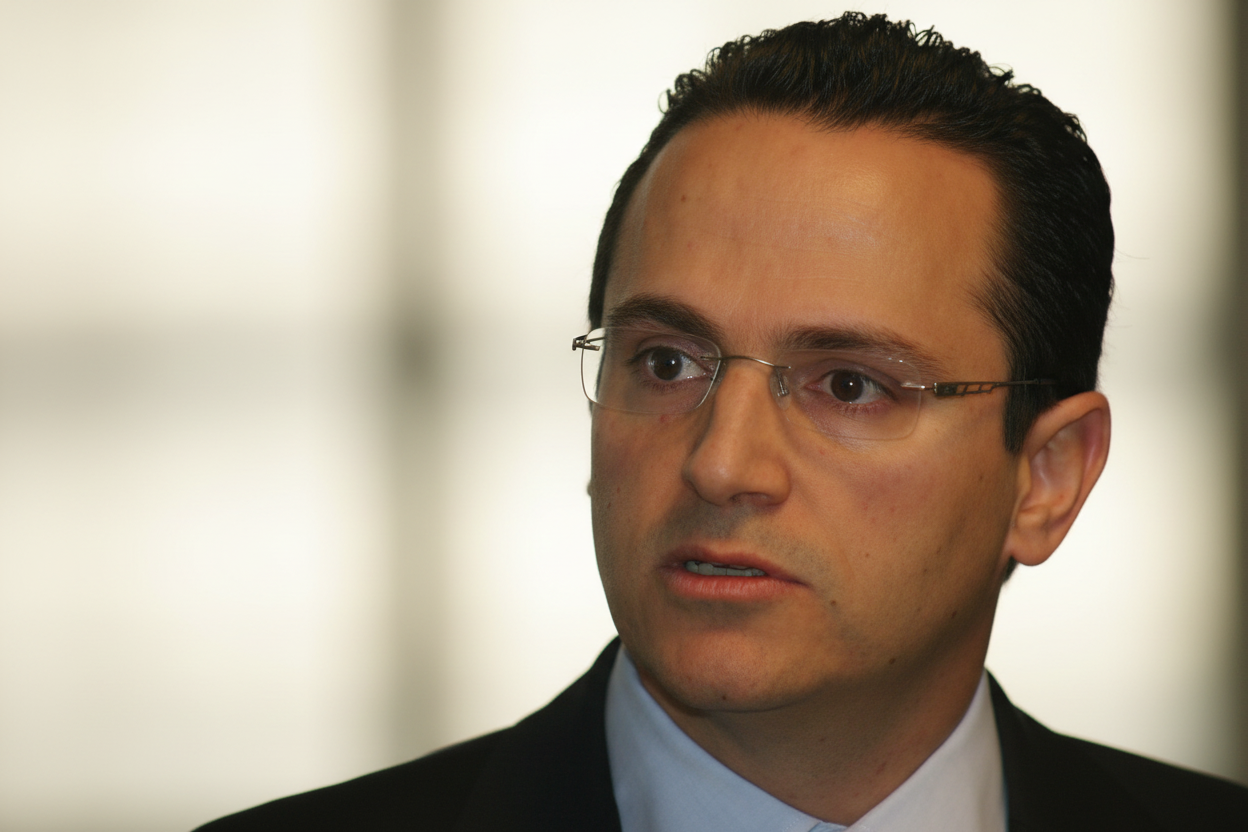
Vasant Narasimhan
Physician-scientist leading a pharmaceutical giant's strategic pivot towards advanced therapy platforms.
Vasant 'Vas' Narasimhan is an American physician and the chief executive officer of Novartis. He briefly worked at McKinsey before joining Novartis in 2005, where he has held a range of leadership roles, including Global Head of Development for Novartis Vaccines and Global Head of Drug Development & Chief Medical Officer. He succeeded Joseph Jimenez as CEO in 2018, pivoting the company towards innovation in gene therapy, radioligand therapy, and advanced cell therapies while divesting non-core assets like the Alcon ophthalmology unit.
Biography
Accomplishments
- 01Orchestrated the strategic divestiture of Alcon (ophthalmic products business) in 2019, creating a fully independent, publicly traded company valued at approximately $23 billion, to focus Novartis's portfolio on innovative medicines.
- 02Led Novartis's pivot towards advanced therapy platforms, including gene therapy, radioligand therapy, and advanced cell therapies, evidenced by significant investments and approvals in these areas (e.g., Zolgensma, Pluvicto).
- 03Successfully navigated the regulatory approval and commercialization of key innovative drugs, including Mayzent for Multiple Sclerosis and Entresto for heart failure (expanded indications), during his leadership roles.
- 04Championed digital transformation and the application of data science across R&D and commercial operations within Novartis, aiming to enhance efficiency and accelerate drug development.
- 05Refocused Novartis's M&A strategy on bolt-on acquisitions that align with advanced therapy platforms, rather than large-scale mergers.
- 06Oversaw the successful integration and commercialization of AveXis, enhancing Novartis's gene therapy pipeline with Zolgensma.
- 07Implemented a new organizational structure and culture focusing on 'unbossing' and fostering innovation and operational excellence.
- 08Improved financial performance, including sustained revenue growth and profitability, through portfolio optimization and R&D productivity.
Lessons for Operators
Key Takeaways
Practical lessons distilled for operators, investors, C-levels, and capital allocators.
Focused Portfolio Strategy
Divest non-core businesses to concentrate resources on high-growth, high-innovation areas. This frees up capital and management attention for strategic priorities.
Platform Investing
Invest early and aggressively in future-defining technological platforms (e.g., gene therapy, AI) rather than solely optimizing existing product lines. This ensures long-term relevance and competitive advantage.
Digital Transformation as Core R&D
Integrate data science and digital tools deeply into research and development processes to accelerate discovery, optimize trials, and improve commercial outcomes. It's not just support, it's fundamental.
Leadership from a Scientific Foundation
A deep understanding of the core science and patient needs (as a physician) can provide a powerful guiding vision for a science-driven organization, enabling more astute strategic decisions.
Strategic Cultural Shift
Proactively shape company culture (e.g., 'unbossing') to foster innovation, agility, and accountability, recognizing that culture is a key enabler or inhibitor of strategic execution.
Valuation of Intangibles
Recognize that the value of a pharmaceutical company increasingly lies in its pipeline and intellectual property, necessitating a long-term view on R&D investment and M&A.
Frameworks & Principles
Named frameworks and strategic principles they popularized or embodied.
Portfolio Optimization Model
A strategic framework for evaluating business units or product lines based on market attractiveness, competitive position, and strategic fit. Assets not aligning with future strategic direction are divested or deprioritized.
When to useWhen needing to reallocate capital and focus resources, especially in diversified conglomerates. Useful for assessing potential spin-offs or acquisitions.
Platforms vs. Products Strategy
This framework distinguishes between investing in specific products for immediate revenue and investing in underlying technological platforms that can generate multiple future products. It emphasizes building foundational capabilities.
When to useWhen making long-term R&D investment decisions, particularly in rapidly evolving tech-driven industries (e.g., biotech, software), to ensure sustainable innovation.
Digital Transformation Roadmap
A phased approach to integrating digital technologies and data science across an organization's value chain – from R&D to manufacturing and commercialization – to improve efficiency, decision-making, and customer engagement.
When to useWhen an organization seeks to leverage technology to enhance core business processes, improve productivity, and create new revenue streams. Especially critical in data-rich industries.
Sources & Further Reading
Profiles, interviews, podcasts, and articles used to compile and verify this entry. Each link opens at the original publisher.
Explore Related Titans
Other figures in the archive who share Vasant Narasimhan's domain, geography, or era.
More in Healthcare & Biotech







From United States









Contemporaries — born 1970s