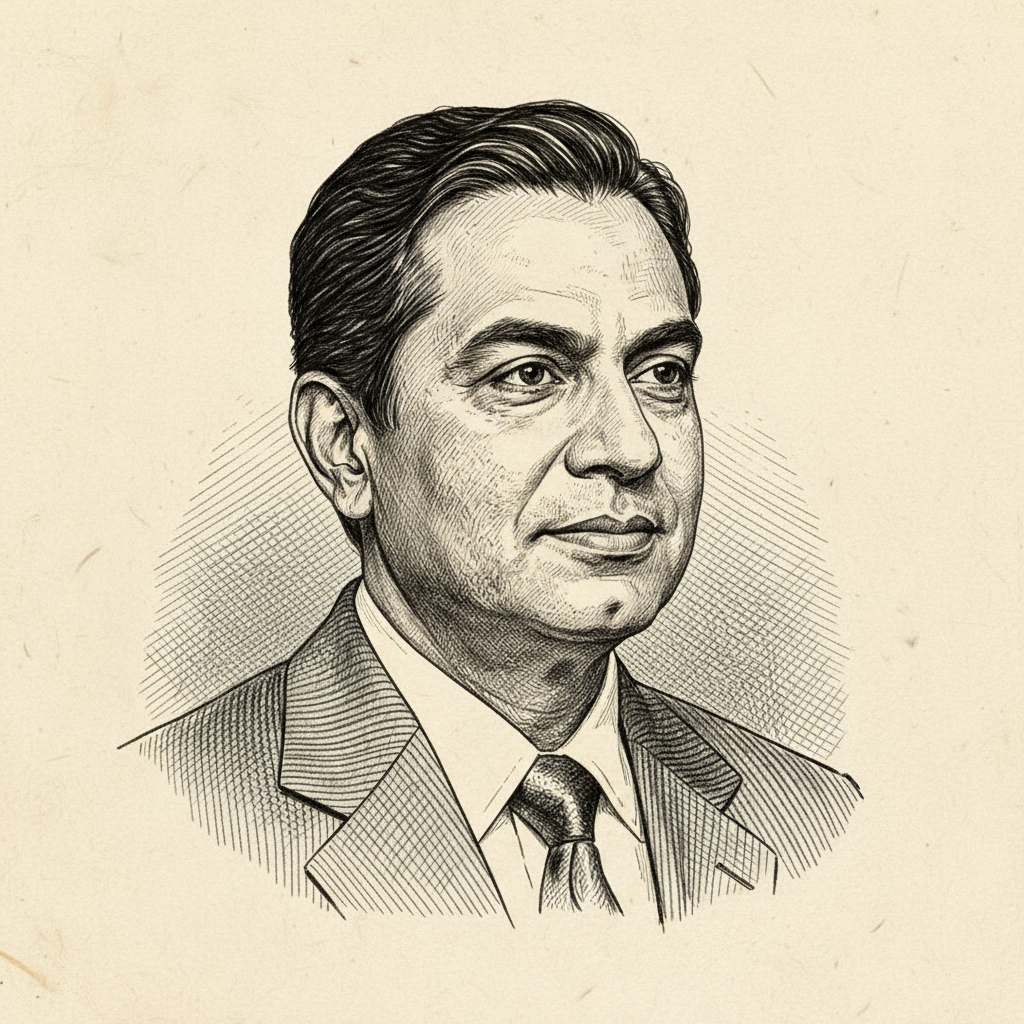
K. V. Kamath
K. V. Kamath: Architect of modern Indian banking and infrastructure finance, known for transforming ICICI Bank into a universal bank and leading critical national development initiatives.
Kundapur Vaman Kamath is an Indian banker who notably served as the Managing Director and CEO of ICICI Bank from 1996 to 2009, transforming it from a development finance institution into a diversified, technology-driven universal bank. He later chaired the bank's board. Kamath was also the first President of the New Development Bank (NDB) established by the BRICS countries and has held significant leadership roles in Indian industry and government advisory bodies.
Biography
Accomplishments
- 01Transformed ICICI from a development finance institution into a leading technology-driven universal bank (ICICI Bank) between 1996 and 2002.
- 02Pioneered retail banking in India, leveraging technology for scale and reach, significantly expanding ICICI Bank's customer base and product offerings.
- 03Led the establishment and operationalization of the New Development Bank (NDB) as its inaugural President (2015-2020), securing its AAA credit rating and initiating ~$17 billion in infrastructure project financing.
- 04Chaired the board of Infosys (2011-2015) during a crucial period of leadership change and strategic recalibration for the Indian IT services giant.
- 05Awarded the Padma Bhushan, India's third-highest civilian honor, for his contributions to banking and finance in 2008.
- 06Successfully navigated ICICI Bank through the 2008 global financial crisis, maintaining financial stability and growth.
- 07Instrumental in introducing innovative financial products and services, contributing to the modernization of India's financial sector.
Lessons for Operators
Key Takeaways
Practical lessons distilled for operators, investors, C-levels, and capital allocators.
Visionary Leadership in Financial Sector
Kamath's career demonstrates a consistent ability to envision the future of financial services and steer large organizations through significant strategic shifts, from development banking to universal banking and multilateral finance.
Leveraging Technology for Scale
His tenure at ICICI Bank showcased how aggressive adoption of technology, particularly in retail banking, can drive exponential growth and market leadership in emerging economies.
Institutional Builder and Operator
Beyond managing existing entities, Kamath excels at establishing and operationalizing new, complex institutions like the New Development Bank, setting up governance, strategy, and execution frameworks from the ground up.
Adaptability and Resilience
His career trajectory, including navigating the global financial crisis and leading diverse organizations like a private bank, an IT giant, and a multilateral development bank, underscores his adaptability and resilience as a leader.
Focus on Infrastructure and Development
Kamath has consistently championed the financing of critical infrastructure, first at ICICI, then at ADB, and most notably at NDB, recognizing its foundational role in economic growth.
Frameworks & Principles
Named frameworks and strategic principles they popularized or embodied.
Strategic Transformation (ICICI Model)
A framework for fundamentally re-engineering a business's core purpose and operational model to adapt to new market realities. It involves identifying new growth vectors, divesting legacy assets, and integrating new technologies and business lines.
When to useWhen an organization's founding mission or core business model is becoming obsolete, or when significant market opportunities require a complete overhaul of operations and strategy (e.g., DFI to universal bank).
Technology-Driven Retail Expansion
A strategy focused on leveraging information technology and digital channels to achieve rapid scale and efficiency in consumer-facing financial services. It involves heavy investment in IT infrastructure, digital platforms, and data analytics to personalize offerings and streamline processes.
When to useWhen aiming for mass-market penetration in retail banking, insurance, or other consumer services, especially in large, diverse geographic markets with varying access to traditional branches.
Multilateral Institution Building
A structured approach to establishing and operationalizing a new international financial institution. This involves defining its mandate, securing initial capital, setting up governance structures, recruiting diverse talent, and building international credibility and partnerships.
When to useWhen launching new global or regional development banks, funds, or organizations that require consensus among multiple sovereign states and must operate under international law and governance principles.
Recent Appearances
Latest interviews, keynotes, and press from the past half year.
 youtube.com
 youtube.com
 youtube.com
 youtube.comyoutube.com
 youtube.com
 youtube.com
 youtube.com
 youtube.com
 m.youtube.com
 youtube.com
 youtube.com
 youtube.com
 youtube.com
 youtube.com
 youtube.com
 youtube.com
 youtube.com
 youtube.com
 youtube.com
 youtube.com
 youtube.com
 youtube.com
 youtube.com
 youtube.com
 youtube.com
 youtube.com
 youtube.com
 youtube.com
 youtube.com
 youtube.comyoutube.com
Sources & Further Reading
Profiles, interviews, podcasts, and articles used to compile and verify this entry. Each link opens at the original publisher.
Explore Related Titans
Other figures in the archive who share K. V. Kamath's domain, geography, or era.
More in Finance & Investing










From India



Contemporaries — born 1940s