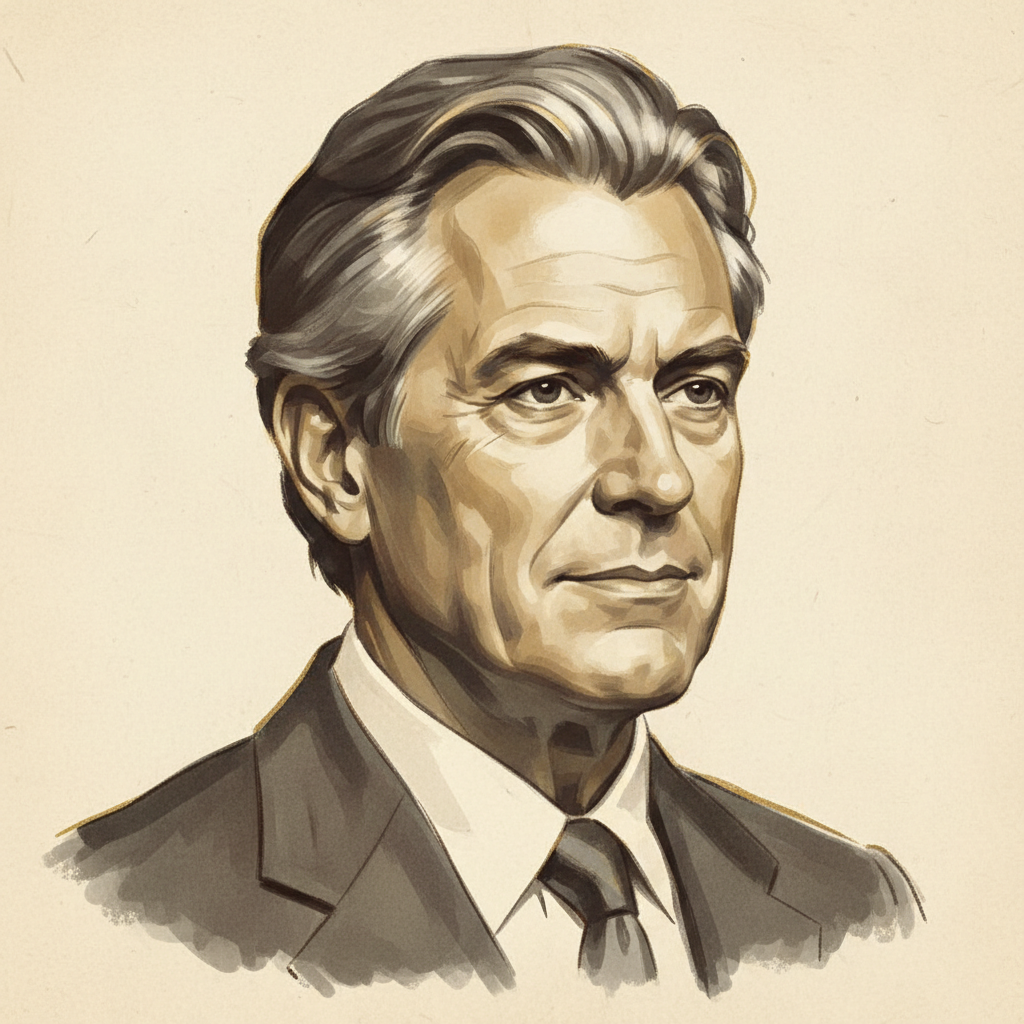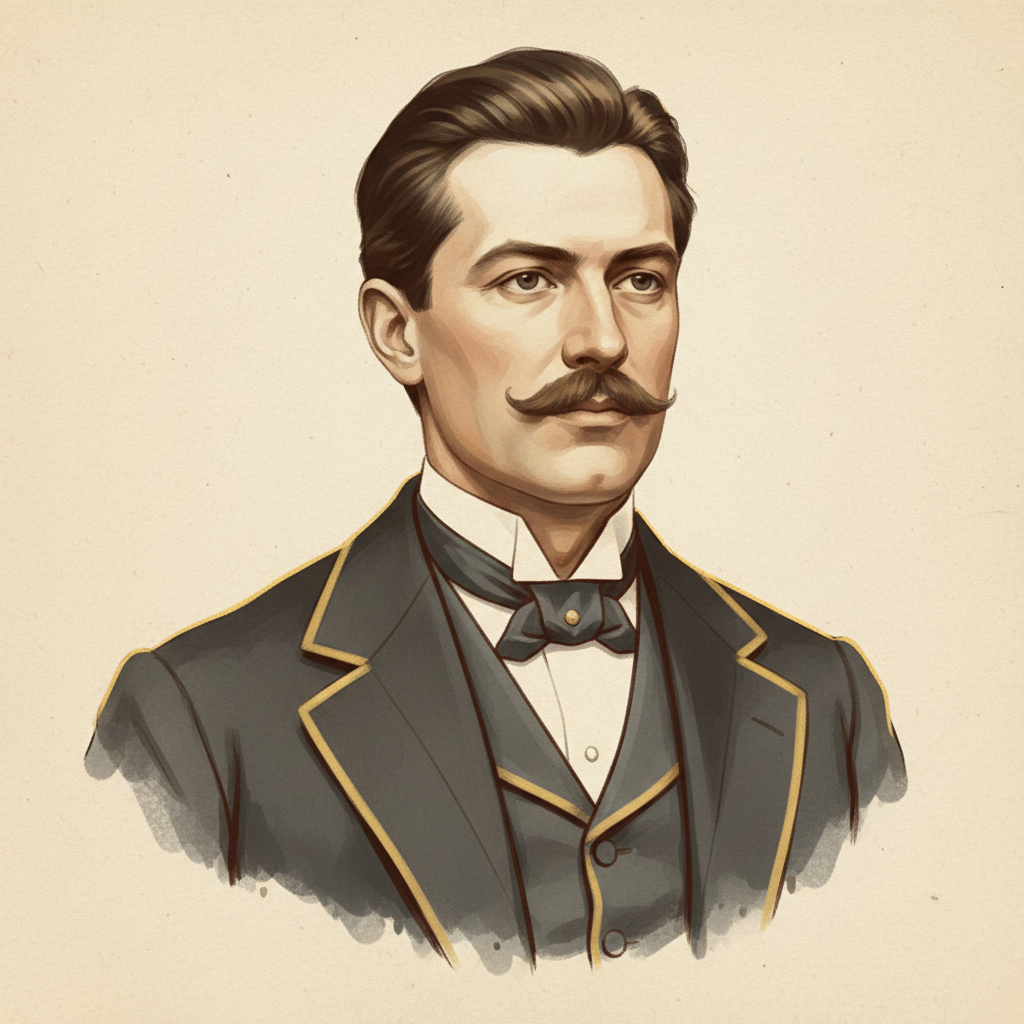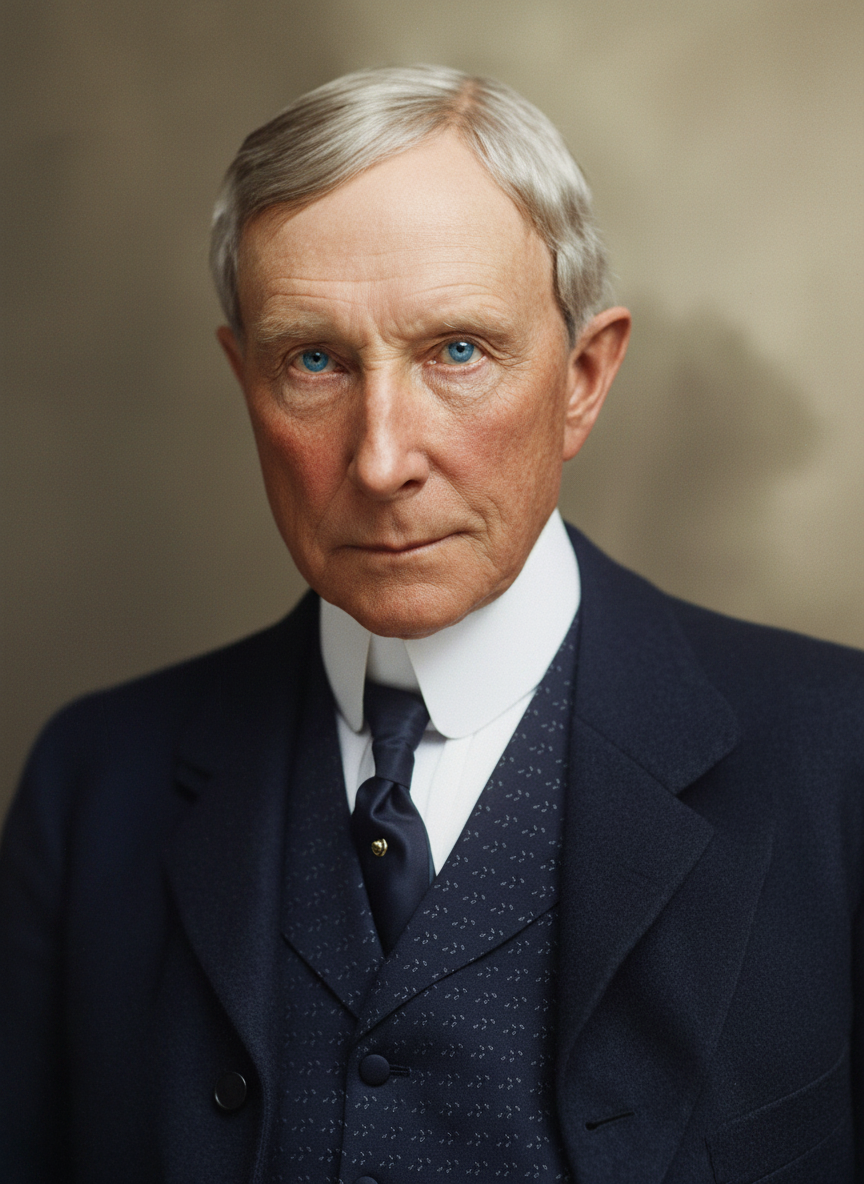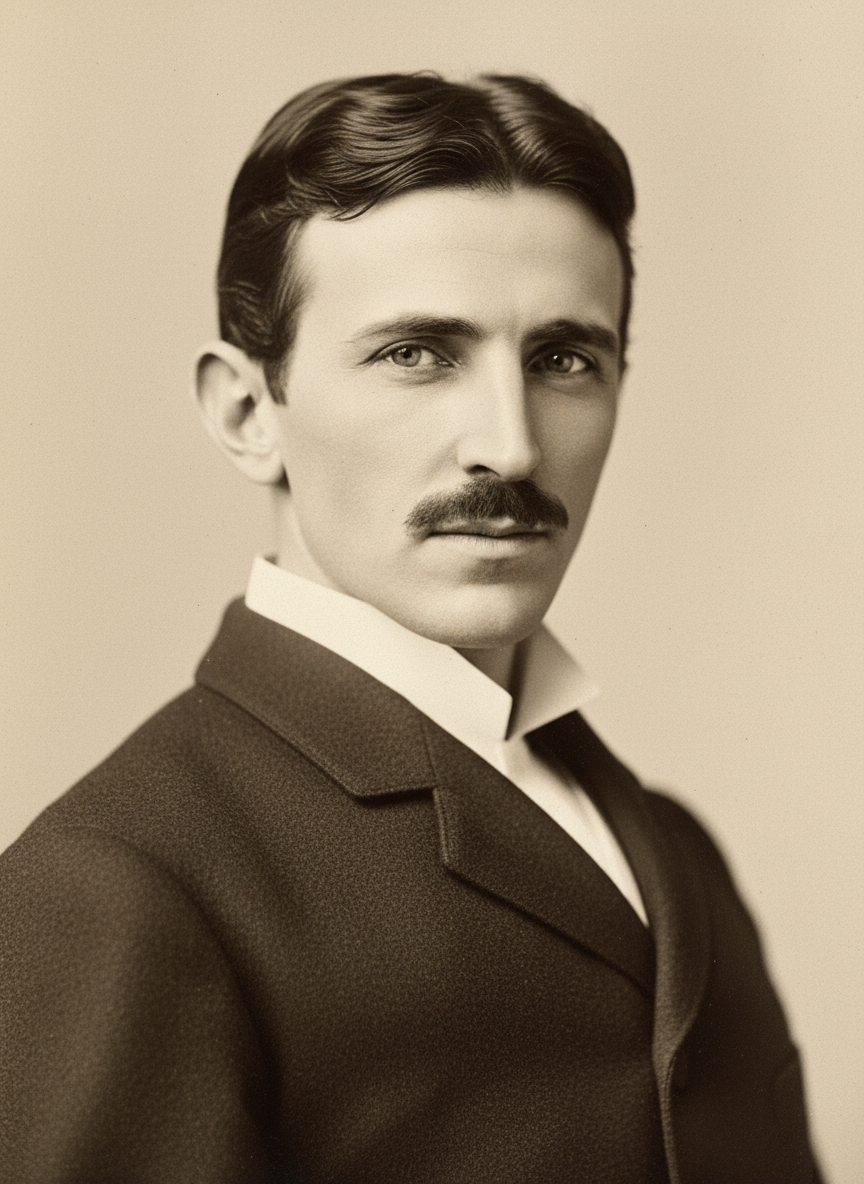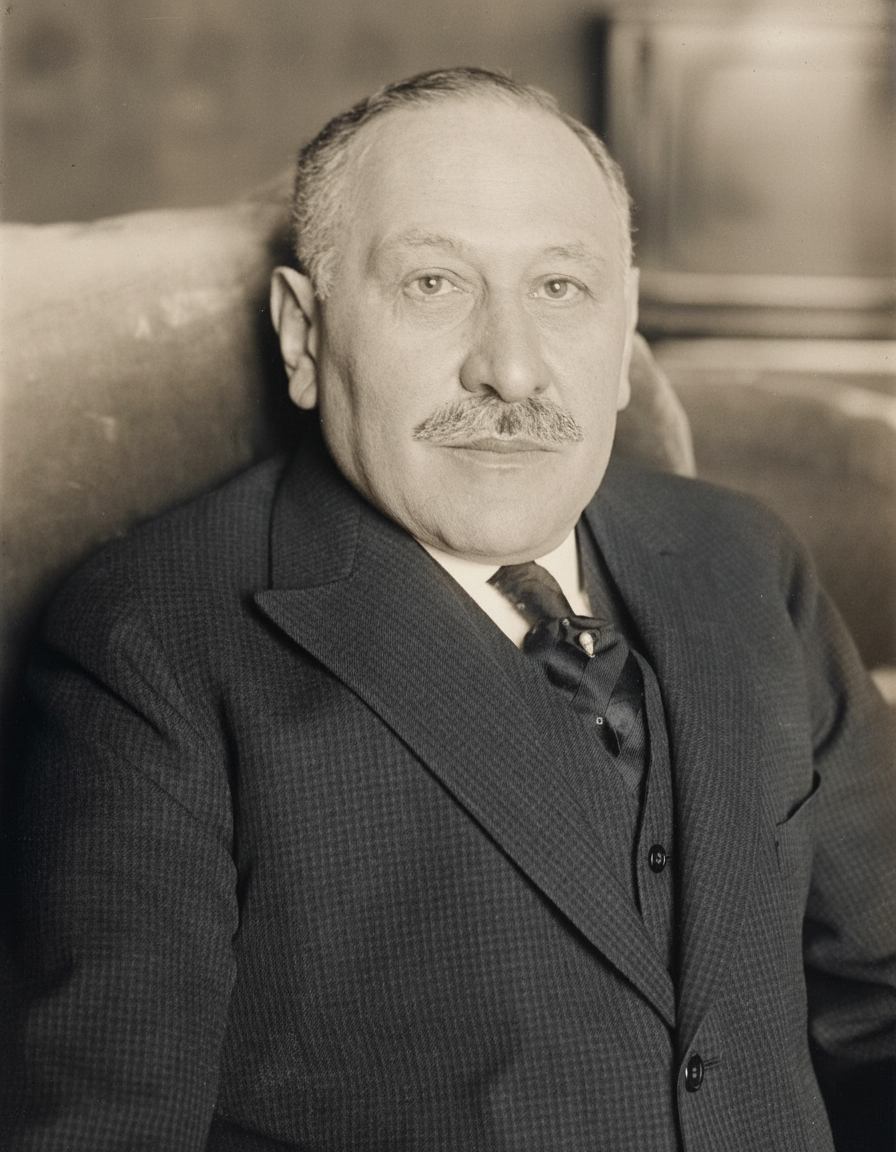
Portrait of Julius Rosenwald
Historical Mind · 1862 — 1932

Julius Rosenwald

Architect of Sears, Roebuck's operational scale and pioneer of spend-down philanthropic matching capital.

Country
United States
Continent
North America
Industry
Retail & Supply Chain / Philanthropy
Role
President & Chairman of Sears, Roebuck and Co., Philanthropist

Julius Rosenwald transformed Sears, Roebuck and Co. from a chaotic mail-order promoter into the operational marvel of early 20th-century retail. He systematized logistics, engineered strict merchandising ethics, steered Sears through systemic economic crises, and revolutionized social impact through matching grants that funded over 5,300 African American schools across the segregated South.

Biography

Born in Springfield, Illinois, to German-Jewish immigrants, Julius Rosenwald entered the wholesale clothing trade in New York and Chicago. In 1895, Rosenwald and his brother-in-law Aaron Nusbaum purchased a half-interest in Sears, Roebuck and Co. for $75,000, stepping in as operational counterparts to Richard Sears's promotional genius. While Sears generated customer demand through charismatic catalog copy, Rosenwald addressed fulfillment bottlenecks, customer trust deficits, and inventory management. Rosenwald instituted strict business practices: accurate product descriptions, unconditional money-back guarantees, and the 1906 opening of the 3-million-square-foot central fulfillment plant on Chicago's West Side, which set the standard for assembly-line supply chain logistics. Under Rosenwald's presidency (1908-1924), Sears grew net sales from roughly $50 million to over $200 million. In 1906, working with Henry Goldman of Goldman Sachs and Philip Lehman of Lehman Brothers, Rosenwald orchestrated Sears's public stock offering, one of the earliest institutional underwritings of a retail enterprise based on earning power rather than fixed physical property. During the deflationary crash of 1921, Rosenwald personally pledged $21 million of his personal wealth (including $5 million of his own real estate and $16 million in Sears stock) to preserve the company's solvency without diluting minority shareholders. Outside commerce, Rosenwald rejected perpetual endowments, mandating that the Julius Rosenwald Fund spend down all capital within 25 years of his death. Influenced by Booker T. Washington, his foundation financed the construction of 5,357 rural schools, shops, and teacher homes across fifteen southern states using a strict matching-grant formula that required buy-in from Black farming communities and local white school boards. Rosenwald also founded the Museum of Science and Industry in Chicago, modeled after Munich's Deutsches Museum, solidifying his legacy as a master of systems, capital allocation, and social efficiency.

Accomplishments

  • 01Scaled Sears, Roebuck and Co. from $75,000 equity stake in 1895 into a retail enterprise generating over $250 million in annual gross revenue.
  • 02Oversaw the construction and deployment of the 1906 Chicago fulfillment center, establishing the benchmark for time-scheduled mail-order fulfillment and logistics.
  • 03Co-engineered Sears's 1906 initial public offering alongside Goldman Sachs, setting a Wall Street precedent for valuing retailers on cash flow rather than tangible assets.
  • 04Rescued Sears from corporate insolvency during the post-WWI commodity collapse of 1921 by injecting $21 million of his personal fortune.
  • 05Pioneered early corporate profit-sharing in 1916 by creating the Sears Employees' Savings and Profit Sharing Pension Fund, aligning labor with enterprise equity.
  • 06Established the Julius Rosenwald Fund with an explicit spend-down mandate, disbursing over $63 million to eliminate bureaucratic capital entrenchment.
  • 07Catalyzed the construction of 4,978 schools, 217 teachers' homes, and 163 shop buildings across the American South, educating more than one-third of rural Black children before integration.

Lessons for Operators

Demand generation without execution is fatal: Richard Sears drove record sales, but without Rosenwald's process standardization, order backlogs and inventory spoilage would have bankrupted the firm.
Operational integrity creates pricing power: Rosenwald's insistence on truthful catalog copy and ironclad money-back guarantees converted skeptical rural consumers into lifetime subscribers.
Capital allocation requires counter-cyclical courage: When commodity deflation crushed Sears's inventory in 1921, Rosenwald subordinated his personal balance sheet to stabilize the enterprise, restoring supplier and bank confidence.
Incentive alignment defuses labor friction: Structuring an equity-linked profit-sharing plan in 1916 aligned floor-level warehouse productivity directly with corporate net income.
Philanthropy must avoid the perpetual agency problem: Rosenwald believed perpetual foundations prioritize institutional self-preservation over actual problem-solving, requiring capital to be exhausted while problems are addressable.
Matching grants drive operational buy-in: Philanthropic capital is vastly more durable when local recipients and government stakeholders are forced to co-fund and maintain the underlying assets.
The Operator's Playbook

Key Takeaways

Practical lessons distilled for operators, investors, C-levels, and capital allocators.

Lesson 01

The Operational Engine Behind the Visionary

Visionaries generate customer acquisition, but systems architects generate cash flow. Rosenwald's analytical discipline balanced Richard Sears's marketing exuberance, proving that fulfillment infrastructure is an essential growth moat.

Lesson 02

Systematized Throughput as a Competitive Advantage

The 1906 Chicago plant used gravity chutes, pneumatic tubes, and scheduled order routing to process thousands of distinct SKU orders in hours. Logistics velocity minimizes working capital requirements.

Lesson 03

Skin-in-the-Game Solvency Defense

In the 1921 economic contraction, Rosenwald averted bankruptcy by buying company real estate at book value and donating personal stock. High-conviction leadership demands decisive balance sheet intervention during liquidity shocks.

Lesson 04

The Spend-Down (Sunset) Doctrine

Rosenwald mandated his foundation exhaust its endowment within 25 years of his death. Limiting fund lifespan forces rapid capital deployment, curtails administrative bloat, and aligns resources with generational needs.

Lesson 05

Conditional Co-Investment

The Rosenwald School initiative never funded 100% of any school; it required Black communities to raise funds and white-run school districts to commit public tax revenues. Matching mechanisms ensure skin-in-the-game and structural durability.

Mental Models

Frameworks & Principles

Named frameworks and strategic principles they popularized or embodied.

01

Scheduled Order Routing (The 'Forty-Minute Rule')

A logistical processing framework wherein incoming orders were stamped with an exact dispatch time. Goods from distinct multi-story warehouse departments were required to arrive at the packing floor within a synchronized 40-minute window, preventing floor inventory bottlenecks and accelerating inventory turnover.

When to useUse in high-SKU fulfillment, supply chain optimization, and multi-department service operations where uncoordinated sub-assemblies stall delivery times.

02

Conditional Matching-Capital Model

A capital deployment framework where primary capital is disbursed strictly on the condition of proportional co-investment from both the direct beneficiaries and public/institutional stakeholders. This guarantees local validation, shared financial liability, and long-term asset maintenance.

When to useUse in blended-finance investments, corporate grants, public-private partnerships, and impact investing where capital sustainability and operational stewardship are critical.

03

Sunset Endowment Protocol

An organizational architecture rule requiring an entity or fund to liquidate its full principal within a pre-determined timeframe (typically 10 to 25 years), prioritizing immediate, intensive problem mitigation over perpetual capital preservation.

When to useUse in private equity special-purpose vehicles, turnaround funds, and philanthropic foundations aiming to tackle acute, time-sensitive structural crises rather than managing generational endowments.

Citations

Sources & Further Reading

Profiles, interviews, podcasts, and articles used to compile and verify this entry. Each link opens at the original publisher.

Adjacent Minds

Explore Related Titans

Other figures in the archive who share Julius Rosenwald's domain, geography, or era.

Technology

More in Technology

Browse all →
Portrait of Steve Jobs
USA / TECHNOLOGY
Steve Jobs
Co-founder of Apple Inc. and visionary credited with transforming multiple industries.
Portrait of Jeff Bezos
UNITED STATES / TECHNOLOGY, RETAIL, LOGISTICS, CLOUD COMPUTING, SPACE EXPLORATION
Jeff Bezos
Architect of Amazon, pioneer of e-commerce, and visionary across cloud computing, logistics, and space exploration.
Portrait of Elon Musk
SOUTH AFRICA / AEROSPACE, AUTOMOTIVE, ARTIFICIAL INTELLIGENCE, ENERGY, TELECOMMUNICATIONS
Elon Musk
Elon Reeve Musk: Visionary entrepreneur leading advancements in aerospace, automotive, and artificial intelligence.
Portrait of Jensen Huang
TAIWAN (NATURALIZED AMERICAN CITIZEN) / SEMICONDUCTORS, ARTIFICIAL INTELLIGENCE, COMPUTING
Jensen Huang
Co-founder, President, and CEO of NVIDIA, a pioneering force in graphics processing units (GPUs) and artificial intelligence.
Portrait of Satya Nadella
UNITED STATES / TECHNOLOGY
Satya Nadella
Architect of Microsoft's cloud-first, AI-driven renaissance, shifting culture and strategy to drive sustained growth and market leadership.
Portrait of Bill Gates
UNITED STATES / SOFTWARE, TECHNOLOGY, PHILANTHROPY
Bill Gates
Co-founder of Microsoft, architect of the personal computing revolution, and global philanthropist.
Portrait of Mark Cuban
UNITED STATES / TECHNOLOGY, MEDIA, SPORTS, HEALTHCARE
Mark Cuban
Mark Cuban: The Prolific Disrupter – From Software Startups to Sports Franchises and Pharmaceutical Innovation, Leveraging Technology and Direct-to-Consumer Models.
Portrait of Sam Walton
UNITED STATES / RETAIL
Sam Walton
The architect of modern retail, pioneering discount merchandising and logistical efficiency to establish the world's largest retail corporation.
Portrait of Jack Ma
CHINA / E-COMMERCE, TECHNOLOGY, FINANCE
Jack Ma
Co-founder of Alibaba Group, pioneering e-commerce and digital finance in China.
Portrait of Walt Disney
UNITED STATES / ENTERTAINMENT
Walt Disney
Co-founder of The Walt Disney Company, pioneering animation, theme parks, and diversified entertainment.
United States

From United States

Browse all →
Portrait of Andrew Carnegie
UNITED STATES / STEEL & MANUFACTURING
Andrew Carnegie
The architect of American steel supremacy and a pioneering industrialist whose innovations in cost control and vertical integration reshaped global manufacturing.
Portrait of Warren Buffett
UNITED STATES / INVESTING
Warren Buffett
The Oracle of Omaha: Architect of long-term value investing and compounding returns through disciplined acquisition and intrinsic value focus.
Portrait of Jeff Bezos
UNITED STATES / TECHNOLOGY, RETAIL, LOGISTICS, CLOUD COMPUTING, SPACE EXPLORATION
Jeff Bezos
Architect of Amazon, pioneer of e-commerce, and visionary across cloud computing, logistics, and space exploration.
Portrait of Satya Nadella
UNITED STATES / TECHNOLOGY
Satya Nadella
Architect of Microsoft's cloud-first, AI-driven renaissance, shifting culture and strategy to drive sustained growth and market leadership.
Portrait of Bill Gates
UNITED STATES / SOFTWARE, TECHNOLOGY, PHILANTHROPY
Bill Gates
Co-founder of Microsoft, architect of the personal computing revolution, and global philanthropist.
Portrait of Mark Cuban
UNITED STATES / TECHNOLOGY, MEDIA, SPORTS, HEALTHCARE
Mark Cuban
Mark Cuban: The Prolific Disrupter – From Software Startups to Sports Franchises and Pharmaceutical Innovation, Leveraging Technology and Direct-to-Consumer Models.
Portrait of Sam Walton
UNITED STATES / RETAIL
Sam Walton
The architect of modern retail, pioneering discount merchandising and logistical efficiency to establish the world's largest retail corporation.
Portrait of Mohnish Pabrai
UNITED STATES / FINANCIAL SERVICES
Mohnish Pabrai
Pioneer of asymmetric 'heads I win, tails I don't lose much' value investing and zero-management-fee partnership structures.
Portrait of Walt Disney
UNITED STATES / ENTERTAINMENT
Walt Disney
Co-founder of The Walt Disney Company, pioneering animation, theme parks, and diversified entertainment.
Portrait of Henry Ford
UNITED STATES / AUTOMOTIVE
Henry Ford
The architect of mass production, democratizing the automobile through efficiency and scale.
Same Era

Contemporaries — 19th century
Browse all →
Portrait of Andrew Carnegie
UNITED STATES / STEEL & MANUFACTURING
Andrew Carnegie
The architect of American steel supremacy and a pioneering industrialist whose innovations in cost control and vertical integration reshaped global manufacturing.
Portrait of Henry Ford
UNITED STATES / AUTOMOTIVE
Henry Ford
The architect of mass production, democratizing the automobile through efficiency and scale.
Portrait of Thomas Edison
UNITED STATES / INDUSTRIAL & ENERGY
Thomas Edison
The Prolific Inventor and Industrialist Who Electrified the World and Standardized Innovation.
Portrait of J. Pierpont Morgan
UNITED STATES / BANKING & FINANCE
J. Pierpont Morgan
The architect of American industrial capitalism and financial stability.
Portrait of John D. Rockefeller
UNITED STATES / OIL & ENERGY
John D. Rockefeller
Architect of Standard Oil: Pioneering Vertical and Horizontal Integration in the Petroleum Industry.
Portrait of Konosuke Matsushita
JAPAN / CONSUMER ELECTRONICS
Konosuke Matsushita
The Founder of Panasonic, pioneered mass-market electronics and the 'management philosophy' approach to business.
Portrait of Coco Chanel
FRANCE / FASHION & LUXURY
Coco Chanel
The architect of modern female fashion, transforming haute couture into an empire of timeless style and aspirational luxury.
Portrait of Madam C.J. Walker
UNITED STATES / BEAUTY & COSMETICS
Madam C.J. Walker
America's First Self-Made Woman Millionaire, Founder of a Global Haircare and Cosmetics Empire.
Portrait of Henry J. Heinz
UNITED STATES / FOOD & BEVERAGE
Henry J. Heinz
Henry J. Heinz: The pioneer of branded foods, meticulous quality, and innovative marketing, transforming the food industry from local bulk sales to a trusted global enterprise.
Portrait of Nikola Tesla
SERBIA / ELECTRICAL ENGINEERING, ENERGY, TELECOMMUNICATIONS
Nikola Tesla
Nikola Tesla: The visionary engineer whose innovations in alternating current laid the foundation for modern electrical power systems, driving the second industrial revolution.