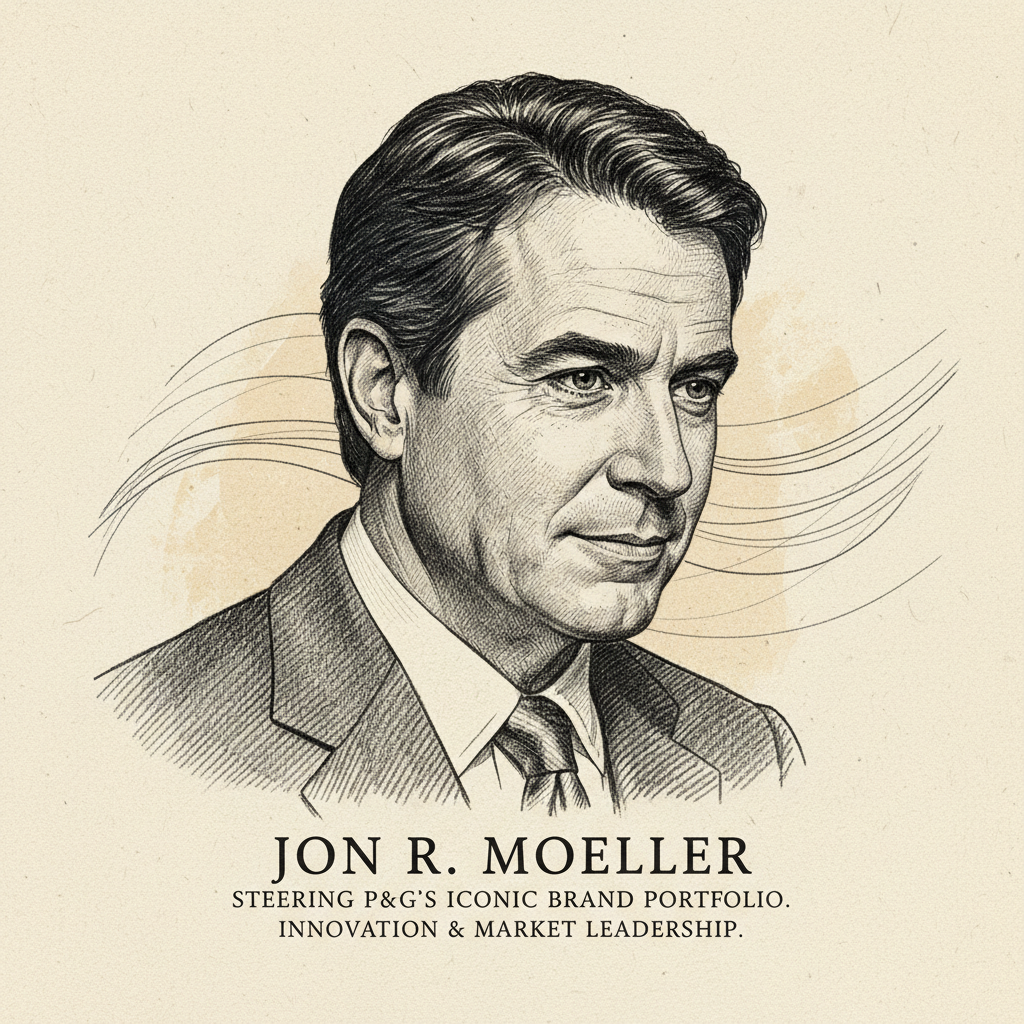
Jon R. Moeller
Jon R. Moeller: A finance-driven leader steering Procter & Gamble's global brand portfolio through strategic growth and operational efficiency.
Jon R. Moeller is an American businessman serving as the Executive Chairman of the Board of Procter & Gamble. He was previously Chief Executive Officer from November 2021 to January 2026, succeeding David Taylor. Moeller's career at P&G, spanning over three decades, has encompassed significant financial, operational, and strategic leadership roles, notably as Chief Financial Officer for 12 years prior to his CEO appointment.
Biography
Accomplishments
- 01Oversaw significant portfolio restructuring as CFO, including the divestiture of over 100 brands between 2014 and 2016, focusing P&G on 65 core brands and improving organic sales growth.
- 02Led P&G's financial strategy and performance as CFO for 12 years, contributing to consistent shareholder returns and efficient capital allocation.
- 03Steered P&G through complex global economic environments and supply chain disruptions during his tenure as CEO (2021-2026), maintaining market leadership in key categories.
- 04Implemented robust productivity programs, as CFO and CEO, consistently delivering cost savings that fueled investments in innovation and brand building.
- 05Championed digital transformation initiatives within finance and operations, leveraging data analytics for better decision-making and efficiency.
Lessons for Operators
Key Takeaways
Practical lessons distilled for operators, investors, C-levels, and capital allocators.
The Power of Focused Portfolio Strategy
Moeller's leadership in P&G's brand divestiture strategy exemplifies the benefits of concentrating resources on high-potential, market-leading categories. For operators, this means regularly assessing brand or product line vitality and making tough decisions to shed underperforming assets. For investors, it indicates a management team committed to optimizing capital allocation for maximum return.
CFO-to-CEO Pipeline Value
Moeller's trajectory from a long-serving CFO to CEO highlights the strategic advantage of promoting leaders with deep financial understanding. This background ensures a disciplined approach to investment, risk management, and value creation, which resonates with both internal stakeholders and external capital allocators. Organizations should identify and develop financial leaders with strong business acumen for future executive roles.
Resilience Through Operational Discipline
Under Moeller's financial and later executive leadership, P&G emphasized productivity and supply chain resilience. This operational discipline allowed the company to navigate global disruptions and maintain profitability. Businesses should invest in robust operational frameworks and continuous improvement programs, as these are critical safeguards against market volatility.
Continuous Investment in Core Strengths
Despite pressure for short-term gains, Moeller's leadership maintained significant investment in R&D, brand building, and advertising for P&G's core brands. This commitment to long-term category leadership underscores the importance of not sacrificing future growth for immediate cost savings. Capital allocators should seek companies that balance financial discipline with strategic investment in their core competencies.
Frameworks & Principles
Named frameworks and strategic principles they popularized or embodied.
Portfolio Optimization Model
A strategic framework for evaluating and restructuring a company's product or brand portfolio. It involves assessing each asset's market position, growth potential, profitability, and strategic fit with the company's long-term vision. Assets are then categorized for investment, divestment, or harvest.
When to useApplicable when a company's portfolio has become too broad, diluted, or includes underperforming assets that consume disproportionate resources, as demonstrated by P&G's divestitures under Moeller's CFO tenure.
Productivity & Cost Savings Initiative (PCSI)
A systematic approach to identifying, implementing, and monitoring cost reduction and efficiency improvement opportunities across all aspects of an organization. It focuses on driving operational excellence and freeing up capital for reinvestment.
When to useUtilize when seeking to improve profitability, fund new investments without increasing revenue, or navigate economic pressures. Moeller's consistent focus on productivity at P&G is a prime example of this framework in action.
Category Management Strategy
An approach to managing product groups (categories) as strategic business units. It involves understanding consumer needs within a category, optimizing product assortment, pricing, promotion, and shelf placement to maximize value for both the company and the consumer.
When to useEssential for consumer goods companies like P&G, especially after portfolio consolidation, to ensure each leading brand within a category maintains competitive superiority and market share.
Sources & Further Reading
Profiles, interviews, podcasts, and articles used to compile and verify this entry. Each link opens at the original publisher.
Explore Related Titans
Other figures in the archive who share Jon R. Moeller's domain, geography, or era.
More in Consumer & Retail







From USA