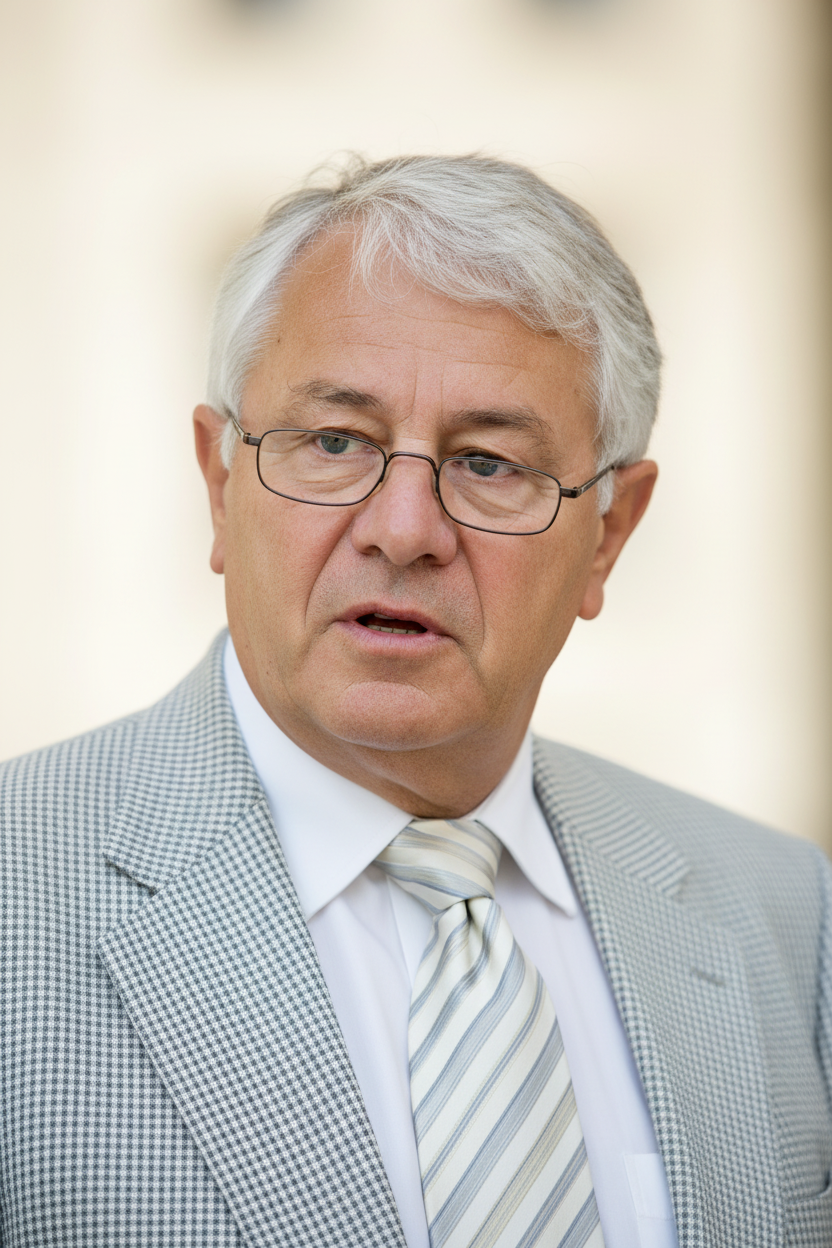
Hasso Plattner
Co-founder of SAP, visionary behind in-memory computing and enterprise software innovation.
Hasso Plattner is a German billionaire businessman who co-founded SAP SE, a global leader in enterprise software, in 1972. He served as its CEO from 1997 to 2003 and has been Chairman of the Supervisory Board since 2003. Plattner is renowned for his technological vision, particularly in database innovation and in-memory computing, driving SAP's evolution for decades.
Biography
Accomplishments
- 01Co-founded SAP AG (now SAP SE) in 1972, developing the world's leading enterprise resource planning (ERP) software company with over 100,000 employees globally.
- 02Spearheaded the development and market adoption of SAP R/3, transitioning enterprise software from mainframe to client-server architecture, enabling real-time business processes.
- 03Conceived and championed SAP HANA, an in-memory, column-oriented, relational database management system, fundamentally altering enterprise data processing and analytics in the 2010s.
- 04Served as CEO of SAP from 1997 to 2003, presiding over a period of significant growth and global expansion, solidifying SAP's market leadership.
- 05Established the Hasso Plattner Institute (HPI) in 1998, a leading center for IT Systems Engineering and Design Thinking research and education in Germany, influencing global innovation methodologies.
- 06Maintained active technological leadership as Chairman of the Supervisory Board (since 2003), providing strategic and technological guidance for SAP's long-term product roadmap.
Lessons for Operators
Key Takeaways
Practical lessons distilled for operators, investors, C-levels, and capital allocators.
Visionary Technical Leadership
Plattner's direct involvement in architectural decisions and his conviction about in-memory computing (SAP HANA) demonstrate that deep technical understanding at the executive level can drive multi-decade competitive advantage. For operators, this means fostering technical expertise in leadership and empowering engineering-led innovation.
Platform Strategy
SAP's success is built on providing a comprehensive platform for enterprise operations. Plattner consistently pushed for integrated solutions that simplified complex business processes. Investors should evaluate companies based on their platform potential and ability to create defensible ecosystems rather than single-point solutions.
Long-Term R&D Investment
The development of SAP HANA was a massive, multi-year bet on a new database paradigm. This illustrates the necessity of sustained, significant investment in R&D to achieve breakthrough innovation, especially in established industries. Capital allocators should look for companies willing and able to fund such ambitious projects.
Culture of Innovation and Learning
Plattner's founding of the Hasso Plattner Institute dedicated to Design Thinking and IT systems engineering underscores his belief in continuous learning and human-centered innovation. C-levels should emulate this by fostering internal cultures that embrace experimentation, critical thinking, and design-led product development.
Strategic Market Expansion
Under Plattner’s leadership, SAP aggressively expanded its global footprint, adapting its robust ERP solutions to diverse regulatory and operational environments. This highlights the importance of scalable technology and localized execution for achieving international market dominance.
Transitioning Technology Paradigms
From mainframe (R/2) to client-server (R/3) to in-memory cloud (HANA), Plattner consistently guided SAP through fundamental technological shifts. Enterprise leaders must possess the foresight and courage to shed legacy architectures and embrace new paradigms before they become obsolete.
Frameworks & Principles
Named frameworks and strategic principles they popularized or embodied.
The In-Memory Paradigm Shift
Refers to the transition from disk-based, row-oriented database systems to main memory-resident, column-oriented databases for transactional and analytical workloads. Plattner championed this shift with SAP HANA, enabling real-time processing and complex analytics on massive datasets without needing separate OLTP/OLAP systems.
When to useApplicable when evaluating technologies or developing systems where real-time data processing, immediate insights, and high performance on vast datasets are critical. It informs decisions around database architecture, data warehousing, and analytics infrastructure.
Design Thinking (Hasso Plattner Institute Model)
A human-centered approach to innovation that integrates technological feasibility, business viability, and human desirability. Originated from Stanford and formalized at Hasso Plattner Institute (HPI), it emphasizes empathy, problem definition, ideation, prototyping, and testing through iterative cycles.
When to useUtilize for complex problem-solving, product development, service design, or strategic planning where user needs are paramount and traditional linear approaches fall short. Particularly effective for fostering cross-functional collaboration and managing uncertainty.
Integrated Enterprise Platform Strategy
The strategic approach of building a comprehensive, interconnected suite of applications (like ERP) that cover all core business functions on a single underlying technology stack. This contrasts with best-of-breed approaches, aiming for seamless data flow, process integration, and reduced complexity.
When to useRelevant for companies developing or acquiring software solutions designed to manage end-to-end business operations. It guides decisions on product roadmaps, M&A strategy, and architectural choices to ensure cohesion and eliminate data silos across an enterprise.
Sources & Further Reading
Profiles, interviews, podcasts, and articles used to compile and verify this entry. Each link opens at the original publisher.
Explore Related Titans
Other figures in the archive who share Hasso Plattner's domain, geography, or era.
More in Technology










From Germany









Contemporaries — born 1940s