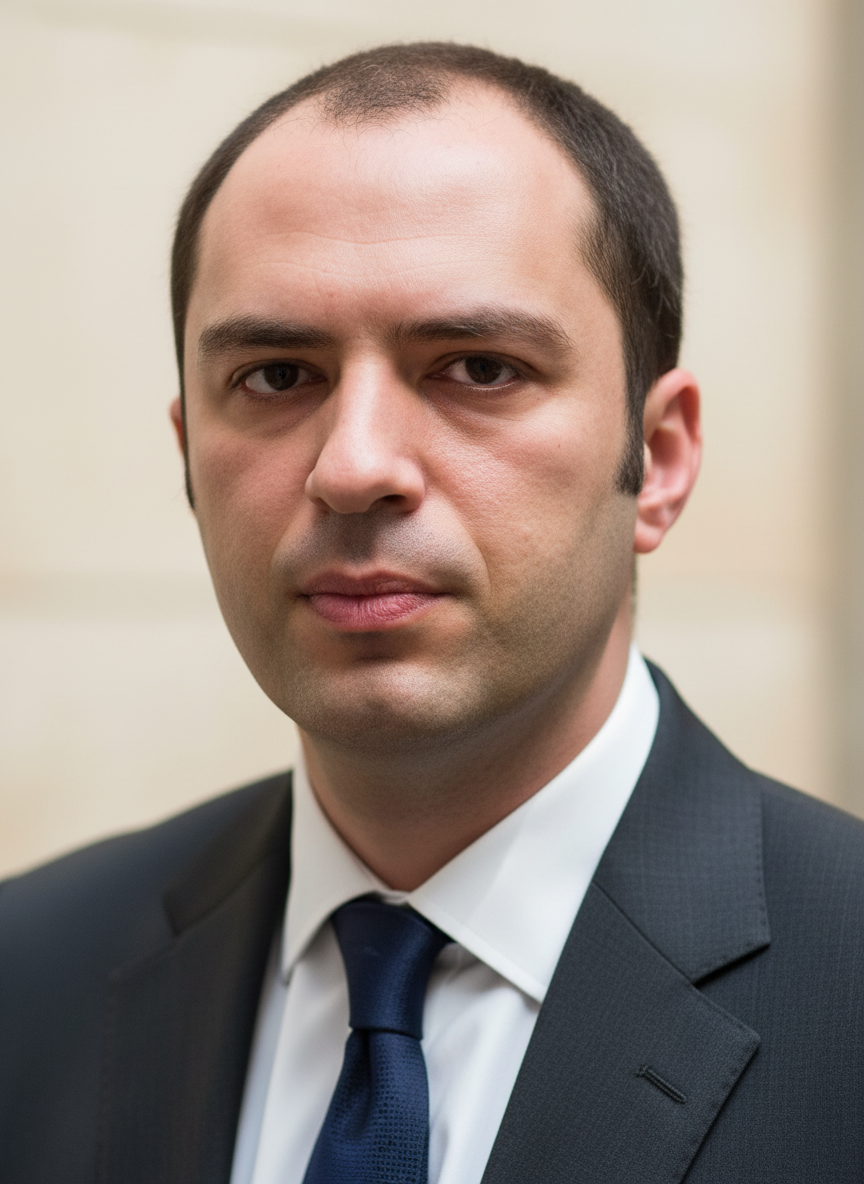
Demis Hassabis
Architect of Artificial General Intelligence and Nobel Laureate in Chemistry for AI's role in protein structure prediction.
Sir Demis Hassabis is a British AI researcher and entrepreneur, co-founder of Google DeepMind and Isomorphic Labs. He received the Nobel Prize in Chemistry in 2024 for AI research contributions to protein structure prediction.
Biography
Accomplishments
- 01Co-founder and CEO of Google DeepMind, a leading AI research laboratory acquired by Google in 2014.
- 02Led the development of AlphaGo, the first AI program to defeat a professional Go player (Lee Sedol) in a five-game match in 2016.
- 03Co-founder of Isomorphic Labs in 2021, an AI-driven pharmaceutical company focused on drug discovery.
- 04Awarded the Nobel Prize in Chemistry in 2024 (jointly with John M. Jumper) for AI research contributions to protein structure prediction (specifically AlphaFold).
- 05Developed AlphaFold, an AI system that predicts protein 3D structures from amino acid sequences with high accuracy.
- 06Holds a Ph.D. in cognitive neuroscience from University College London, with research on memory and imagination.
- 07Recipient of numerous accolades including a CBE for services to AI, and being named one of Time Magazine's 100 most influential people.
Lessons for Operators
Key Takeaways
Practical lessons distilled for operators, investors, C-levels, and capital allocators.
Interdisciplinary Synergy
Actionable: Build teams with diverse academic and professional backgrounds to enhance problem-solving and innovation. Actively seek talent from seemingly unrelated fields to foster novel perspectives.
Commitment to Fundamental Research
Actionable: Allocate a portion of R&D budget to 'blue-sky' or foundational research without immediate commercial pressure. This can lead to proprietary advantages that are difficult for competitors to replicate.
Leverage Strategic Partnerships (or Acquisitions)
Actionable: For ambitious projects requiring significant capital and infrastructure, consider strategic partnerships or M&A. This provides the necessary resources to scale innovation beyond an early-stage venture's capacity.
Societal Impact as a Business Driver
Actionable: Identify opportunities where your core technology can provide significant public good. Making key research or tools openly available can build reputation, attract top talent, and create new market ecosystems, as seen with AlphaFold.
Bold Vision as a Unifying Force
Actionable: Define an aspirational, long-term vision that transcends immediate product cycles. This vision will inspire employees, attract investors, and provide strategic direction for complex undertakings.
Frameworks & Principles
Named frameworks and strategic principles they popularized or embodied.
Grand Challenge Approach
Focusing organizational efforts and resources on solving a large, complex, and seemingly intractable problem. This often involves breakthrough scientific research and significant resource allocation, with the aim of generating entirely new capabilities or industries.
When to useWhen aiming for disruptive innovation rather than incremental improvements, particularly in technology or scientific domains. Suitable for organizations with significant R&D budgets or those seeking to define a new market category.
Interdisciplinary Team Formation
Assembling project teams composed of individuals with diverse expertise, academic backgrounds, and cognitive styles. This method encourages cross-pollination of ideas and holistic problem-solving.
When to useWhen tackling complex problems that require insights from multiple domains (e.g., AI and biology, or software and cognitive science). Effective for fostering creativity and generating novel solutions.
AI for Scientific Discovery
Applying advanced artificial intelligence techniques, such as deep learning and reinforcement learning, to accelerate and enhance scientific research, hypothesis generation, and data analysis in various scientific fields (e.g., biology, chemistry, physics).
When to useWhen scientific breakthroughs are bottlenecked by data analysis complexity, experimental design, or the sheer volume of search space. Particularly powerful in areas like drug discovery, material science, and personalized medicine.
Sources & Further Reading
Profiles, interviews, podcasts, and articles used to compile and verify this entry. Each link opens at the original publisher.
Explore Related Titans
Other figures in the archive who share Demis Hassabis's domain, geography, or era.
More in Other







From United Kingdom








Contemporaries — born 1970s