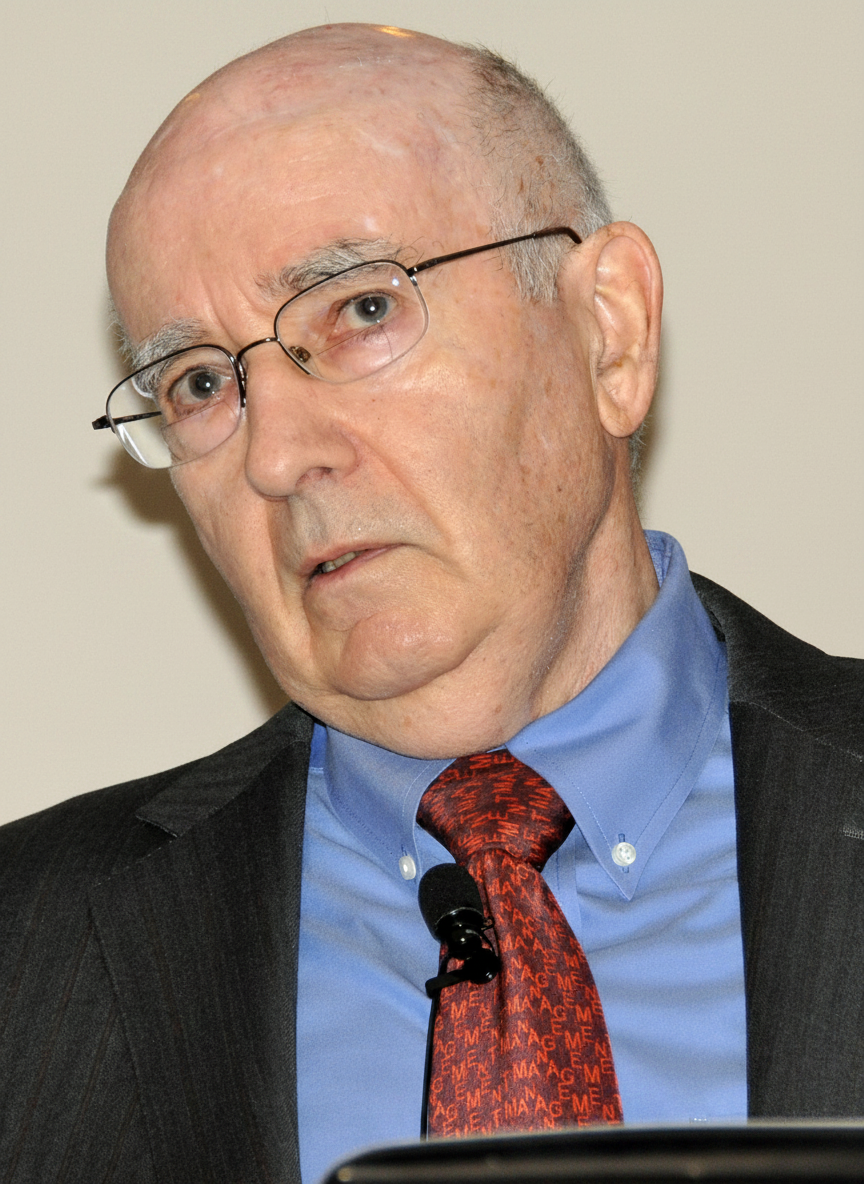
Daniel Kahneman
Pioneering the science of how humans make decisions, revealing systematic biases that impact economic and business choices.
Daniel Kahneman was a Nobel Memorial Prize-winning psychologist and economist, best known for his groundbreaking work with Amos Tversky on prospect theory and cognitive biases. His research fundamentally challenged the traditional economic assumption of human rationality, demonstrating that psychological factors systematically influence judgment and decision-making, with profound implications for finance, business strategy, and policy.
Biography
Accomplishments
- 01Co-developed Prospect Theory with Amos Tversky (1979), which describes how individuals make decisions under risk, highlighting the roles of loss aversion and framing, fundamentally challenging expected utility theory.
- 02Awarded the Nobel Memorial Prize in Economic Sciences (2002) for integrating psychological research into economic science, particularly for understanding human judgment and decision-making under uncertainty.
- 03Authored 'Thinking, Fast and Slow' (2011), a New York Times bestseller that synthesized decades of research on cognitive biases and heuristics, introducing the widely adopted System 1 and System 2 model of thought processes.
- 04Identified and cataloged numerous cognitive biases (e.g., availability heuristic, anchoring bias, framing effect, confirmation bias), providing a scientific basis for understanding irrational economic behavior.
- 05Influenced the development of behavioral economics and behavioral finance, leading to practical applications in financial advising, marketing, and corporate strategy.
- 06His work led to the creation of predictive models for consumer behavior and risk assessment in financial institutions and tech companies.
- 07Co-founded TGG Group (2009), an advisory firm applying behavioral science principles to business challenges, with partners like Cass Sunstein and Richard Thaler.
- 08Pioneered the concept of 'nudges' in public policy, influencing governments and organizations to design environments that guide individuals toward better decisions without restricting choice.
Lessons for Operators
Key Takeaways
Practical lessons distilled for operators, investors, C-levels, and capital allocators.
Dual-System Thinking
Humans operate with two distinct cognitive systems: System 1 (fast, intuitive, emotional) and System 2 (slow, deliberative, logical). Effective decision-making, especially in complex business environments, requires consciously engaging System 2 to override potential System 1 biases.
Cognitive Biases Are Systematic
Decision-making errors are not random but predictable and systematic. Understanding common biases (e.g., confirmation bias, availability heuristic, anchoring) allows leaders to design processes and checks to mitigate their negative impact on strategic choices, hiring, and investments.
Loss Aversion Drives Behavior
The pain of a loss is psychologically more potent than the pleasure of an equivalent gain. This principle, central to prospect theory, explains risk-taking behavior (e.g., holding onto losing investments too long) and influences negotiation outcomes, customer loyalty, and employee motivation.
Context and Framing Matter
How information is presented (framed) significantly alters choices, even if the underlying objective facts are the same. Leaders must be aware of framing effects in their communication, marketing, and presentation of data to avoid misleading themselves or others, and to persuade effectively.
Overconfidence is a Pervasive Bias
Individuals, especially experts, tend to be overconfident in their judgments and predictions, leading to underestimation of risks and overestimation of capabilities. Implementing structured debiasing techniques like pre-mortems or red-teaming is crucial for realistic planning and risk management.
The Importance of Data and Experimentation
Intuition, while useful, can be misleading. Kahneman's work underscores the necessity of relying on objective data, statistical models, and controlled experimentation (like A/B testing) to make sound business decisions, rather than succumbing to narratives or gut feelings alone.
Frameworks & Principles
Named frameworks and strategic principles they popularized or embodied.
Prospect Theory
A cognitive theory that describes how individuals make decisions under risk and uncertainty. It posits that people evaluate potential outcomes in terms of gains and losses from a reference point (rather than absolute wealth), are loss-averse (losses loom larger than equivalent gains), and exhibit different risk attitudes for gains (risk-averse) versus losses (risk-seeking).
When to useApply when analyzing investment decisions, pricing strategies, product design (e.g., freemium models, guarantees), or during negotiations where understanding how perceived gains and losses influence the counterparty's choices is critical. Useful for predicting consumer reactions to price changes or new offerings.
System 1 and System 2 Thinking
A model of cognitive processing where System 1 is fast, intuitive, automatic, and emotional, while System 2 is slow, deliberate, analytical, and effortful. System 1 generates impressions and feelings, which System 2 can endorse, rationalize, or override.
When to useUtilize this framework to understand decision-making in your organization, design processes that encourage System 2 thinking for critical strategic choices (e.g., investment committees, due diligence), and identify when System 1 is likely to lead to errors (e.g., snap hiring decisions, gut-feel market entries). Also valuable for marketing to understand how customers make purchasing decisions.
Cognitive Biases Catalog
A collection of systematic deviations from rationality in judgment and decision-making, such as anchoring (over-reliance on an initial piece of information), availability heuristic (overestimating the likelihood of events that are easily recalled), confirmation bias (seeking information that confirms existing beliefs), and framing effects.
When to useEmploy this framework as a checklist when reviewing critical decisions, project plans, or investment theses. Actively search for evidence of these biases in your own thinking and your team's discussions. Design specific interventions (e.g., devil's advocate roles, structured checklists, independent reviews) to counteract known biases in high-stakes situations.
Pre-Mortem Analysis
A prospective hindsight technique where, before a project or decision is implemented, the team imagines that it has already failed catastrophically. They then work backward to identify all the potential reasons for the failure. This helps uncover flaws that might have been overlooked due to over-optimism or groupthink.
When to useConduct a pre-mortem before launching significant projects, making large investments, or entering new markets. It's particularly effective for mitigating planning fallacy, overconfidence, and confirmation bias by encouraging a critical examination of risks and assumptions upfront.
Recent Appearances
Latest interviews, keynotes, and press from the past half year.
 youtube.com
 youtube.comyoutube.com
 youtube.com
 youtube.com
 youtube.com
 youtube.com
 m.youtube.com
 youtube.com
 youtube.com
 youtube.com
 youtube.com
 youtube.com
 youtube.com
 youtube.com
 youtube.com
 youtube.com
 youtube.com
 youtube.com
 youtube.com
 youtube.com
 youtube.com
 youtube.com
 youtube.com
 youtube.com
 youtube.com
Sources & Further Reading
Profiles, interviews, podcasts, and articles used to compile and verify this entry. Each link opens at the original publisher.
Explore Related Titans
Other figures in the archive who share Daniel Kahneman's domain, geography, or era.
More in Other






Contemporaries — born 1930s