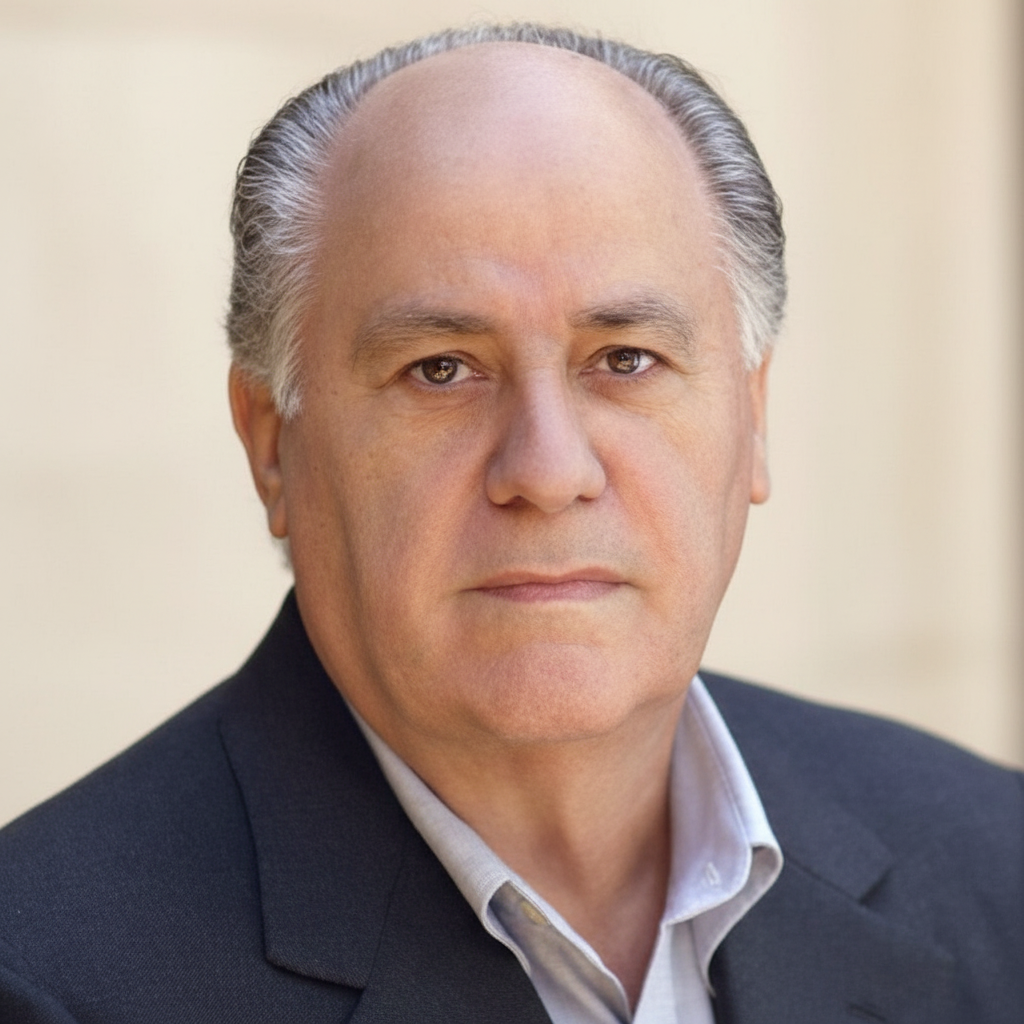
Amancio Ortega Gaona
The visionary co-founder of Inditex, who revolutionized global fashion retail through agile supply chains and rapid trend-to-market execution.
Amancio Ortega Gaona is a Spanish billionaire businessman, best known as the co-founder of the Inditex fashion group, which includes Zara, Pull&Bear, Massimo Dutti, and other brands. Starting from humble beginnings, Ortega built a global retail empire on principles of vertical integration, speed-to-market, and a data-driven approach to design and distribution, fundamentally altering traditional fashion industry timelines.
Biography
Accomplishments
- 01Co-founded Zara in 1975, pioneering the 'fast fashion' business model.
- 02Led Inditex to become the world's largest fashion retailer, with brands like Zara, Pull&Bear, Massimo Dutti, Bershka, Stradivarius, Oysho, and Zara Home.
- 03Engineered a vertically integrated supply chain, reducing design-to-shelf time to as little as two weeks, a significant competitive advantage.
- 04Successfully expanded Inditex's global footprint, establishing a presence in over 90 countries with thousands of stores.
- 05Diversified personal wealth into a substantial global real estate portfolio through Pontegadea Inversiones, becoming a dominant private real estate magnate.
- 06Implemented a decentralized decision-making structure within Inditex, empowering store managers to provide real-time sales data and feedback directly to designers.
Lessons for Operators
Key Takeaways
Practical lessons distilled for operators, investors, C-levels, and capital allocators.
Fast Fashion Paradigm
Ortega's Zara model created the 'fast fashion' industry, proving that rapid iteration and supply chain efficiency could fundamentally disrupt traditional seasonal fashion cycles. Operators should assess if their industry allows for similar speed-to-market advantages.
Decentralized Intelligence
By empowering store staff to act as direct conduits for customer feedback and sales data, Ortega built a system where market intelligence flowed rapidly to designers and manufacturers. This demonstrates the power of bottom-up data collection and agile response in enterprise operations.
Strategic Non-Operating Assets
Ortega's post-Inditex career highlights a shrewd strategy in real estate. Investors and C-levels should consider how core business assets (like prime retail locations for Zara) can also become valuable, income-generating non-operating assets through astute acquisition and management.
Resilience through Humility
Podcast narratives frequently highlight Ortega's humble beginnings and the motivational impact of early rejections. This underscores the entrepreneurial lesson that adversity can be a powerful catalyst for innovation and determination, leading to groundbreaking business models.
Controlled Public Profile
Ortega's preference for a private lifestyle despite his immense success shows that effective leadership and extraordinary business growth do not require constant public engagement. This serves as a reminder for leaders to define their public presence strategically.
Philanthropy as Impact
His foundation's significant contributions to public health infrastructure, like the 11.2 million donation to a hospital in Toledo, demonstrate a commitment to social impact, which for large enterprises and wealth holders, can be a crucial component of long-term legacy and stakeholder value.
Frameworks & Principles
Named frameworks and strategic principles they popularized or embodied.
Vertical Integration Model (VIM)
A business model where a company controls multiple stages of its supply chain, from production to retail. For Inditex, this included design, manufacturing, logistics, and distribution.
When to useApplicable when control over product quality, speed-to-market, and cost efficiency are critical competitive differentiators, especially in industries with volatile demand or rapidly changing trends.
Fast Fashion Cycle (FFC)
A retail strategy characterized by quickly moving designs from the catwalk to stores to meet new trends. It emphasizes rapid product turnover, small batches, and a constant influx of new inventory.
When to useIdeal for industries where consumer preferences are highly dynamic, products have short lifecycles, and the ability to respond swiftly to market shifts offers a significant advantage.
Data-Driven Design & Production (DDDP)
A system where real-time sales data and direct customer feedback from retail points inform product design, manufacturing quantities, and inventory allocation, minimizing waste and maximizing relevance.
When to useEffective for businesses looking to optimize inventory, reduce markdown risks, and ensure product offerings are tightly aligned with current consumer demand, requiring robust data collection and analytical capabilities at the operational front.
Recent Appearances
Latest interviews, keynotes, and press from the past half year.
 youtube.com
 youtube.com
 youtube.com
 youtube.com
 youtube.com
 youtube.com
 youtube.com
 youtube.com
 youtube.com
 youtube.com
 youtube.com
 youtube.com
 youtube.com
 youtube.com
 youtube.com
 youtube.com
 youtube.com
 youtube.com
 youtube.com
 youtube.com
 youtube.com
 youtube.com
 youtube.com
 youtube.com
 youtube.com
 youtube.com
 youtube.com
 youtube.com
 youtube.com
 youtube.com
 youtube.com
 youtube.com
 youtube.com
 youtube.com
 youtube.com
 youtube.com
 youtube.com
 youtube.com
 youtube.com
 youtube.com
 youtube.comm.youtube.com
 youtube.com
 youtube.com
 youtube.com
 youtube.com
 youtube.com
Sources & Further Reading
Profiles, interviews, podcasts, and articles used to compile and verify this entry. Each link opens at the original publisher.
- podcastHow a poor kid created ZARA after being humiliated and ... - YouTubeyoutube.com→
- podcastHere are some of the best-known new-age billionaires representing ...facebook.com→
- podcastBreaking Industry Norms for Success - TikToktiktok.com→
- podcastAmancio Ortega: El magnate inmobiliario más rico del mundo - TikToktiktok.com→
- podcastDonación de 11,2 millones mejora Hospital en Toledo | TikToktiktok.com→
- podcastEl hombre detrás de Zara: La historia de cómo un rechazo cambió el ...tiktok.com→
- podcastLiándola como Amancio: La vida te sorprende - TikToktiktok.com→
- podcastAmancio Ortega se ha convertido en el magnate inmobiliario más ...tiktok.com→
- podcastAmancio Ortega: ¿Más solidario que tú? - TikToktiktok.com→
- podcastLos del Fondo: Amancio Ortenga tiene carita de Ludo - TikToktiktok.com→
Explore Related Titans
Other figures in the archive who share Amancio Ortega Gaona's domain, geography, or era.
More in Technology





From Spain

Contemporaries — born 1930s