Ana Botín
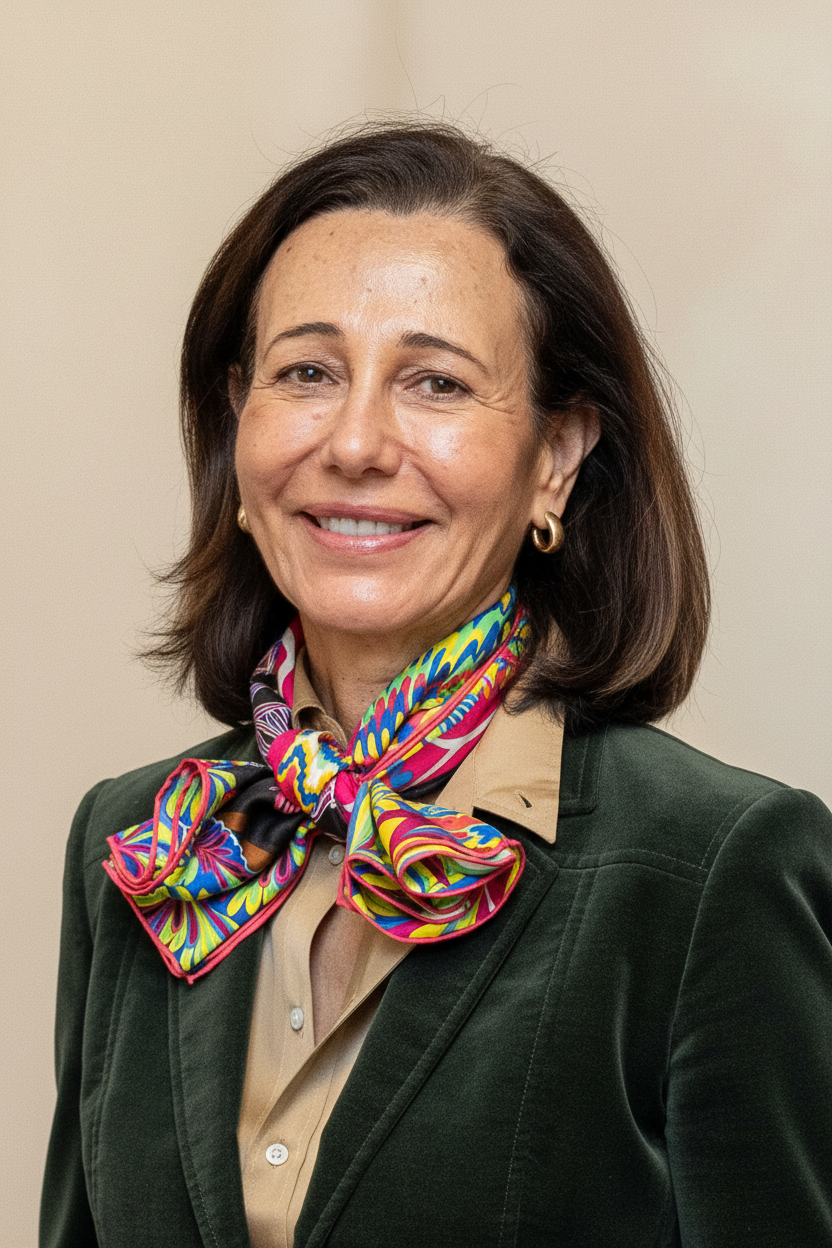
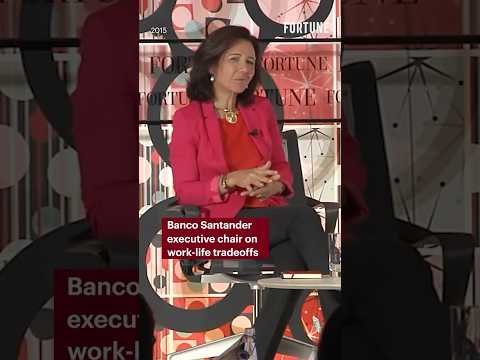
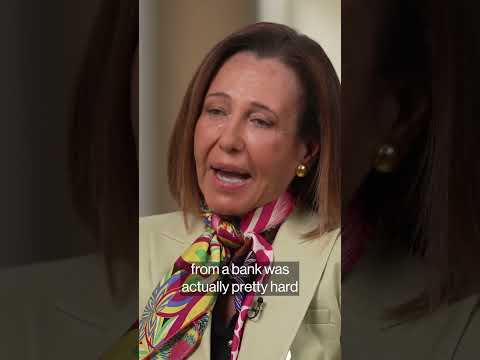
Ana Botín is the Executive Chairman of Banco Santander, a third-generation leader transforming a traditional banking giant into a digitally-focused, responsible financial services group.
Ana Patricia Botín-Sanz de Sautuola O'Shea (born October 4, 1960) is a Spanish banker who has served as the Executive Chairman of Banco Santander since 2014. A member of the Botín family, which founded Santander, she previously held roles at J.P. Morgan in New York before joining Santander in 1988. She led Santander UK as CEO from 2010 to 2014, orchestrating its digital transformation and market stabilization before assuming her current global leadership role.
Biography
Accomplishments
- 01Successfully led Santander UK as CEO (2010-2014), implementing a digital transformation strategy and launching market-leading products like the 1|2|3 Current Account, significantly improving customer perception and financial performance.
- 02Orchestrated the strategic acquisition of Banco Popular in 2017, recapitalizing and integrating a troubled Spanish competitor for a nominal sum, strengthening Santander's domestic market share without relying on public funds.
- 03Pioneered Openbank, Santander's fully digital bank, expanding its reach across Europe and the Americas, demonstrating a commitment to innovation and competition in the digital banking space (e.g., launched in Argentina 2020, Portugal 2022).
- 04Championed 'Responsible Banking,' integrating ESG (Environmental, Social, Governance) factors into Santander's core strategy, committing to significant green financing targets (e.g., €220 billion by 2030) and financial inclusion initiatives.
- 05Consistently ranked among the world's most powerful women by Forbes and Fortune, reflecting her significant influence on the global financial landscape and her leadership in a male-dominated industry.
- 06Oversaw the group's global digital transformation program, investing over €5 billion annually in technology, resulting in a significant increase in digital customers (e.g., over 50% of customers are digital as of 2023).
- 07Navigated Banco Santander through periods of significant economic uncertainty, including the COVID-19 pandemic and inflationary pressures, maintaining profitability and balance sheet strength.
- 08Led initiatives to enhance talent diversity and inclusion within Santander, setting targets for female representation in senior leadership positions.
Lessons for Operators
Key Takeaways
Practical lessons distilled for operators, investors, C-levels, and capital allocators.
Proactive Digitalization
Ana Botín's leadership demonstrates that even large, established institutions must aggressively pursue digital transformation, not as a reactive measure, but as a proactive strategy for future relevance and growth. This involves significant capital investment in technology and a cultural shift towards agile development.
Responsible Capitalism
Her focus on 'responsible banking' illustrates that integrating ESG factors is no longer optional. Businesses that align financial success with social and environmental impact can attract a broader customer base, secure long-term capital, and enhance brand reputation.
Customer-Centric Product Design
The success of products like the 1|2|3 Current Account highlights the importance of designing offerings around clear customer benefits and value propositions. Simplifying complex financial products and delivering tangible advantages fosters loyalty and market share.
Strategic M&A for Market Consolidation
The acquisition of Banco Popular exemplifies how well-executed strategic M&A, particularly for distressed assets, can be a powerful tool for market consolidation and value creation, provided there's a clear integration plan and strong balance sheet discipline.
Global Vision with Local Execution
Operating a multinational business requires a delicate balance between a unified global strategy and tailored local execution. Botín's approach allows for leveraging group resources while adapting to diverse market demands and regulatory environments.
Innovation Through Internal Venturing
The development and expansion of Openbank demonstrate that innovation can be fostered within a large organization by creating separate, agile units that can operate with startup-like speed and focus, without being encumbered by legacy systems.
Leadership in Evolving Markets
Botín's tenure shows that effective leadership in dynamic markets requires constant adaptation, a willingness to challenge established norms, and a strong commitment to long-term vision over short-term gains, particularly in navigating regulatory changes and technological shifts.
Talent Development for Future Readiness
Investing in diversity, inclusion, and continuous learning for employees is critical. Preparing the workforce with relevant digital and analytical skills is paramount for any organization aiming to thrive in an increasingly tech-driven business landscape.
Frameworks & Principles
Named frameworks and strategic principles they popularized or embodied.
Customer Value Proposition Design
A structured approach to understanding customer needs and designing products or services that deliver unique and compelling value. It involves identifying customer jobs-to-be-done, pains, and gains, then crafting solutions that address these directly.
When to useWhen developing new products or services, refining existing offerings, or seeking to differentiate in competitive markets. Useful for ensuring that innovations truly resonate with target customers, as seen with Santander's 1|2|3 Current Account.
Digital Transformation Roadmap
A strategic plan outlining the steps, technologies, and organizational changes required to integrate digital technology into all areas of a business, fundamentally changing how it operates and delivers value to customers. It typically covers technology infrastructure, data strategy, operational processes, and cultural shifts.
When to useWhen an organization needs to modernize its operations, improve customer experience, or enhance efficiency through technology. Essential for large legacy organizations like Santander looking to remain competitive against agile fintechs.
ESG Integration Strategy
A framework for embedding Environmental, Social, and Governance factors into a company's core business strategy, operations, and investment decisions. It involves setting measurable targets, reporting on performance, and aligning corporate values with sustainable practices.
When to useWhen aiming to enhance corporate reputation, attract socially conscious investors, mitigate long-term risks (e.g., climate change), or improve stakeholder relationships. Relevant for any business seeking to build a resilient and responsible long-term model.
Acquisition Integration Model (e.g., 'Day 100 Plan')
A structured approach to planning and executing the post-merger integration of an acquired company. It typically involves defining clear objectives, establishing integration teams, harmonizing systems, cultures, and processes, often with short-term (e.g., 100-day) milestones.
When to useFollowing a merger or acquisition, particularly for significant transactions like Banco Popular. Critical for realizing the synergy benefits, retaining talent, and minimizing disruption to customers and operations.
Global-Local Operating Model
A framework for structuring multinational organizations, balancing centralized control and standardized processes (global) with local autonomy and responsiveness to specific market conditions (local). This often involves shared services, global platforms, and regional customization.
When to useFor multinational corporations operating in diverse markets, to optimize efficiency and leverage scale while maintaining relevance and agility in local contexts. Santander's presence across Europe and Latin America necessitates such a model.
Recent Appearances
Latest interviews, keynotes, and press from the past half year.
 youtube.com
 youtube.com
 youtube.com
 youtube.com
 youtube.com
 youtube.com
 youtube.com
 youtube.com
 youtube.com
 youtube.com
 youtube.com
 youtube.com
 youtube.com
 youtube.com
 youtube.com
 youtube.com
 youtube.com
 youtube.com
 youtube.com
 youtube.com
 youtube.com
 youtube.com
 youtube.com
 youtube.com
 youtube.com
 youtube.com
 youtube.com
 youtube.com
 youtube.com
 youtube.com
 youtube.com
 youtube.com
 youtube.com
 youtube.com
 youtube.com
 youtube.com
 youtube.com
 youtube.com
 youtube.com
 youtube.com
 youtube.com
 youtube.com
 youtube.com
 youtube.com
 youtube.com
 youtube.com
 youtube.com
 youtube.com
 youtube.com
 youtube.com
 youtube.com
 youtube.com
 youtube.com
 youtube.com
 youtube.com
 youtube.com
 youtube.com
 youtube.com
 youtube.com
 youtube.com
 youtube.com
 youtube.com
 youtube.com
 youtube.com
 youtube.comm.youtube.com
 youtube.com
 youtube.com
 youtube.com
 youtube.com
 youtube.com
 youtube.com
 youtube.com
 youtube.com
 youtube.com
 youtube.com
 youtube.com
 youtube.com
 youtube.com
 m.youtube.com
 youtube.com
 youtube.com
 youtube.com
 youtube.com
 youtube.com
 youtube.com
 youtube.com
 youtube.com
 youtube.com
 youtube.com
 youtube.com
 youtube.com
 youtube.com
 youtube.com
 youtube.com
 youtube.com
 youtube.com
 youtube.com
 youtube.com
 m.youtube.com
 youtube.com
 youtube.comyoutube.com
 youtube.com
 youtube.com
 m.youtube.com
 youtube.com
 youtube.com
 youtube.com
 youtube.com
 youtube.com
 youtube.com
 youtube.com
 youtube.com
 youtube.com
 youtube.com
 youtube.com
 youtube.com
 m.youtube.com
 youtube.com
 youtube.com
 youtube.com
 youtube.com
 youtube.com
 youtube.com
 youtube.com
 youtube.com
 youtube.com
 youtube.com
 youtube.com
 youtube.comyoutube.com
 youtube.com
 youtube.com
 youtube.com
 m.youtube.com
 youtube.com
 youtube.com
 youtube.comm.youtube.com
 youtube.com
 youtube.com
 youtube.com
Sources & Further Reading
Profiles, interviews, podcasts, and articles used to compile and verify this entry. Each link opens at the original publisher.
Explore Related Titans
Other figures in the archive who share Ana Botín's domain, geography, or era.
More in Finance & Investing



From Spain

Contemporaries — born 1960s