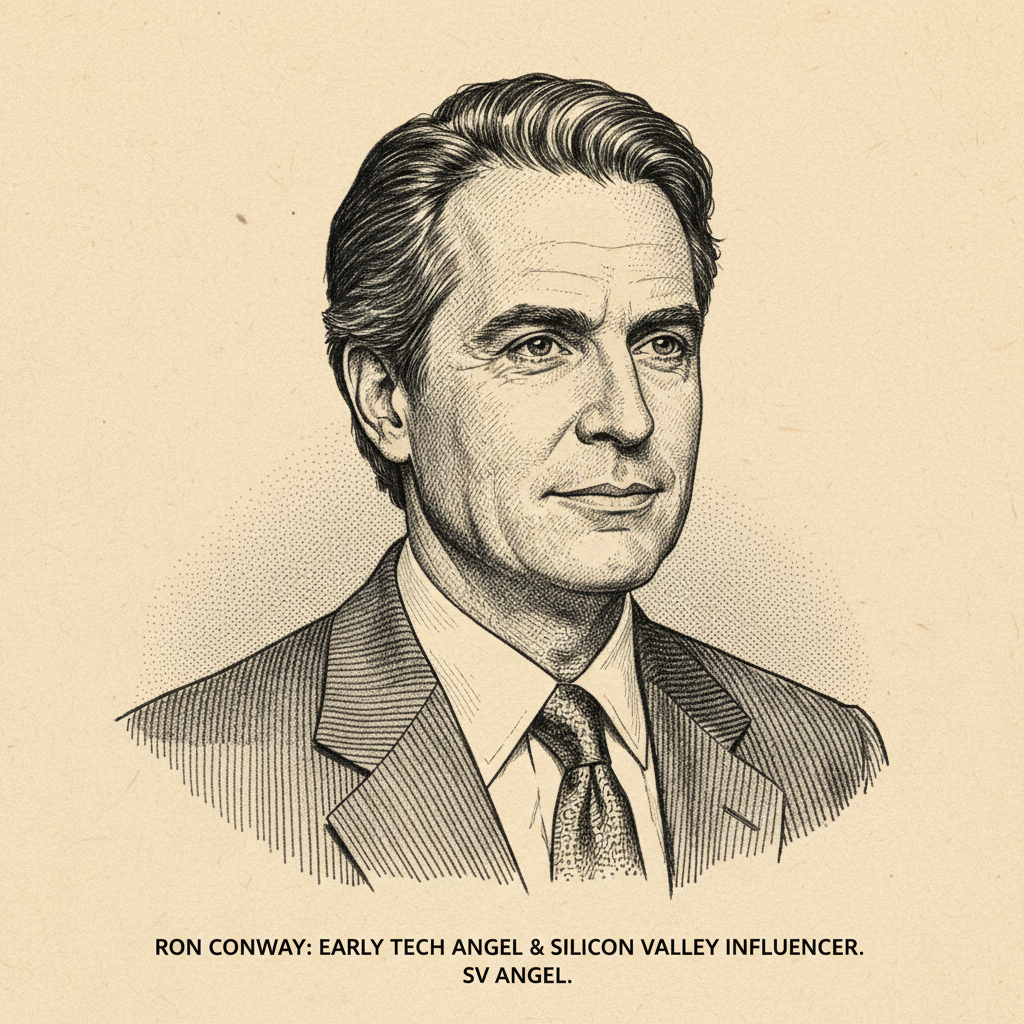
Ron Conway
The Prolific Angel: Ron Conway's Impact on Silicon Valley's Entrepreneurial Landscape
Ron Conway is a pioneering angel investor and philanthropist, best known for his early-stage investments in foundational internet companies such as Google, PayPal, and Facebook. Through SV Angel, his investment firm, Conway has funded over 1,000 startups, playing a pivotal role in shaping the modern technology ecosystem and advocating for policy changes beneficial to the startup community.
Biography
Accomplishments
- 01Early investor in Google (1998), contributing to its foundational growth and subsequent global dominance.
- 02Seed investor in PayPal (1999), instrumental in its early development before its acquisition by eBay and later resurgence.
- 03First investor in Facebook (2004), identifying its potential as a social networking behemoth.
- 04Founded SV Angel (2007), one of the most active and influential seed-stage investment firms, funding over 1,000 startups.
- 05Instrumental in the early funding rounds of Twitter (2007), Airbnb (2009), and Pinterest (2010), among other unicorns.
- 06Co-founded Altos Computer Systems (1977), taking it public in 1982, demonstrating early entrepreneurial success.
- 07Recognized for advocating for startup-friendly policies in Washington D.C., impacting legislation beneficial to the tech ecosystem.
Lessons for Operators
Key Takeaways
Practical lessons distilled for operators, investors, C-levels, and capital allocators.
Founder-First Investing
Ron Conway's enduring success stems from his unwavering belief in backing exceptional founders, even if the initial idea is nascent. His approach highlights that a strong, adaptable team is paramount for navigating the inherent uncertainties of a startup.
Strategic Network Leverage
Beyond capital, Conway provides invaluable access to his vast network, acting as a crucial connector for talent, follow-on funding, and strategic partnerships. This 'smart money' approach magnifies the impact of his investments.
Volume and Velocity in Seed Stage
SV Angel's model demonstrates the effectiveness of making a high volume of relatively small, early-stage investments with rapid decision-making. This strategy maximizes exposure to breakout opportunities and accounts for the power law distribution of startup returns.
Advocacy as a Value-Add
Conway's active role in policy advocacy showcases that shaping the regulatory and political environment can be a significant, albeit indirect, value-add for the entire startup ecosystem, benefiting portfolio companies broadly.
Long-Term Vision
His sustained involvement over decades, from Altos Computer Systems to SV Angel, illustrates the power of a long-term commitment to innovation and entrepreneurship, adapting to evolving market landscapes while maintaining core principles.
Frameworks & Principles
Named frameworks and strategic principles they popularized or embodied.
Founder-Centric Investment Thesis
A framework prioritizing the quality, resilience, and vision of the founding team above all else when evaluating early-stage investment opportunities.
When to useApplicable for angel investors, seed funds, and corporate innovation leaders making early-stage investment decisions where market and product are still fluid. Use when the primary risk factor is execution and team capability.
Ecosystem Value Creation Model
A strategy where an investor actively contributes to the broader startup ecosystem through networking, mentorship, and policy advocacy, creating a virtuous cycle that benefits their portfolio.
When to useSuitable for venture capitalists, institutional investors, and corporate strategists looking to build long-term influence and deal flow within a specific industry or geographic region. Use when aiming to be a 'platform' rather than just a 'capital provider'.
High-Volume Seed Investing Strategy
An investment approach characterized by making numerous, relatively small bets at the earliest stages of company formation, accepting a high failure rate but aiming for outsized returns from a few winners.
When to useIdeal for dedicated seed funds, angel groups, or corporate venture arms with a mandate for high-risk, high-reward early-stage investments. Requires a robust deal sourcing and rapid decision-making process.
Recent Appearances
Latest interviews, keynotes, and press from the past half year.
 youtube.com
 youtube.com
 youtube.com
 youtube.com
 youtube.com
 youtube.com
 youtube.com
 youtube.com
 youtube.com
 youtube.com
 youtube.com
 youtube.com
 youtube.com
 youtube.com
 youtube.com
 youtube.com
 youtube.com
 youtube.com
 youtube.com
 youtube.com
 youtube.com
 youtube.com
Sources & Further Reading
Profiles, interviews, podcasts, and articles used to compile and verify this entry. Each link opens at the original publisher.
Explore Related Titans
Other figures in the archive who share Ron Conway's domain, geography, or era.
More in Technology









From United States




Contemporaries — born 1950s