Ren Zhengfei
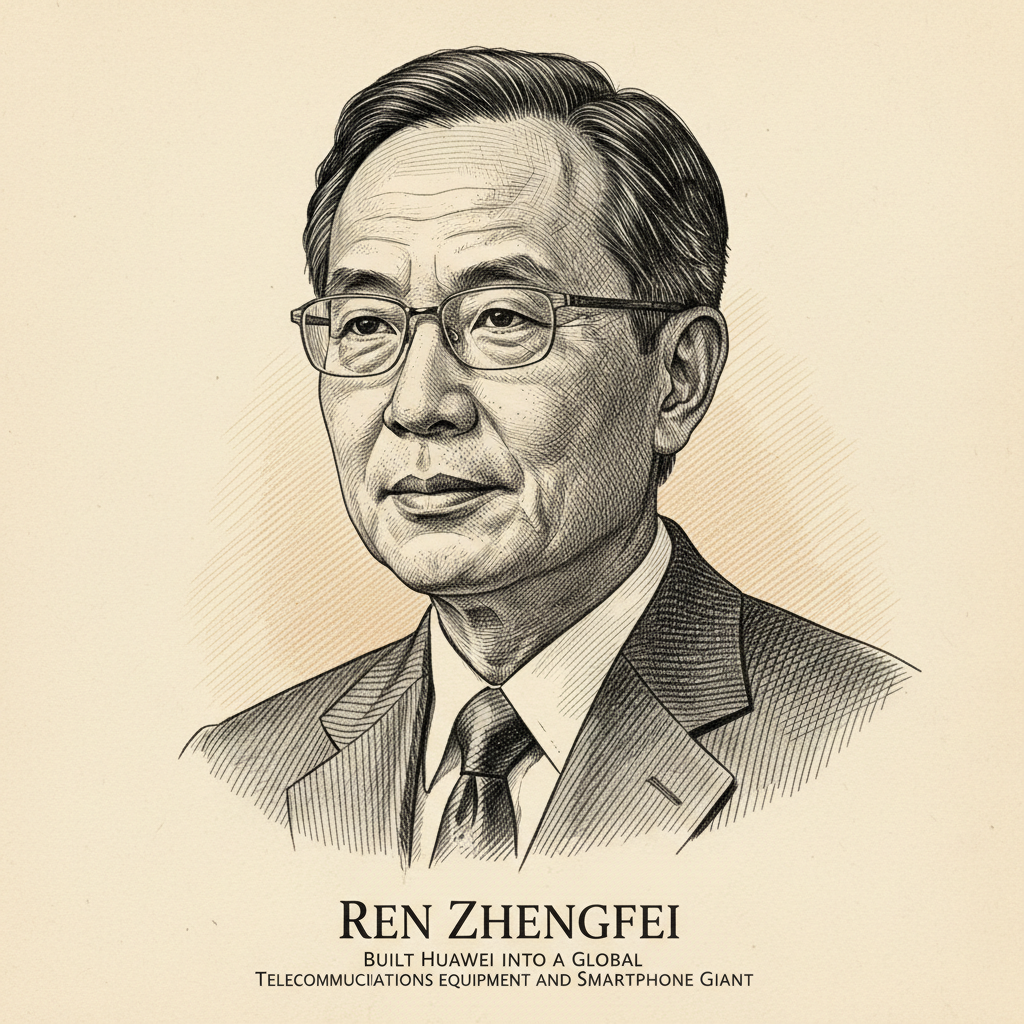
Founder of Huawei, architect of a global telecommunications giant, and a formidable challenger to established Western tech dominance.
Ren Zhengfei is the founder of Huawei Technologies Co., Ltd., established in 1987. A former People's Liberation Army technologist, he built Huawei into a global leader in telecommunications equipment and consumer electronics, navigating intense geopolitical pressure and establishing a reputation for aggressive R&D and market penetration.
Biography
Accomplishments
- 01Founded Huawei Technologies Co., Ltd. in 1987, growing it from a small reseller into the world's largest telecommunications equipment manufacturer.
- 02Led Huawei's aggressive expansion into international markets, particularly in developing countries, establishing a global footprint that challenged Western incumbents.
- 03Pioneered a relentless R&D investment strategy, consistently allocating 10-15% of annual revenue, which enabled Huawei to become a leader in 3G, 4G, and 5G technologies.
- 04Cultivated a unique 'wolf spirit' corporate culture focused on resilience, customer-centricity, and competitive drive, instrumental in Huawei's market penetration.
- 05Navigated unprecedented geopolitical pressure and U.S. sanctions, maintaining Huawei's operational integrity and continued innovation despite significant market access restrictions.
Lessons for Operators
Key Takeaways
Practical lessons distilled for operators, investors, C-levels, and capital allocators.
Build Proprietary IP Early
Investing in core R&D and owning intellectual property is foundational for long-term industry leadership and resilience against external pressures. Avoid excessive reliance on third-party licenses for critical components or technologies.
Think Globally, Act Locally
Successful global expansion requires understanding diverse market needs. Huawei's strategy of adapting products and services to specific regional requirements, combined with competitive pricing, allowed it to penetrate markets where Western firms struggled.
Cultivate a 'Wolf Spirit' Culture
Foster a corporate culture that emphasizes aggressive execution, continuous learning, and resilience in the face of adversity. This drive can propel rapid growth and market share gains, but must be balanced with ethical considerations.
Lead Through Adversity
Ren's leadership during intense geopolitical scrutiny demonstrates the importance of a clear long-term vision, unwavering commitment to innovation, and internal unity to navigate existential threats.
Operational Efficiency for Market Dominance
Huawei's ability to deliver advanced technology at competitive prices stemmed from optimized manufacturing, lean operations, and a relentless focus on cost-effectiveness, enabling rapid market penetration and displacement of rivals.
Frameworks & Principles
Named frameworks and strategic principles they popularized or embodied.
Proprietary Core Technology Development
Focus corporate strategy on developing and owning key technologies rather than licensing. This reduces dependency, enhances innovation cycles, and creates defensible market positions.
When to useApplicable for technology-intensive industries where control over intellectual property provides a significant competitive edge or strategic independence. Prioritize this in sectors prone to geopolitical or supply chain risks.
Emerging Market First Strategy
Prioritize entry and market capture in emerging economies before or in parallel with established markets. This allows for scale development, refinement of offerings, and building a cost-effective operational model before confronting highly competitive, mature markets.
When to useIdeal for companies with a disruptive value proposition (e.g., lower cost, greater adaptability) that can gain traction where incumbents have neglected or under-served customers. Also useful for building global brand recognition without immediate direct conflict with well-entrenched players.
Wolf Spirit Culture (Internal Resilience and Aggression)
Instill a corporate culture characterized by intense competitiveness, dedication, frugality, and a 'survival of the fittest' mentality. Emphasizes rapid action, customer focus, and resilience in challenging environments.
When to useSuitable for organizations operating in highly competitive or rapidly changing industries where aggressive market penetration and adaptability are crucial. Requires strong, centralized leadership and clear strategic objectives to avoid burnout or ethical missteps.
Recent Appearances
Latest interviews, keynotes, and press from the past half year.
 youtube.com
 youtube.com
 youtube.com
 youtube.com
 youtube.com
 youtube.com
 youtube.com
 youtube.com
 youtube.com
 youtube.com
 youtube.com
 youtube.com
 youtube.com
 youtube.com
 youtube.com
 youtube.com
 youtube.com
![[Highlight Recap] Huawei chip yields soar, "US gradually ...](https://i.ytimg.com/vi/ZaweV8YZJHI/hqdefault.jpg) youtube.com
youtube.com youtube.com
 youtube.com
 youtube.com
 youtube.com
 youtube.com
 youtube.com
 youtube.com
Sources & Further Reading
Profiles, interviews, podcasts, and articles used to compile and verify this entry. Each link opens at the original publisher.
Explore Related Titans
Other figures in the archive who share Ren Zhengfei's domain, geography, or era.
More in Technology









From China




Contemporaries — born 1940s