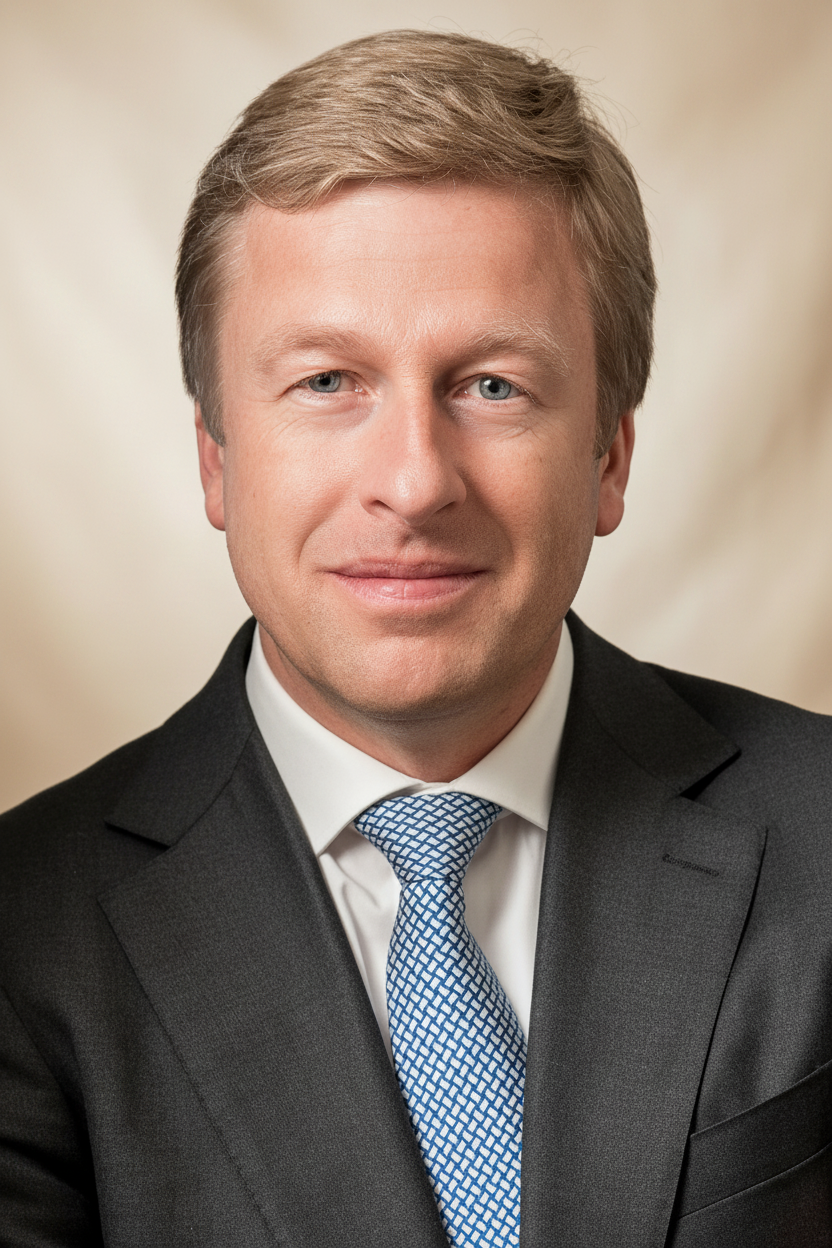
Oliver Zipse
Chief architect of BMW's electrification and sustainable production strategy, navigating traditional automotive craftsmanship into a digital, carbon-neutral future.
Oliver Zipse, born in 1964, has been the Chairman of the Board of Management of BMW AG since August 16, 2019. With a career spanning over three decades at the company, Zipse has held various leadership roles in production, planning, and strategy across different regions, culminating in his appointment to the top executive position. He is a steadfast proponent of sustainable mobility, digitalization, and maintaining BMW's premium market position.
Biography
Accomplishments
- 01Accelerated BMW's electrification roadmap ('Neue Klasse' architecture announced 2021, planned for 2025 launch), committing to fully electric models in various segments (e.g., i4, iX, i7).
- 02Implemented ambitious sustainability targets, including a 20% reduction in vehicle lifecycle CO2 emissions by 2030 (vs. 2019 levels) and a 40% reduction in supply chain CO2 emissions.
- 03Oversaw the successful navigation of global supply chain disruptions (e.g., semiconductor shortages) and the COVID-19 pandemic, maintaining robust profitability and market share.
- 04Championed a technology-open approach to powertrains, investing in both battery-electric vehicles and hydrogen fuel cell technology (e.g., BMW iX5 Hydrogen pilot fleet launched 2022).
- 05Initiated significant digital transformation efforts, including an expanded software development workforce and enhanced in-car digital services (e.g., BMW Operating System 8 and iDrive 8).
- 06Strengthened BMW's global production network for EV manufacturing, including investments in existing plants and establishing new battery production facilities.
Lessons for Operators
Key Takeaways
Practical lessons distilled for operators, investors, C-levels, and capital allocators.
Dual Strategy Imperative
Successfully manage existing, profitable business lines while simultaneously making aggressive investments in future-proof technologies. BMW's strategy under Zipse involves leveraging combustion engine profits to fund EV development without cannibalizing current market share too quickly.
Full Lifecycle Sustainability
Sustainability must extend beyond the product itself to encompass raw material sourcing, manufacturing, logistics, and end-of-life recycling. This holistic approach builds genuine brand equity and meets increasing regulatory and consumer demands.
Production Flexibility as a Competitive Edge
The ability to rapidly adapt production facilities to new models, technologies, and market demands is crucial. BMW's integrated production system allows for mixed-model lines (ICE and EV), providing resilience during transitions.
Strategic Technology Diversification
Avoid placing all bets on a single future technology. Investing in a portfolio of potential solutions (e.g., BEV, Hydrogen FCEV) reduces risk and allows for adaptability in an uncertain technological landscape.
Digital Integration from Core
Digitalization is not an add-on but an integral part of product development, manufacturing, and customer experience. Investing in software capabilities and data analytics enhances both operational efficiency and product differentiation.
Frameworks & Principles
Named frameworks and strategic principles they popularized or embodied.
Sustainability & Circularity Integration
A top-down strategic approach where environmental and social considerations are embedded throughout the entire product lifecycle and value chain, from raw material procurement to end-of-life recycling, aiming for a net-positive impact.
When to useWhen developing new products or rethinking existing value chains to meet evolving regulatory requirements, consumer demand for eco-friendly products, and long-term resource efficiency goals. Implement this when aiming for comprehensive CO2 reduction across Scope 1, 2, and 3 emissions.
Technology-Open Innovation Portfolio
A strategic framework for research and development that invests in multiple prospective technologies rather than committing solely to one dominant solution. This hedges against unforeseen market shifts, technological hurdles, or regulatory changes in rapidly evolving sectors.
When to useApplicable in industries undergoing significant technological disruption and uncertainty (e.g., automotive, energy, biotech). Use this when the long-term winning technology is not yet clear, or when managing dependency risk on a single technological path.
Flexible Production Architecture
Designing manufacturing systems that can rapidly adapt to produce different product variants, powertrain types (e.g., ICE, BEV, FCEV), or even entirely new models on the same assembly lines, minimizing capital expenditure and downtime during product transitions.
When to useCritical for industries with high R&D costs and complex manufacturing processes, especially during periods of technological transition (e.g., automotive's shift to electric). Implement when needing to reduce time-to-market for new products or to efficiently manage production volumes of diverse offerings in a single facility.
Sources & Further Reading
Profiles, interviews, podcasts, and articles used to compile and verify this entry. Each link opens at the original publisher.
Explore Related Titans
Other figures in the archive who share Oliver Zipse's domain, geography, or era.
More in Transportation & Logistics







From Germany


Contemporaries — born 1960s