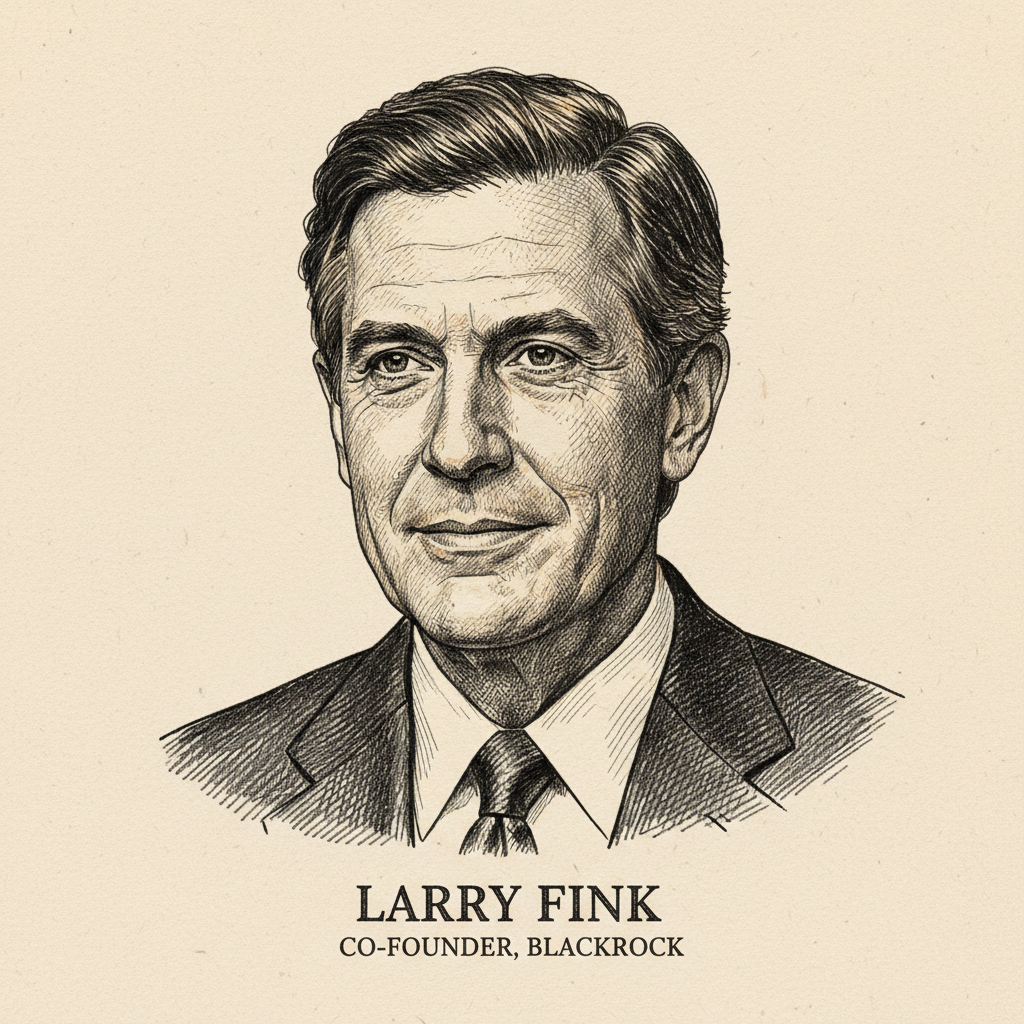
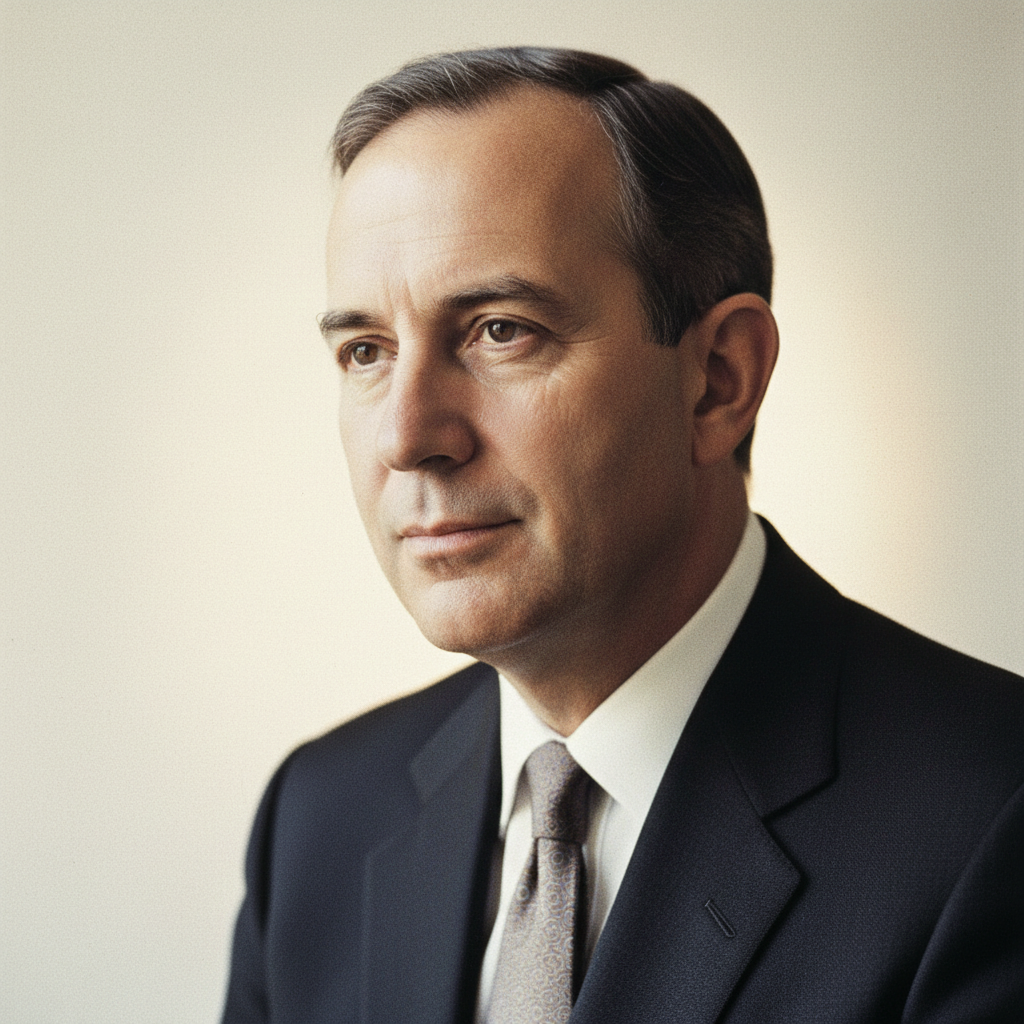
Larry Fink
The architect of BlackRock, the world's largest asset manager, and a leading voice on corporate governance and sustainability.
Laurence D. Fink co-founded BlackRock in 1988, transforming it from an institutional risk management and fixed-income specialist into the world's preeminent asset manager with over $10 trillion under management. He is recognized for pioneering the iShares ETF platform and for his annual "Letter to CEOs," which heavily influences corporate governance and sustainability agendas globally.
Biography
Accomplishments
- 01Co-founded BlackRock in 1988, growing it into the world's largest asset manager with over $10 trillion in AUM by 2023.
- 02Engineered the acquisition of Barclays Global Investors (BGI) in 2009, bringing the iShares ETF platform to BlackRock and establishing its dominance in passive investing.
- 03Developed and deployed Aladdin, BlackRock's proprietary risk management and portfolio analytics platform, which became an industry standard.
- 04Instrumental in managing distressed assets for the U.S. government during the 2008 financial crisis, demonstrating BlackRock's risk management capabilities.
- 05Pioneered the concept of embedding ESG considerations into investment decisions through his widely circulated annual "Letter to CEOs," influencing global corporate governance.
- 06Expanded BlackRock's global footprint, establishing operations in key markets worldwide and diversifying its client base.
Lessons for Operators
Key Takeaways
Practical lessons distilled for operators, investors, C-levels, and capital allocators.
Risk Management as a Differentiator
Fink's personal experience with a significant trading loss led to BlackRock's foundational emphasis on sophisticated risk management, exemplified by the Aladdin platform. For operators, this means embedding risk analytics not just as a compliance function, but as a core competitive advantage that informs all strategic decisions.
The Power of Strategic Acquisition
The acquisition of Barclays Global Investors (BGI) and its iShares ETF business was a game-changer, transforming BlackRock into a passive investing powerhouse. Companies should proactively identify and pursue strategic acquisitions that not only expand market share but also introduce new, high-growth business lines or technologies.
Thought Leadership as a Strategic Tool
Fink's annual 'Letter to CEOs' demonstrates how articulating a clear, consistent vision for corporate responsibility and sustainability can influence global capital markets and corporate behavior. Leaders should establish platforms to communicate their strategic insights, shaping industry discourse and influencing stakeholder expectations.
Technology as Core Business
Aladdin, BlackRock's proprietary risk and portfolio management system, evolved from an internal tool to a critical service offered to external clients. This exemplifies treating technology as a core revenue-generating and differentiating asset, not merely an operational cost. Invest in and leverage proprietary tech for competitive advantage.
Long-Term Value Creation Over Short-Term Gains
Fink consistently advocates for companies to focus on long-term value creation, considering all stakeholders, rather than solely quarterly earnings. Operators and investors should adopt a similar long-term perspective, aligning strategy, capital allocation, and performance metrics with sustainable growth and broader societal impact.
Embrace ESG as an Investment Imperative
BlackRock's push for ESG integration reflects Fink's conviction that climate risk and social factors are investment risks. For fund managers and capital allocators, this means systematically integrating environmental, social, and governance factors into investment analysis and decision-making, recognizing their material impact on long-term returns.
Frameworks & Principles
Named frameworks and strategic principles they popularized or embodied.
Aladdin (Asset, Liability, and Debt & Derivative Investment Network)
BlackRock's proprietary end-to-end investment management and risk analytics platform. It provides institutional investors with a unified view of their portfolios, comprehensive risk analysis, trading capabilities, and operational tools across asset classes.
When to useApplicable for large institutional investors, fund managers, and enterprise leaders managing complex, multi-asset portfolios who require sophisticated, integrated risk management, extensive scenario analysis, and a consolidated operational platform.
Stakeholder Capitalism Principle
This principle, heavily promoted by Fink, posits that a company's success is not solely measured by shareholder returns but by its ability to create long-term value for all stakeholders: employees, customers, suppliers, communities, and the environment. It emphasizes purpose beyond profit.
When to useRelevant for C-suite executives, board members, and enterprise leaders developing long-term corporate strategy, defining organizational purpose, establishing CSR initiatives, and navigating complex ESG challenges. It guides decisions towards sustainable and inclusive growth.
Purpose-Driven Investing
An investment philosophy articulated by Fink, suggesting that companies with a clear sense of purpose beyond profit tend to be more resilient, innovative, and provide better long-term returns. It encourages investors to prioritize companies that demonstrate positive societal impact alongside financial performance.
When to useUtilize this framework for fund managers, capital allocators, and individual investors seeking to integrate ESG and impact considerations into their investment selection process. It helps identify companies with sustainable business models and strong governance that are better positioned for future growth.
Sources & Further Reading
Profiles, interviews, podcasts, and articles used to compile and verify this entry. Each link opens at the original publisher.
Explore Related Titans
Other figures in the archive who share Larry Fink's domain, geography, or era.
More in Finance & Investing







From United States








Contemporaries — born 1950s