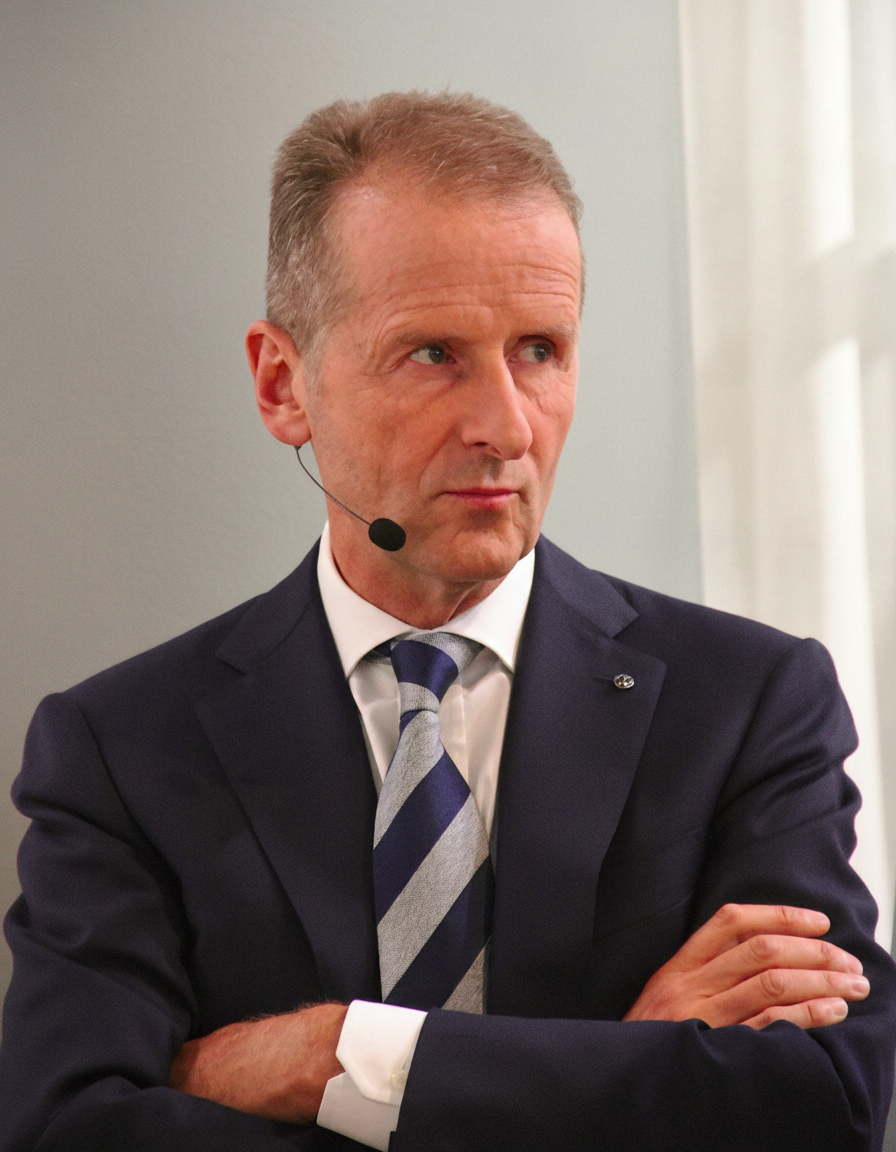
Herbert Diess
Architect of Volkswagen's electrification and digitalization transformation, navigating post-Dieselgate reform.
Herbert Diess, an Austrian business executive, served as Chairman of the Board of Management for Volkswagen AG from 2018 to 2022, following a significant tenure at BMW. He spearheaded Volkswagen's ambitious transition toward electric mobility and digitalization, aiming to redefine the company's future in a rapidly evolving automotive landscape, particularly in the aftermath of the 'Dieselgate' scandal. His leadership was characterized by bold strategic shifts and a drive for internal reform.
Biography
Accomplishments
- 01Spearheaded Volkswagen's 'Transform 2025+' strategy, committing over 30 billion euros to e-mobility by 2023 and shifting focus to EVs and digitalization.
- 02Launched the ID. family of electric vehicles (e.g., ID.3, ID.4), establishing Volkswagen as a significant player in the mass-market EV segment.
- 03Oversaw the establishment of Cariad, Volkswagen's dedicated software company, aiming to develop a unified software platform across all group brands.
- 04Initiated Project Trinity, Volkswagen's plan for a highly efficient, software-defined electric vehicle produced in Wolfsburg with Level 4 autonomous driving capabilities.
- 05Implemented significant cost-cutting measures and efficiency drives, particularly during his tenure at BMW and upon joining Volkswagen.
- 06Secured crucial investments in battery technology and gigafactories across Europe, aiming for vertical integration in EV component production.
- 07Navigated Volkswagen through the immediate post-Dieselgate crisis, refocusing the company's image and strategic direction.
- 08Successfully brought Porsche AG to the public market via an IPO in 2022, securing substantial capital for further investments.
Lessons for Operators
Key Takeaways
Practical lessons distilled for operators, investors, C-levels, and capital allocators.
Decisive Strategic Pivoting
Diess demonstrated that even large, legacy organizations can undertake fundamental strategic pivots. His commitment to electrification post-Dieselgate was not incremental but transformative, reshaping Volkswagen's entire product and manufacturing roadmap. This underscores the necessity for bold, top-down strategic shifts in the face of disruptive change.
The Imperative of Vertical Integration in New Tech
Diess's push for in-house software development (Cariad) and battery cell production highlighted the critical need for automotive companies to control core technologies in the EV era. Relying solely on external suppliers for differentiating components like software and batteries can erode competitive advantage and increase dependency.
Cultural Transformation is as Crucial as Technological Transformation
Diess recognized that technological change alone was insufficient; Volkswagen's organizational culture needed to become more agile, innovative, and software-centric. His challenges to traditional structures illustrate that cultural transformation is a prerequisite for successful strategic shifts in large, established enterprises.
Leadership Requires Both Vision and Political Acumen
While Diess had a clear and ambitious vision for Volkswagen's future, his tenure also demonstrated the intricate political landscape of managing a multi-brand conglomerate with strong union representation and powerful family ownership. Effective leadership in such environments requires not only strategic foresight but also adept stakeholder management.
Software is the New Differentiator
Diess explicitly articulated that software, not just hardware, would define the next generation of vehicles. His substantial investment in Cariad reflects the understanding that future vehicle value will increasingly be derived from digital services, autonomous capabilities, and user experience driven by integrated software.
Global Competition Demands Speed and Efficiency
Diess frequently benchmarked Volkswagen against agile competitors like Tesla and emerging Chinese EV manufacturers. His focus on reducing development cycles, improving efficiency, and accelerating decision-making was a direct response to intensifying global competition and the need for speed in new product introductions.
Frameworks & Principles
Named frameworks and strategic principles they popularized or embodied.
Transform 2025+ Strategy
Volkswagen's comprehensive strategic plan initiated under Diess to transform the company into a leading provider of sustainable mobility. It focused on electrification (with the MEB platform and ID. series), digitalization (Cariad), and new mobility services, alongside cost optimization and efficiency improvements across global operations.
When to useApplicable for large, established corporations facing disruptive technological shifts and needing a holistic, long-term roadmap for reinvention. Useful when a multi-faceted approach involving product, technology, organizational culture, and financial restructuring is required.
EV Platform Strategy (e.g., MEB)
Diess championed the development and rapid rollout of dedicated electric vehicle platforms like the Modular Electric Drive Matrix (MEB). This strategy aimed for economies of scale, component standardization, and accelerated product development across multiple brands and models for the electric transition.
When to useIdeal for industries undergoing a fundamental shift in core product technology where common architectural foundations can drive efficiency, speed-to-market, and cost reduction across a diverse product portfolio. Especially relevant for companies with multiple brands or models leveraging similar underlying technology.
Software-Defined Vehicle (SDV) Approach
The concept of vehicles being primarily defined by their software rather than hardware, with functionalities and updates delivered 'over-the-air'. Diess pushed this by creating Cariad, centralizing software development, and designing new vehicle architectures like Project Trinity for SDV capabilities.
When to useRelevant for industries where products are becoming increasingly 'smart' and connected (e.g., automotive, industrial IoT, consumer electronics). Enterprises should adopt this approach when software becomes a primary differentiator, enabling new services, personalization, and recurring revenue streams.
Recent Appearances
Latest interviews, keynotes, and press from the past half year.
 youtube.com
 youtube.com
 youtube.com
 youtube.com
 youtube.com
 youtube.com
 youtube.com
 youtube.com
 youtube.com
 youtube.com
 youtube.com
 youtube.com
 youtube.com
 youtube.com
 youtube.com
 youtube.com
 youtube.com
 youtube.com
 youtube.com
 youtube.com
 youtube.com
Sources & Further Reading
Profiles, interviews, podcasts, and articles used to compile and verify this entry. Each link opens at the original publisher.
Explore Related Titans
Other figures in the archive who share Herbert Diess's domain, geography, or era.
More in Transportation & Logistics


From Austria
Contemporaries — born 1960s