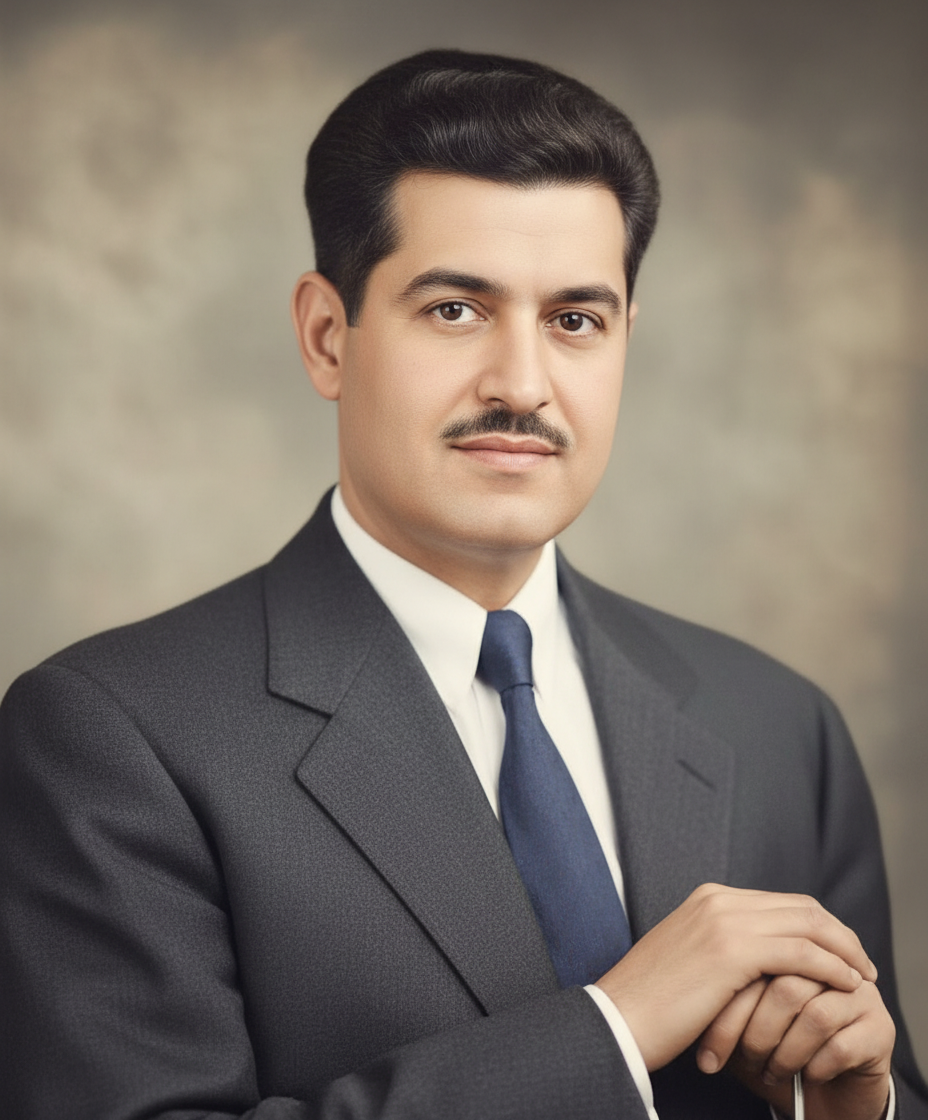
Hassan Kamel Al-Sabbah
The 'Edison of the East', a prolific inventor whose innovations significantly advanced early 20th-century electronics and optics, primarily at General Electric.
Hassan Kamel Al-Sabbah was a Lebanese electrical and electronics engineer and inventor who amassed over 70 patents during his brief but impactful career, predominantly with General Electric Co. in the United States. His work spanned television technology, solar energy conversion, and magnetics, making fundamental contributions to early electrical and optical systems.
Biography
Accomplishments
- 01Patented over 70 inventions with General Electric Co. from 1923 to 1935, demonstrating an exceptional rate of innovation in a corporate R&D setting.
- 02Made significant contributions to early television technology, including innovations in cathode ray tubes and their deflection systems, foundational for display development.
- 03Advanced solar energy conversion by improving the efficiency and design of photoelectric cells, recognized at the time as crucial for practical solar applications.
- 04Developed novel methods for converting light energy into electrical energy using photovoltaic materials, a precursor to modern solar cell technology.
- 05Contributed to improvements in magnetics and electrical power transmission, specifically related to AC motors and transmitters, enhancing industrial efficiency.
- 06Recognized posthumously by Lebanon and the wider Arab world as a pioneer in science and technology, with monuments and institutions named in his honor.
Lessons for Operators
Key Takeaways
Practical lessons distilled for operators, investors, C-levels, and capital allocators.
Leverage Corporate R&D Ecosystems
Al-Sabbah's prolific patent record was not solely a function of individual genius but also his integration into GE's industrial research labs. For operators and investors, this highlights the immense advantage of structured R&D environments that offer resources, collaborators, and a clear path to patenting and commercialization. Consider how your organizational structure either facilitates or hinders such high-velocity innovation.
Breadth in Innovation, Depth in Impact
His work spanned television, solar, and motors, yet each area saw significant, fundamental advancements. This demonstrates that expertise can be broadly applied to yield diverse intellectual property. C-levels should encourage cross-domain exploration within R&D teams and look for synergies between seemingly disparate projects, as core scientific principles often transcend specific product categories.
Invest in Foundational Technology
Al-Sabbah's contributions to photoelectric cells and cathode ray tubes were fundamental, often years before their full commercial potential was realized. Capital allocators should recognize that 'deep tech' and foundational science, though requiring longer investment horizons, can yield disproportionately large and lasting returns, enabling entirely new industries.
Strategic Patenting is Paramount
The sheer number of patents secured by Al-Sabbah underscores the strategic importance of systematically protecting intellectual property. Enterprise leaders must ensure robust processes for identifying, documenting, and patenting innovations. This builds a defensible moat around technological advancements, crucial for long-term competitive advantage and valuation.
The Enduring Value of Core Technologies
Many of his inventions, although refined over decades, form the basis of technologies still in use or concepts that evolved into modern solutions (e.g., photovoltaics, display technology). This emphasizes to investors and operators the long-term asset value of core technological IP, which can outlast product cycles and market shifts.
Frameworks & Principles
Named frameworks and strategic principles they popularized or embodied.
GE Model of Centralized Industrial Research
Al-Sabbah thrived within the General Electric Research Laboratory, an early and highly effective model for corporate R&D. This framework emphasizes a dedicated, well-funded central research facility where scientists and engineers are empowered to pursue both fundamental and applied research, insulated from immediate commercial pressures but with a clear mandate for innovation.
When to useApplicable for large enterprises or well-capitalized startups aiming to establish a sustainable long-term innovation engine. It requires significant capital investment, a tolerance for delayed gratification, and a culture that supports scientific exploration alongside product development. Operators can adapt this by creating 'skunkworks' or dedicated innovation labs.
Patent Portfolio Strategy (Al-Sabbah Approach)
Al-Sabbah's prolific output of patents demonstrates a strategy of aggressive intellectual property generation, covering various aspects and potential applications of his inventions. This approach focuses on not just inventing but systematically securing legal protection for each novel idea, building a broad and deep IP portfolio.
When to useEssential for technology-driven companies, particularly those in competitive or rapidly evolving sectors. Enterprise leaders should implement clear processes for invention disclosure, patent filing, and ongoing IP management. Fund managers should assess the strength and breadth of a company's patent portfolio as a key indicator of its long-term defensibility and asset value.
Translational Research Pathway
Al-Sabbah's work often bridged theoretical physics and practical engineering applications (e.g., translating photoelectric effect knowledge into solar cells). This framework involves taking fundamental scientific discoveries and systematically developing them into viable technologies or products, emphasizing the journey from 'bench to market'.
When to useRelevant for startups and companies operating at the intersection of science and industry (e.g., biotech, advanced materials, AI). Operators need to build teams that can bridge scientific understanding with engineering execution. Investors should look for companies capable of demonstrating a clear pathway from scientific proof-of-concept to scalable commercial solutions.
Sources & Further Reading
Profiles, interviews, podcasts, and articles used to compile and verify this entry. Each link opens at the original publisher.
Explore Related Titans
Other figures in the archive who share Hassan Kamel Al-Sabbah's domain, geography, or era.
More in Technology







Contemporaries — 19th century