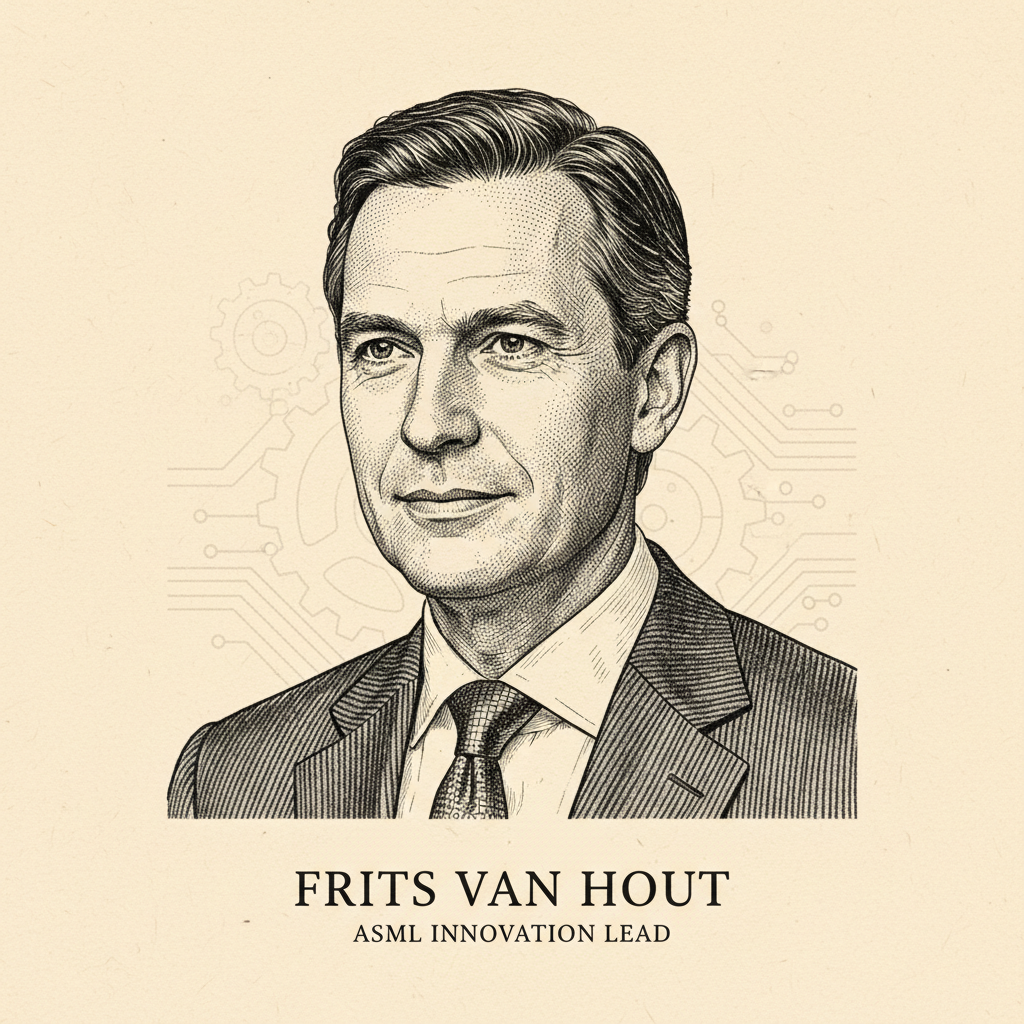
Frits van Hout
Architect of ASML's supply chain and operational resilience, pivotal in scaling extreme ultraviolet (EUV) lithography.
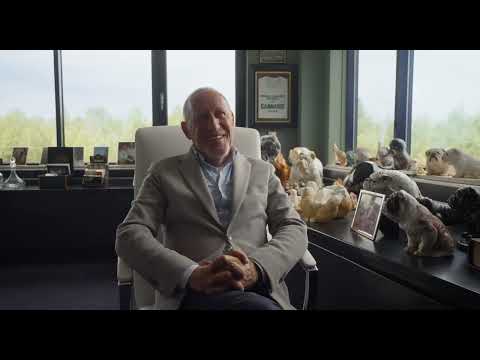
Frits van Hout is a Dutch business executive known for his extensive tenure and strategic contributions at ASML, the world's leading manufacturer of photolithography systems. He played a critical role in ASML's growth, particularly in developing and commercializing Extreme Ultraviolet (EUV) lithography technology, serving various executive functions including Chief Marketing Officer and Executive Vice President for Customer Business. His focus on operational excellence, supply chain integration, and customer collaboration was instrumental in establishing ASML's market dominance.
Biography
Accomplishments
- 01Instrumental in the commercialization and high-volume manufacturing ramp-up of Extreme Ultraviolet (EUV) lithography technology, securing ASML's leadership in advanced semiconductor manufacturing (circa 2010s).
- 02Played a critical role in developing and integrating ASML's global supply chain for EUV, managing complex interdependencies with hundreds of suppliers worldwide, ensuring timely delivery of components like Zeiss's optics and Cymer's light sources.
- 03Led ASML's customer business division, fostering deep strategic partnerships with major semiconductor foundries (e.g., TSMC, Samsung, Intel) that solidified long-term order commitments and co-development initiatives.
- 04Helped steer ASML through multiple technological transitions, from deep ultraviolet (DUV) immersion to EUV, maintaining market dominance and technological leadership (1990s-2010s).
- 05Pioneered a 'co-investment' model where major customers invested directly in ASML's R&D, accelerating EUV development and sharing the financial burden of innovation (e.g., 'Customer Co-Investment Program' in 2012, where Intel, TSMC, and Samsung invested €1.38 billion in ASML R&D).
- 06Successfully navigated and managed the complexities of highly capital-intensive and long-cycle product development, reducing time-to-market for cutting-edge lithography systems.
Lessons for Operators
Key Takeaways
Practical lessons distilled for operators, investors, C-levels, and capital allocators.
Ecosystem Orchestration is Paramount
ASML's success, particularly with EUV, was not solely an internal ASML achievement but a result of orchestrating a global ecosystem of specialized suppliers and strategic customers. Leaders must proactively build and manage these intricate networks.
Long-Term Vision Over Short-Term Gains
The multi-decade, multi-billion-euro investment in EUV before realizing significant returns exemplifies the need for patient capital and a strategic vision that transcends quarterly earnings for truly disruptive innovation.
Customer Co-Development Drives Adoption
Involving customers in the R&D process, sometimes even through direct investment, mitigates risk, ensures market relevance, and builds strong commitment to new, expensive technologies.
Mastering Program Management in High-Tech
For complex, high-stakes technology programs, robust program leadership, cross-functional integration, and diligent milestone tracking are non-negotiable for successful commercialization.
Resilience Through Operational Rigor
Transforming experimental technology into industrial-scale production requires an unyielding focus on operational discipline, quality control, and supply chain reliability to ensure consistency and performance.
Frameworks & Principles
Named frameworks and strategic principles they popularized or embodied.
Ecosystem Development Model
A strategic framework for building and nurturing a network of interconnected partners (suppliers, customers, research institutions) to collaboratively develop, produce, and commercialize complex technologies.
When to useApplicable for industries with high R&D costs, complex supply chains, or where technological breakthroughs require contributions from multiple specialized entities (e.g., semiconductors, aerospace, biotech).
Co-Investment & Risk-Sharing Strategy
A financial and strategic approach where key customers or partners invest directly in the R&D or capital expenditure of a core supplier, aligning interests and sharing the financial burden and risk of large-scale innovation.
When to useIdeal for projects with exceptionally high development costs, long payback periods, or where the success of the innovation is mutually beneficial to multiple major players in the value chain.
Complex Program Management (CPM)
A methodology for planning, executing, and controlling large-scale, multi-disciplinary projects characterized by high uncertainty, interdependencies, and evolving requirements. Emphasizes structured phases, risk management, and stakeholder alignment.
When to useEssential for managing projects involving cutting-edge technology, significant capital investment, and extensive coordination across multiple internal and external teams (e.g., new product development in high-tech, infrastructure projects).
Recent Appearances
Latest interviews, keynotes, and press from the past half year.
 youtube.com
 youtube.com
 youtube.com
 youtube.com
 youtube.com
 youtube.com
 youtube.com
 youtube.com
 youtube.com
 youtube.com
Explore Related Titans
Other figures in the archive who share Frits van Hout's domain, geography, or era.
More in Technology





From Netherlands

Contemporaries — born 1960s