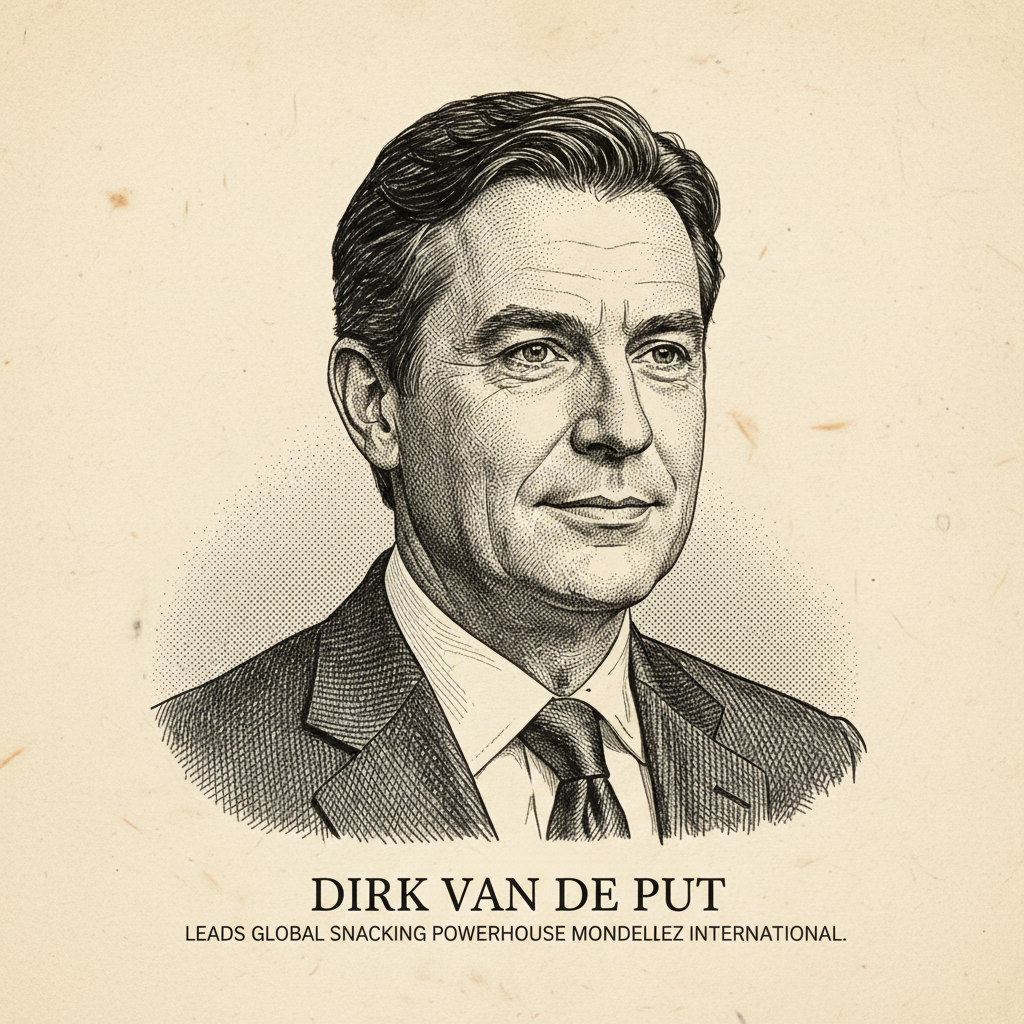
Dirk Van de Put
Architect of brand portfolio transformation and global market expansion in consumer packaged goods.
Dirk Van de Put is the Chairman and CEO of Mondelēz International, a global snack and confectionery company. Since joining in November 2017, he has overseen a strategic pivot towards profitable growth through accelerated portfolio transformation, M&A, and market expansion, focusing on scaling global snacking brands.
Biography
Accomplishments
- 01Orchestrated significant portfolio reshaping at Mondelēz International, including the acquisition of Tate's Bake Shop for approximately $500 million in 2018, acquiring a premium cookie brand to expand into high-growth segments.
- 02Led the acquisition of Hu Master Holdings for an undisclosed sum in 2021, a high-growth, premium dark chocolate and snacks brand, further strengthening Mondelēz's presence in wellness-oriented snacking.
- 03Spearheaded the 2022 acquisition of Clif Bar & Company for approximately $2.9 billion, significantly expanding Mondelēz's global snack bar presence and health-focused portfolio.
- 04Initiated the divestiture of Mondelēz's developed-market gum business (including Trident and Dentyne) to Perfetti Van Melle for $1.35 billion in 2022, streamlining the portfolio to focus on core snacking categories.
- 05Implemented a strategic shift towards accelerated market expansion and digital engagement, increasing e-commerce sales and penetration in emerging markets.
- 06Achieved consistent organic net revenue growth and improved profit margins through disciplined cost management and supply chain optimization across global operations.
- 07Fostered a culture of innovation, driving new product development and brand renovation within core categories like biscuits, chocolate, and baked snacks.
Lessons for Operators
Key Takeaways
Practical lessons distilled for operators, investors, C-levels, and capital allocators.
Strategic Portfolio Optimization
Van de Put's tenure at Mondelēz is characterized by aggressive portfolio transformation. He demonstrated that constant evaluation of assets, through both divestitures (e.g., gum business) and strategic acquisitions (e.g., Tate's Bake Shop, Hu, Clif Bar), is crucial for maintaining relevance and growth in a dynamic consumer market. This proactive approach ensures capital is allocated to high-return opportunities.
Focus on Global Snacking Powerhouses
His strategy emphasizes leveraging Mondelēz's core strengths in global snacking, particularly biscuits and chocolate. This focus allows for greater investment in innovation, marketing, and distribution for a concentrated set of high-performing brands, leading to category leadership and improved market share.
M&A as a Growth Engine
Mondelēz under Van de Put has actively used M&A to accelerate growth, particularly in premium and health-and-wellness segments. This strategy avoids the lengthy organic development cycle for new categories and provides immediate access to established brands and consumer bases, driving faster portfolio premiumization.
Digital and E-commerce Acceleration
Recognizing shifting consumer behavior, Van de Put has prioritized digital investments, including e-commerce capabilities and data-driven marketing. This ensures Mondelēz remains competitive in an increasingly digital retail landscape and can engage consumers effectively across various channels.
Operational Excellence and Margin Expansion
Alongside growth initiatives, there's a strong emphasis on operational efficiency and cost discipline. This dual focus on top-line growth and bottom-line optimization allows the company to generate stronger cash flows and invest back into the business or return capital to shareholders.
Frameworks & Principles
Named frameworks and strategic principles they popularized or embodied.
The 'Snacking Powerhouse' Strategy
A strategic framework focusing resources on core, advantaged snacking categories (e.g., biscuits, chocolate, baked snacks) where the company holds strong market positions and has global scalability. It involves divesting non-core assets and acquiring complementary brands to build category leadership.
When to useApplicable for CPG companies with diverse portfolios looking to streamline operations, achieve market leadership in specific categories, and allocate capital more effectively. Useful for prioritizing M&A and R&D investments.
Accelerated Portfolio Transformation
A dynamic approach to managing a brand portfolio through continuous evaluation, strategic divestitures of underperforming or non-strategic assets, and targeted acquisitions of high-growth brands that align with long-term strategic objectives. Emphasizes agility and responsiveness to market trends.
When to useIdeal for mature companies in dynamic industries facing changing consumer preferences or competitive landscapes. Use when a portfolio refresh is needed to unlock growth, improve margins, and adapt to new market segments (e.g., premium, health-focused).
Global Scale, Local Relevance
A dual strategy that leverages the economies of scale and brand power of global brands while empowering local teams to adapt products, marketing, and distribution to specific regional consumer needs, tastes, and retail environments. Balances global efficiency with local market penetration.
When to useEffective for multinational corporations operating in diverse markets. Use to maximize the potential of global brands while ensuring they remain competitive and relevant in local contexts, especially for food & beverage or consumer goods.
Recent Appearances
Latest interviews, keynotes, and press from the past half year.
 youtube.com
 youtube.com
 youtube.com
 youtube.com
 youtube.com
 youtube.com
 youtube.com
 youtube.com
 youtube.com
 youtube.com
 youtube.com
 youtube.com
 youtube.com
 youtube.com
 youtube.com
 youtube.com
 youtube.com
 youtube.com
 youtube.com
 youtube.com
 youtube.com
 youtube.com
 youtube.comyoutube.com
 youtube.com
 youtube.com
 youtube.com
 youtube.com
Sources & Further Reading
Profiles, interviews, podcasts, and articles used to compile and verify this entry. Each link opens at the original publisher.
Explore Related Titans
Other figures in the archive who share Dirk Van de Put's domain, geography, or era.
More in Consumer & Retail










From Belgium


Contemporaries — born 1950s