
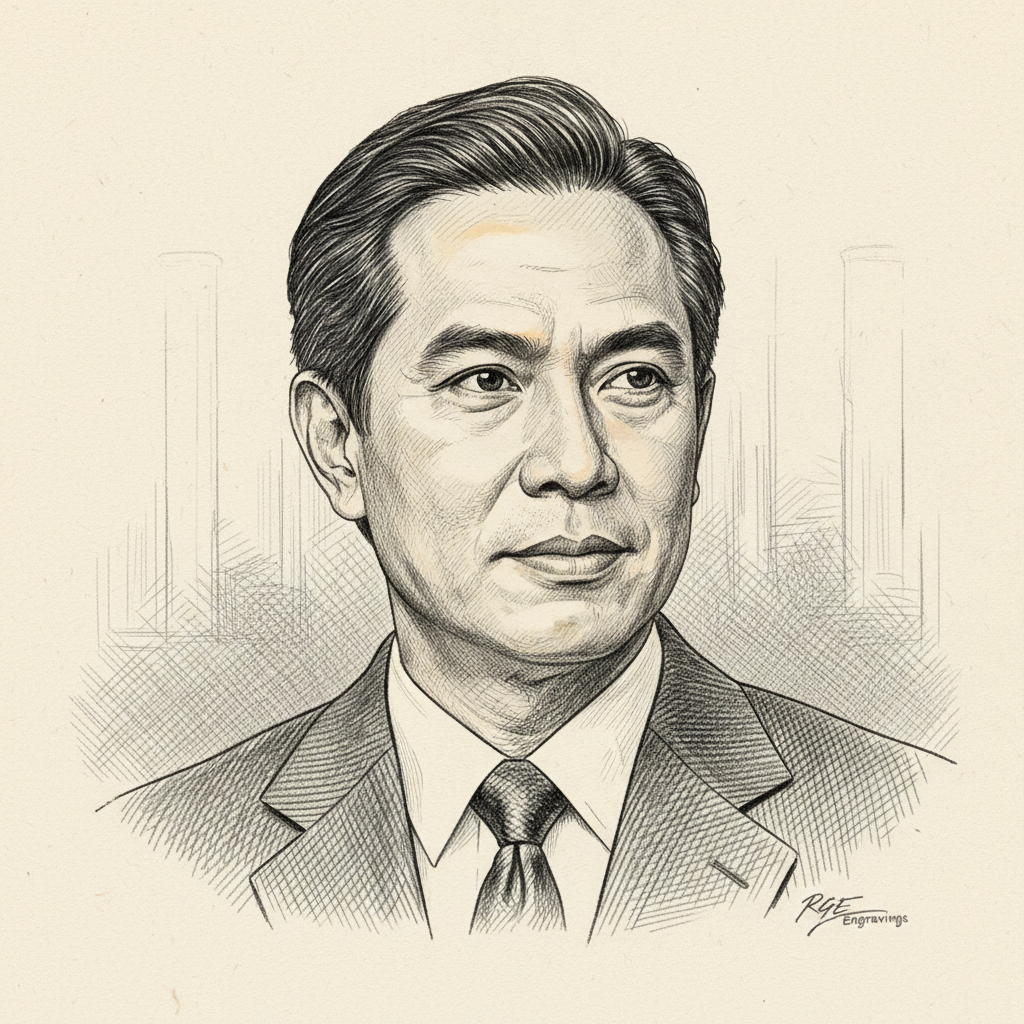
Darren Woods
Navigating the energy transition: Darren Woods' leadership at ExxonMobil.
Darren Woods is the Chairman and CEO of ExxonMobil, leading the global energy giant through a period of significant industry transformation. A career ExxonMobil employee, he rose through the ranks, holding various senior leadership positions across the company's refining, chemicals, and upstream operations.
Biography
Accomplishments
- 01Steering ExxonMobil through the COVID-19 pandemic and its unprecedented demand destruction in 2020, implementing cost-cutting measures and capital expenditure reductions while preserving long-term project viability.
- 02Initiating a significant strategic reorganization in 2023, consolidating its three business lines (upstream, downstream, chemicals) into three new organizations (Upstream, Product Solutions, Low Carbon Solutions) to enhance efficiency and accelerate decarbonization efforts.
- 03Launching the Low Carbon Solutions business in 2021, targeting investments in carbon capture, hydrogen, and biofuels, with a projected investment of over $15 billion by 2027.
- 04Overseeing major investments in Guyana's Stabroek Block, significantly expanding ExxonMobil's upstream portfolio and proving new deepwater development models with industry-leading capital efficiency, such as the Liza Phase 1 and 2 projects (first oil in 2019 and 2022, respectively).
- 05Successfully navigating and defending against activist investor campaigns (e.g., Engine No. 1 in 2021) that challenged the company's climate strategy and board composition, leading to board refreshment and a refined approach to energy transition messaging.
- 06Prioritizing financial discipline, maintaining a strong balance sheet, and consistently returning capital to shareholders through dividends, even during challenging market conditions.
- 07Accelerating methane emissions reduction targets, aiming for net-zero from operated unconventional assets by 2030 and a 70-80% reduction in company-wide methane intensity by 2030, compared to 2016 levels.
Lessons for Operators
Key Takeaways
Practical lessons distilled for operators, investors, C-levels, and capital allocators.
Dual Strategy Execution
ExxonMobil under Woods simultaneously pursues maximizing value from traditional fossil fuels while building out significant low-carbon solutions. Leaders must master the art of executing on core business strengths while pivoting to future growth areas, avoiding either/or fallacy.
Capital Discipline in Volatility
Woods has consistently emphasized capital efficiency and high-return projects, even during market upswings. This approach prevents overextension and ensures resilience when commodity prices inevitably fluctuate. Apply stringent ROI metrics across all investment decisions.
Organizational Agility
The strategic reorganization demonstrates a willingness to adapt the corporate structure to better execute new strategic imperatives, particularly around sustainability. Periodically assess if your organizational design is an enabler or a barrier to strategic goals.
Long-Term Vision in Energy Transition
Despite intense pressure for immediate, radical shifts, Woods has pursued a more measured, technology-driven approach to energy transition, anchored by carbon capture and hydrogen. This implies that transformational change in capital-intensive industries requires a multi-decade horizon and incremental, well-funded steps.
Stakeholder Management & Resilience
Successfully navigating activist investor pressures and evolving public sentiment on climate change demonstrates the importance of a clear narrative, reinforced by tangible actions (e.g., emissions reductions, low-carbon investments), and the ability to withstand external challenges while adapting internally.
Frameworks & Principles
Named frameworks and strategic principles they popularized or embodied.
Integrated Value Chain Optimization
A strategic approach where a company maximizes value by tightly integrating its various business segments (e.g., upstream, midstream, downstream, chemicals). This allows for internal market capture, reduced external dependencies, and optimized profit capture across the entire production-to-market cycle.
When to useApplicable for diversified companies with sequential operations. Use to identify synergies, minimize transaction costs, enhance supply chain reliability, and improve overall profitability by coordinating across divisions.
Disciplined Capital Allocation (DCA)
A framework emphasizing rigorous evaluation of investment projects based on strict financial criteria (e.g., IRR, NPV, payback period) and strategic fit, prioritizing high-return opportunities and avoiding overinvestment. It often involves a hurdle rate and careful portfolio management.
When to useEssential for capital-intensive industries or companies experiencing significant market volatility. Implement DCA when making decisions on major projects, M&A, R&D, or expanding into new markets to maintain financial health and maximize shareholder value.
Dual Transformation Strategy
A strategic model where an organization simultaneously optimizes its existing core business ('Transformation A') while building a new, potentially disruptive growth engine for the future ('Transformation B'). This allows for resilience and reinvention without abandoning current profitability.
When to useIdeal for established companies facing industry disruption or aiming to transition to new business models while defending their current market position. Use when balancing mature cash cows with nascent growth opportunities, as seen with ExxonMobil's oil/gas and Low Carbon Solutions split.
Explore Related Titans
Other figures in the archive who share Darren Woods's domain, geography, or era.
More in Energy & Resources









From United States









Contemporaries — born 1960s