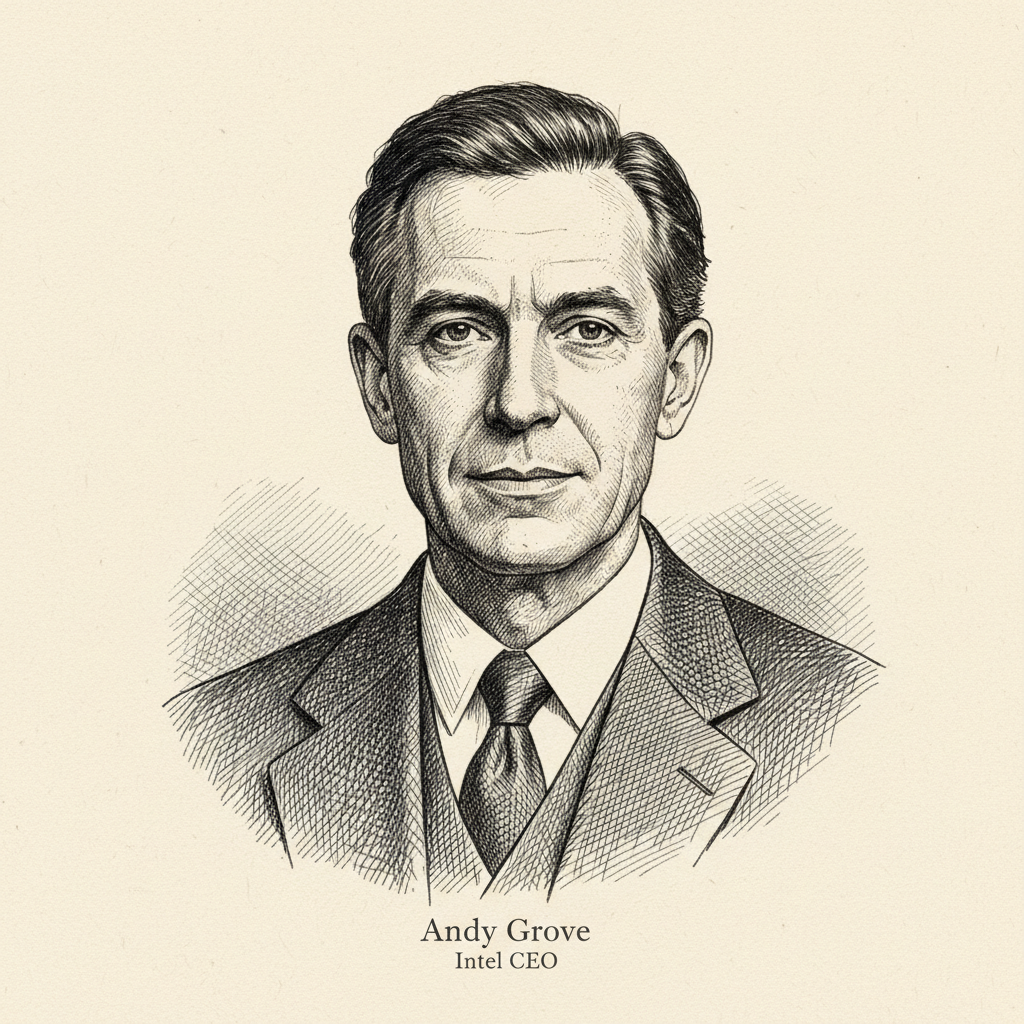
Andy Grove
The architect of Intel's dominance and a pivotal figure in semiconductor manufacturing, known for his relentless operational discipline and strategic foresight.
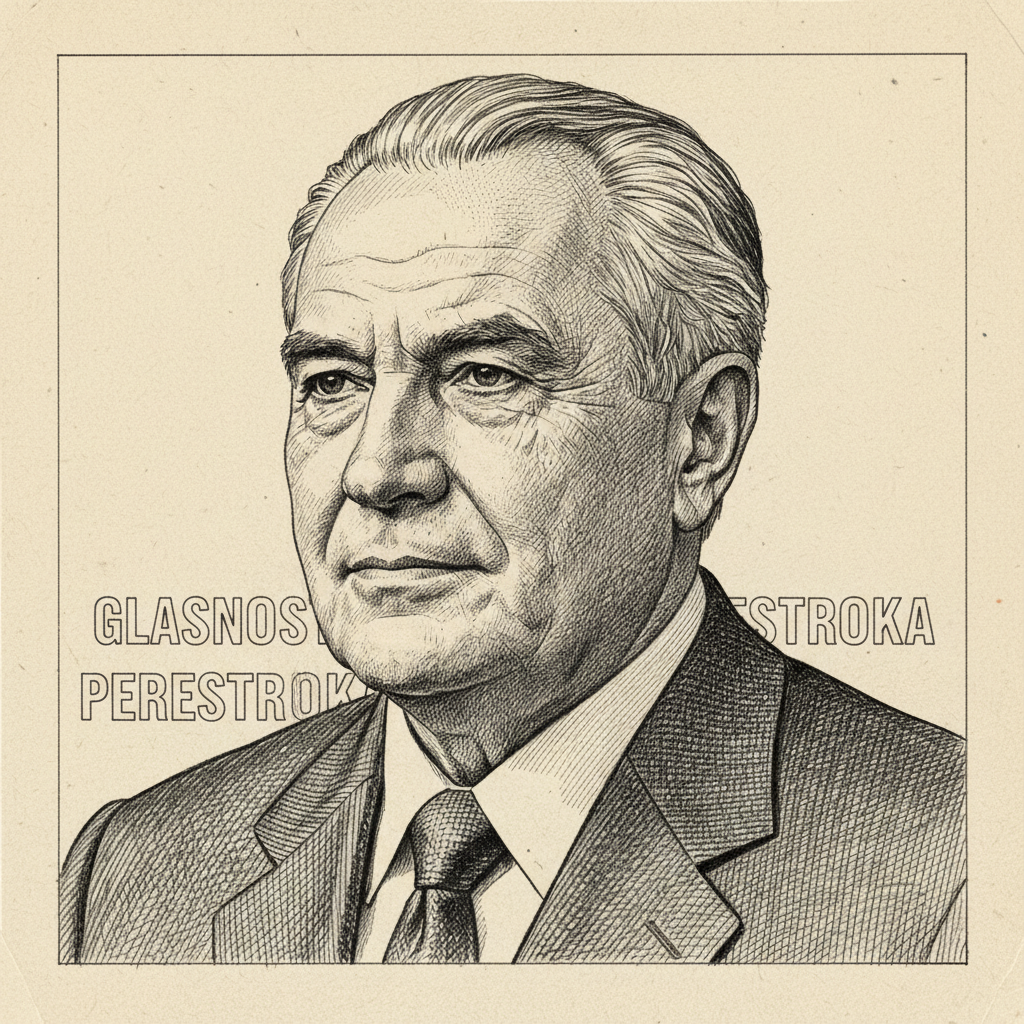
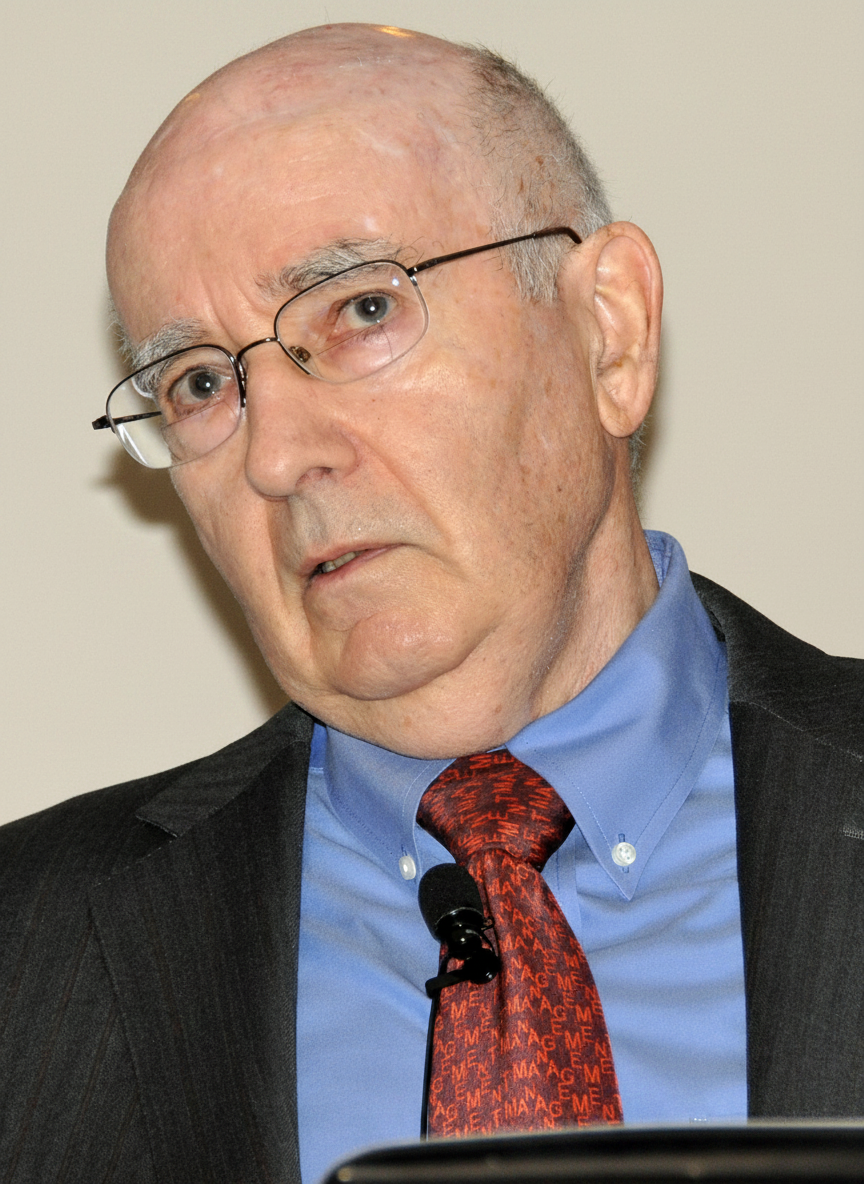
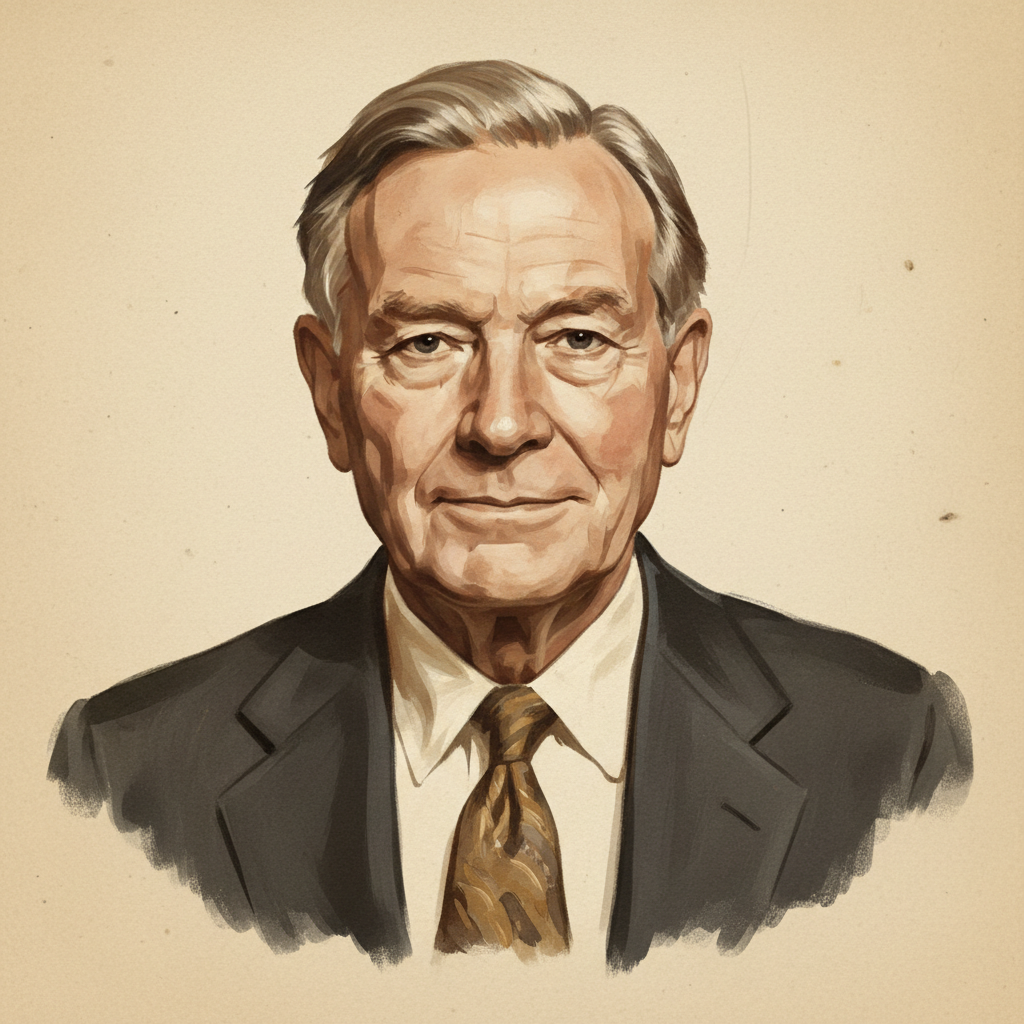
Andrew 'Andy' Stephen Grove was a Hungarian-American businessman and engineer who served as the third CEO of Intel Corporation. He left Hungary during the 1956 revolution at the age of 20 and moved to the United States, where he finished his education. He was the third employee and eventual third CEO of Intel, transforming the company into the world's largest semiconductor company.
Biography
Accomplishments
- 01Led Intel's strategic pivot from DRAM manufacturing to microprocessors in the mid-1980s, a decision critical to the company's survival and subsequent dominance.
- 02Oversaw Intel's revenue growth from $1.9 billion in 1987 (when he became CEO) to $26.3 billion in 1997 (when he stepped down as CEO), establishing Intel as the world's largest semiconductor company.
- 03Championed the 'Intel Inside' marketing campaign, which became one of the most successful co-branding strategies in technology history, increasing brand recognition and demand for Intel processors.
- 04Navigated Intel through significant competitive challenges, including the rise of RISC processors and intense competition from Japanese memory manufacturers in the 1980s, through continuous innovation and operational excellence.
- 05Pioneered the development and adoption of Objective Key Results (OKRs) for corporate alignment and performance management, a methodology widely adopted by numerous Silicon Valley companies.
- 06Authored 'High Output Management' (1983) and 'Only the Paranoid Survive' (1996), seminal business books that articulate his management principles and strategic insights, influencing generations of business leaders.
- 07Received the IEEE Medal of Honor in 2000 for his contributions to the semiconductor industry and effective management strategies.
Lessons for Operators
Key Takeaways
Practical lessons distilled for operators, investors, C-levels, and capital allocators.
Strategic Agility is Paramount
Grove's leadership during Intel's pivot from DRAM to microprocessors underscores the necessity for companies, especially in high-tech, to be willing to abandon past successes and reorient completely in the face of market shifts. This requires constant environmental scanning and decisive action.
Operational Excellence is a Competitive Weapon
Grove's engineering background translated into a deep focus on process, efficiency, and measurable outcomes. 'High Output Management' codified these principles, demonstrating how meticulous operational design can create significant competitive advantage and scale.
Culture of Candid Communication
Grove fostered a culture at Intel that prioritized open debate and 'constructive confrontation.' This ensured that critical issues were addressed directly and decisions were thoroughly vetted, preventing groupthink and fostering robust problem-solving.
The Power of Focus and Discipline (OKRs)
His emphasis on disciplined goal-setting through OKRs provided clarity, alignment, and accountability across Intel. This framework is transferable to any organization seeking to translate strategic vision into tactical execution.
Leadership by Informed Action
Grove was known for his hands-on approach, even as CEO, deeply understanding technical details and market dynamics. This enabled him to make informed, rather than abstract, strategic decisions and to challenge assumptions effectively.
Frameworks & Principles
Named frameworks and strategic principles they popularized or embodied.
Strategic Inflection Point
A strategic inflection point is a moment in time when fundamental changes occur in how business is conducted. These changes can be technological, competitive, customer-driven, or regulatory. A company's response to such a point determines its future trajectory, possibly leading to significant growth or decline.
When to useWhen assessing major shifts in technology, market demand, or competitive landscape that threaten existing business models or open new opportunities. Use it to proactively identify potential disruptions and plan strategic responses.
High Output Management Principles
A management philosophy centered on maximizing managerial leverage and output by designing processes, setting clear objectives (OKRs), and fostering a culture of active supervision and training. It emphasizes output-oriented thinking, process optimization, and team development.
When to useWhen designing or refining organizational processes, improving team productivity, establishing performance management systems, or training managers on effective leadership and delegation. Applicable to operational leaders at all levels.
Objectives & Key Results (OKRs)
A goal-setting framework used to define and track objectives and their outcomes. Objectives are qualitative, ambitious goals, while Key Results are specific, measurable, and time-bound metrics that show progress toward the objective. OKRs provide clarity, focus, and alignment.
When to useTo align individual, team, and company goals, foster transparency, and drive accountability across an organization. Especially effective in rapidly growing companies or those requiring tight strategic execution.
Healthy Paranoid Mindset
A leadership attribute characterized by constant vigilance against competitive threats, market shifts, and potential disruptions. It's not about debilitating fear, but an active, proactive awareness that assumes the current market dominance or competitive advantage is always at risk.
When to useIn competitive strategy formulation, risk management, and fostering an innovation culture. Employed by leaders who seek to anticipate and counter competitive moves and technological obsolescence proactively.
Recent Appearances
Latest interviews, keynotes, and press from the past half year.
 youtube.com
 youtube.comyoutube.com
 youtube.com
 youtube.com
 youtube.com
 youtube.com
 youtube.com
 youtube.com
 youtube.com
 youtube.com
 youtube.com
 youtube.com
 youtube.com
 youtube.com
 youtube.com
 youtube.com
 youtube.com
 youtube.com
 youtube.com
 m.youtube.com
 youtube.com
 youtube.com
 youtube.com
 youtube.com
 youtube.com
 youtube.com
 youtube.com
 youtube.com
 youtube.com
 youtube.com
 youtube.com
 youtube.com
 youtube.com
 m.youtube.com
 youtube.com
 youtube.com
 youtube.com
![Andy Grove: Only The Paranoid Survive [Outliers] - YouTube](https://i.ytimg.com/vi/DLL4WS9y2nA/hqdefault.jpg) youtube.com
youtube.com youtube.comyoutube.com
 youtube.com
![SIEPR Economic Summit 2026 | Lip-Bu Tan of Intel [abridged]](https://i.ytimg.com/vi/fnIrYAO0DiU/hqdefault.jpg) youtube.com
youtube.com youtube.com
 youtube.com
 youtube.com
 youtube.com
 youtube.com
 youtube.com
 youtube.com
 youtube.com
 youtube.com
 youtube.com
 youtube.com
 youtube.com
 youtube.com
 youtube.comyoutube.com
 youtube.com
 youtube.com
 youtube.com
 youtube.com
 youtube.com
 youtube.com
 youtube.com
 youtube.com
 youtube.com
 youtube.com
 youtube.com
 youtube.com
 youtube.com
 youtube.com
 youtube.com
 youtube.com
 youtube.com
 youtube.com
 youtube.com
 youtube.com
 youtube.com
 youtube.com
 m.youtube.com
 youtube.com
 youtube.com
 youtube.com
 m.youtube.comm.youtube.com
 youtube.com
 youtube.com
 youtube.com
 youtube.com
 youtube.com
 youtube.com
 youtube.com
 youtube.com
 m.youtube.com
 youtube.com
 youtube.com
 m.youtube.com
 youtube.com
 youtube.com
 youtube.com
 youtube.com
 youtube.com
 m.youtube.com
Sources & Further Reading
Profiles, interviews, podcasts, and articles used to compile and verify this entry. Each link opens at the original publisher.
Explore Related Titans
Other figures in the archive who share Andy Grove's domain, geography, or era.
More in Technology




From United States
Contemporaries — born 1930s