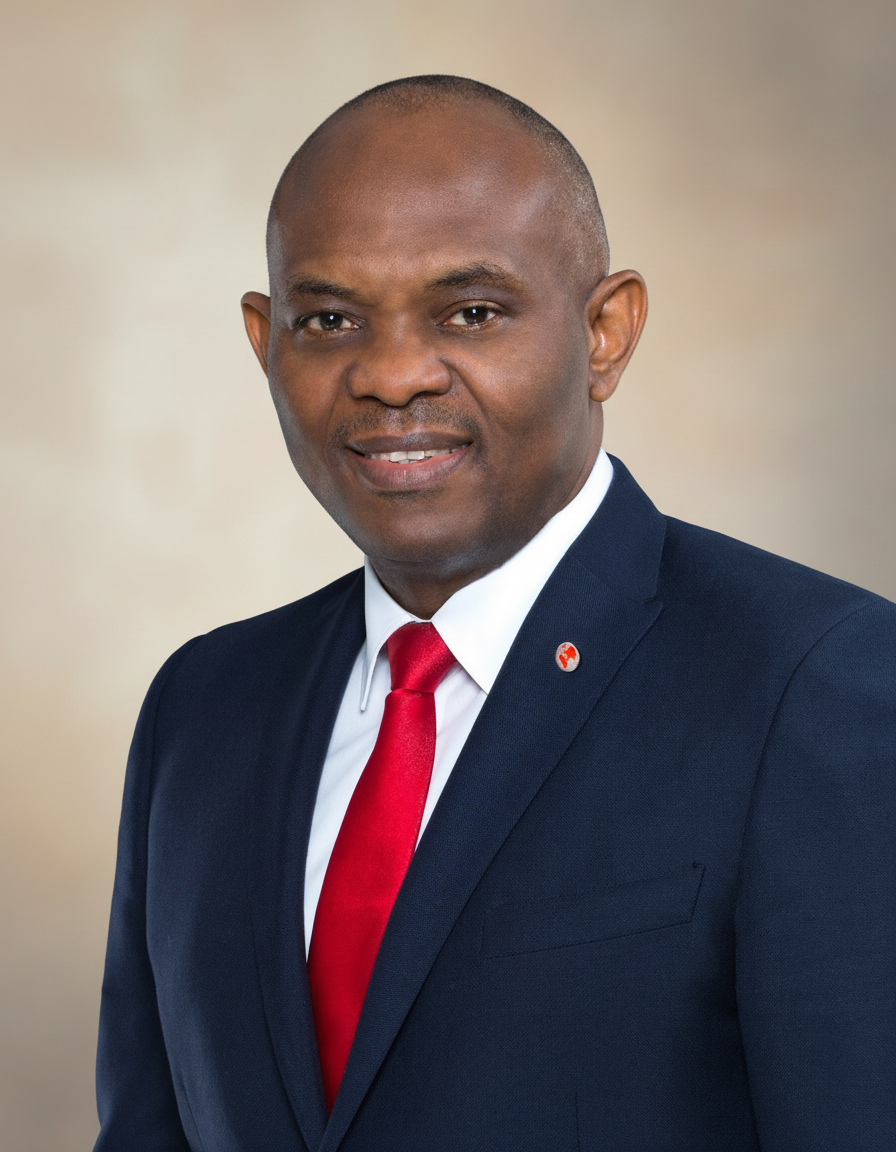
Tony Elumelu
Pioneered Africapitalism by consolidating distressed assets into United Bank for Africa and building Heirs Holdings into a diversified energy and infrastructure titan.
Tony Elumelu is a Nigerian pan-African financier, conglomerate builder, and author of the economic doctrine of Africapitalism. He engineered the 1997 turnaround of distressed Crystal Bank into Standard Trust Bank, executed a historic merger with United Bank for Africa in 2005, and later established Heirs Holdings, which controls dominant market assets across financial services, power generation, hospitality, and energy throughout Africa.
Biography
Accomplishments
- 01Rescued distressed Crystal Bank of Africa in 1997 and transformed it into Standard Trust Bank, one of Nigeria's fastest-growing retail financial institutions.
- 02Orchestrated the 2005 merger between Standard Trust Bank and United Bank for Africa (UBA), scaling the institution into a pan-African powerhouse operating across 20 African markets, the US, UK, France, and the UAE.
- 03Founded Heirs Holdings in 2010, deploying proprietary capital across vital economic sectors including financial services, healthcare, hospitality, and natural resources.
- 04Led the 2011 takeover and restructuring of Transnational Corporation of Nigeria (Transcorp), turning its power division into a generator supplying over 15% of Nigeria's on-grid electricity capacity.
- 05Arranged the $1.1 billion integrated debt and equity acquisition of Shell, Total, and Eni's 45% stake in Nigerian oil block OML 17 in 2021 through Heirs Energies.
- 06Established the Tony Elumelu Foundation's $100 million entrepreneurship programme in 2015, disbursing non-refundable $5,000 seed grants and training to over 20,000 African founders.
Lessons for Operators
Key Takeaways
Practical lessons distilled for operators, investors, C-levels, and capital allocators.
Africapitalism as an Alpha Engine
Long-term private sector investments in core infrastructure generate superior risk-adjusted returns compared to purely speculative trading because they resolve structural operational bottlenecks across emerging markets.
Consolidation Beats Greenfield Development in Fragmented Markets
Acquiring a dated platform with an established banking license and legacy deposit base (UBA in 2005) is significantly cheaper and faster than building distribution organically, provided leadership aggressively strips out operational rot.
Sovereign Strategic Alignment
Investing heavily in national baseload energy, industrial manufacturing, and critical payment infrastructure aligns corporate growth with state survival, creating deep institutional moats against expropriation and regulatory antagonism.
Governance Transition at Peak Scale
Separating executive holding-company oversight from operating-company CEOs enables continuous portfolio rebalancing and ensures business continuity despite regulatory interventions.
Frameworks & Principles
Named frameworks and strategic principles they popularized or embodied.
The Africapitalism Capital Allocation Framework
A strategic doctrine mandating that private capital must commit to long-term equity in foundational sectors (energy, financial plumbing, transport, basic industries) to generate both competitive financial returns and measurable domestic economic transformation. Capital allocators reject purely extractive or short-term arbitrage models in favor of localized value capture.
When to useApply when entering emerging or developing markets where sovereign state capacity is constrained and long-term operating moats can be created by solving infrastructural deficits.
The STB Diagnostic Turnaround Model
A rapid four-step distressed asset recovery sequence: (1) Instant balance sheet cleanup and write-down of unrecoverable assets; (2) Aggressive deployment of unified operating software across all physical outposts; (3) Alignment of managerial compensation directly to low-cost deposit mobilization; and (4) Radical rebranding to project stability and youth against aging incumbent institutions.
When to useApply when acquiring heavily distressed legacy firms within highly regulated, fragmented service industries that suffer from operational inertia rather than structural market obsolescence.
Sources & Further Reading
Profiles, interviews, podcasts, and articles used to compile and verify this entry. Each link opens at the original publisher.
Explore Related Titans
Other figures in the archive who share Tony Elumelu's domain, geography, or era.
More in Finance & Investing






From Nigeria




Contemporaries — born 1960s