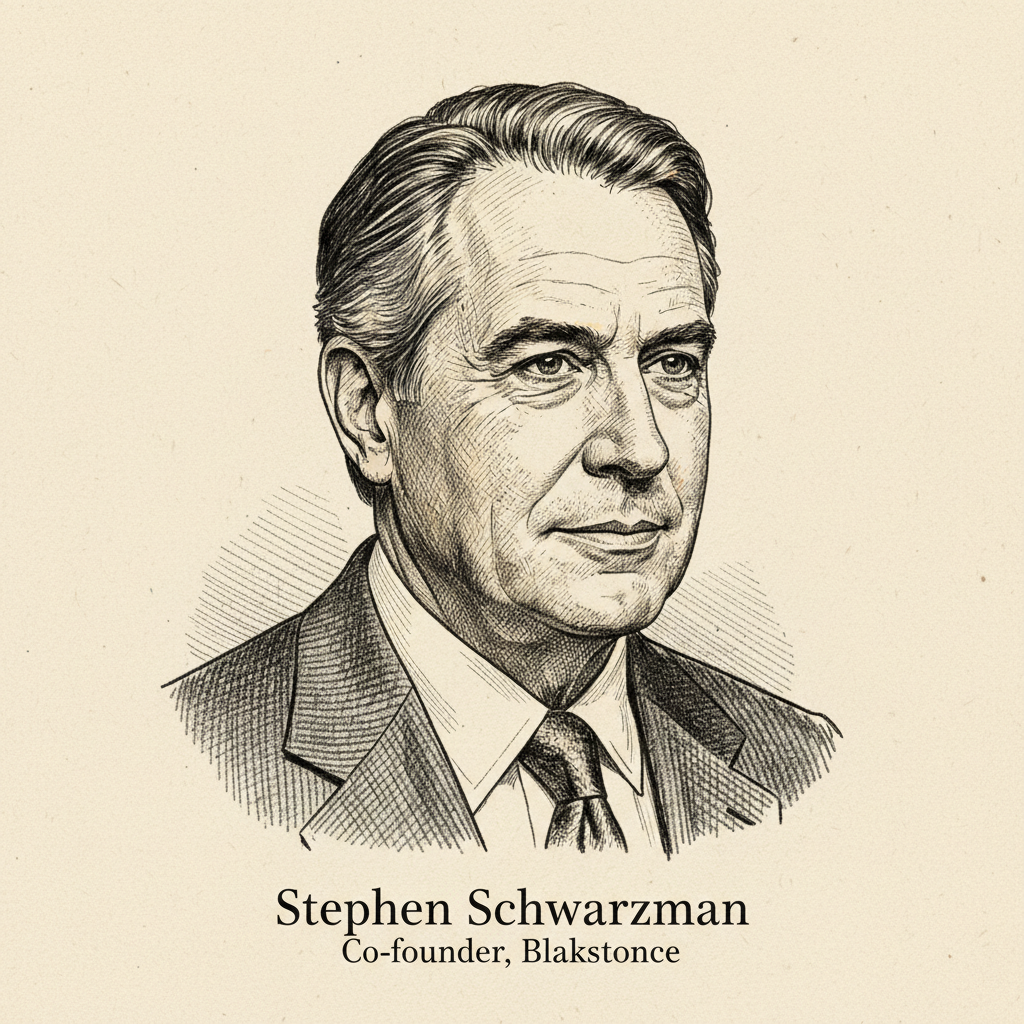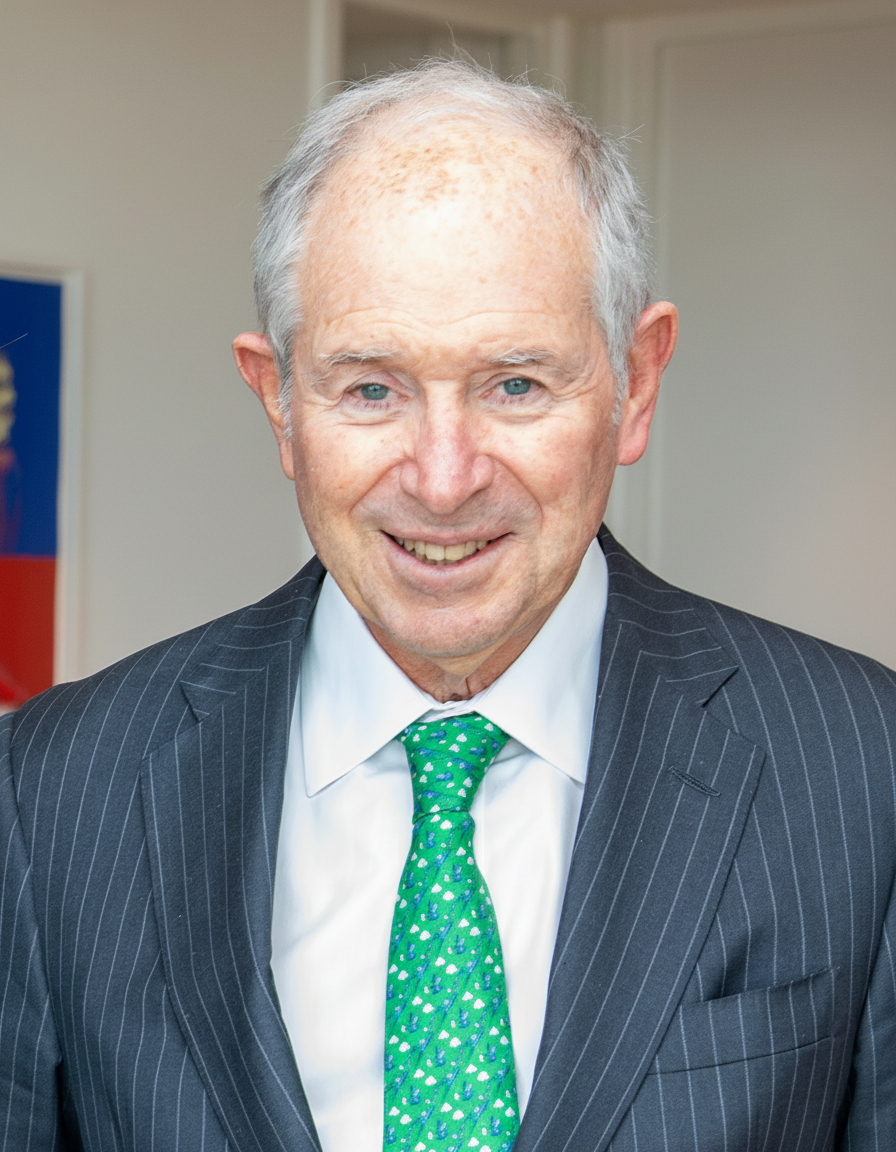
Stephen A. Schwarzman
Stephen A. Schwarzman: The architect of modern private equity, transforming alternative investments into a mainstream financial powerhouse.
Stephen A. Schwarzman is an American financier and philanthropist. He co-founded The Blackstone Group in 1985 with Peter G. Peterson, building it into one of the world's largest alternative investment firms with significant holdings across private equity, real estate, credit, and hedge funds.
Biography
Accomplishments
- 01Co-founded The Blackstone Group in 1985 and scaled it into the world's largest alternative asset manager, overseeing trillions in assets under management across diverse strategies.
- 02Pioneered the institutionalization and expansion of private equity beyond traditional buyouts, successfully integrating real estate, credit, and hedge fund solutions.
- 03Led Blackstone's groundbreaking 2007 IPO, a pivotal moment that transformed the private equity business model and provided liquidity to early investors.
- 04Executed landmark private equity deals, including the $39 billion acquisition of Equity Office Properties Trust in 2007 and the $26 billion buyout of Hilton Worldwide in 2007, demonstrating significant value creation at scale.
- 05Established Schwarzman Scholars at Tsinghua University in 2013 with a $100 million personal gift, creating a prestigious postgraduate scholarship program akin to the Rhodes Scholarship for future global leaders.
- 06Diversified Blackstone's revenue streams and asset classes, evolving from a pure-play private equity firm to a comprehensive alternative investment powerhouse.
Lessons for Operators
Key Takeaways
Practical lessons distilled for operators, investors, C-levels, and capital allocators.
The Power of Institutionalization
Schwarzman's genius was not just in doing deals, but in building an enduring institution around private equity that could scale, attract vast capital, and diversify. Operators should think beyond single transactions to repeatable, scalable systems.
Strategic Diversification
Blackstone’s expansion from pure private equity into real estate, credit, and infra exemplified intelligent diversification. This creates multiple growth engines and hedges against sector-specific downturns, a principle applicable to any enterprise.
Long-Term Vision in Fund Management
His commitment to raising ever-larger, multi-year funds allowed Blackstone to execute truly transformational acquisitions and ride out short-term market volatility. Fund managers should prioritize patient capital and long-term value creation over short-term gains.
Talent as a Core Asset
Schwarzman stresses that hiring and retaining exceptional talent is paramount. In knowledge-intensive fields like finance, the quality of people directly dictates the quality of outcomes. Leaders must invest heavily in human capital.
Seizing Market Dislocation
Blackstone frequently made highly profitable investments during periods of market stress (e.g., post-2008 financial crisis in real estate). This highlights the importance of having capital available and conviction during downturns.
Frameworks & Principles
Named frameworks and strategic principles they popularized or embodied.
Institutional Private Equity Model
Moving beyond individual deals to establishing a diversified, multi-asset class firm with robust fundraising capabilities, professional management, and systematic investment processes. Focuses on institutionalizing alternative assets.
When to useApplicable for fund managers seeking to scale beyond niche strategies, investors evaluating the stability of alternative asset managers, and operators understanding the motivations of large institutional investors.
Scaled Opportunistic Investment
A strategy centered on identifying large-scale, often complex investment opportunities across various asset classes (e.g., undervalued real estate, carve-outs, public-to-private buyouts) and deploying significant capital with a long-term value creation horizon. Often involves operational improvements post-acquisition.
When to useUseful for investors seeking to understand large-cap private equity rationale, corporate strategists considering divestitures or M&A, and operators aiming to identify and capitalize on market inefficiencies at scale.
The 'Best People' Principle
A management philosophy that places paramount importance on hiring and retaining the absolute best talent in every role. It assumes that superior human capital directly leads to superior performance and competitive advantage in complex, intellectual capital-driven industries.
When to useApplicable to any leader building a high-performance team in knowledge-intensive sectors, C-level executives establishing organizational culture, and HR strategists designing talent acquisition and retention programs.
Explore Related Titans
Other figures in the archive who share Stephen A. Schwarzman's domain, geography, or era.
More in Finance & Investing






From United States






Contemporaries — born 1940s