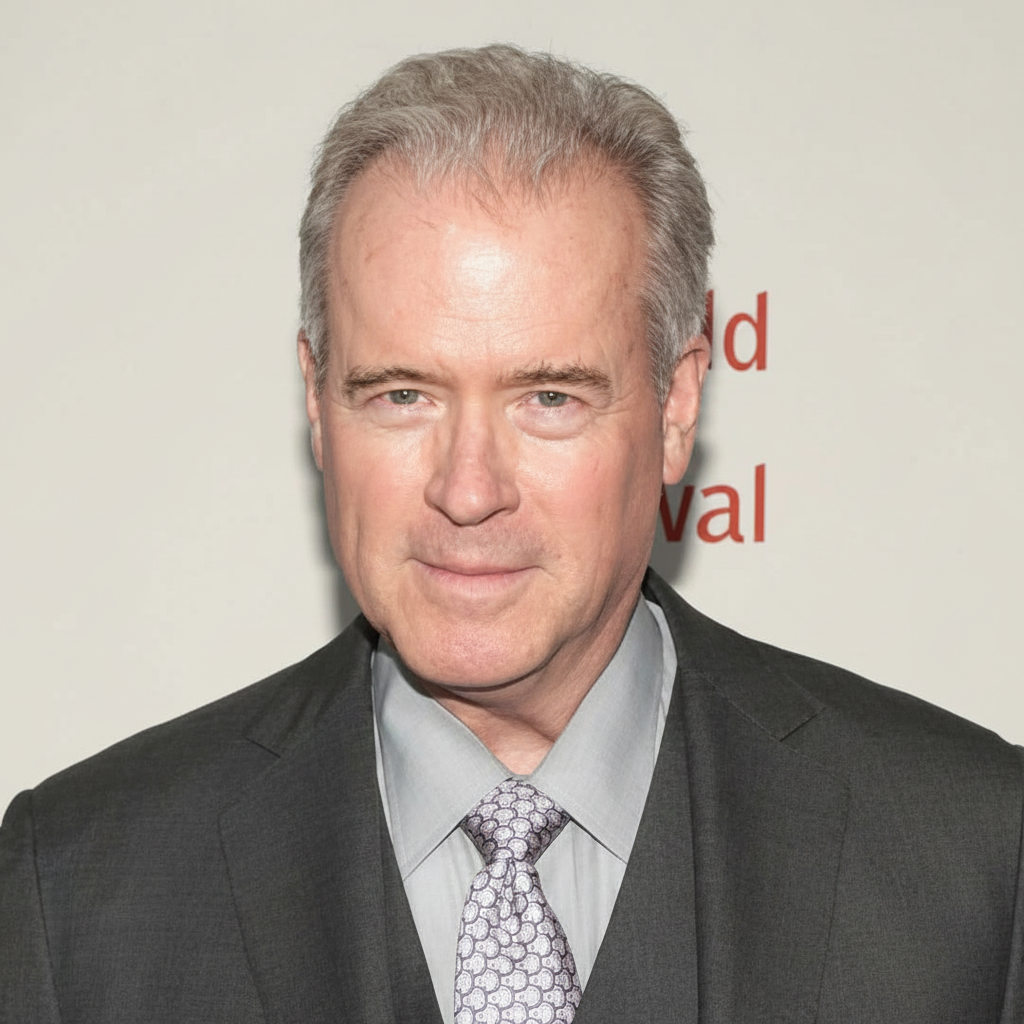
Robert Mercer
A pioneer in statistical machine translation and quantitative finance, known for co-leading Renaissance Technologies and his significant contributions to algorithmic trading.
Robert Mercer is an American computer scientist, hedge fund executive, and artificial intelligence researcher. He co-founded Renaissance Technologies, a highly successful quantitative hedge fund, after pioneering statistical methods for machine translation at IBM. His work at Renaissance, particularly with the Medallion Fund, propelled it to become one of the most profitable and secretive funds globally. More recently, Mercer has been a notable figure in political funding and data analytics through his investment in Cambridge Analytica.
Biography
Accomplishments
- 01Co-developed groundbreaking statistical machine translation techniques at IBM's Thomas J. Watson Research Center in the 1970s and 1980s, which laid the groundwork for modern NLP.
- 02Led the development and optimization of the proprietary trading algorithms for Renaissance Technologies' Medallion Fund, consistently one of the most profitable hedge funds in history, generating average annual returns exceeding 39% net of fees from 1988-2018.
- 03Served as co-CEO of Renaissance Technologies from 2010 to 2017, overseeing a period of sustained high performance and strategic growth for the firm.
- 04Pioneered the application of sophisticated quantitative methods and big data analytics to identify market inefficiencies across diverse financial instruments.
- 05Authored or co-authored influential academic papers on natural language processing and statistical modeling, demonstrating early foresight into the potential of data-driven approaches.
Lessons for Operators
Key Takeaways
Practical lessons distilled for operators, investors, C-levels, and capital allocators.
Algorithmic Supremacy
Mercer's career epitomizes the pursuit of algorithmic excellence. In quantitative finance, a superior algorithm, even one offering a fractional edge, can generate consistent, outsized returns when applied at scale and with speed. This underscores the imperative for investors and operators to continually invest in enhancing their analytical and processing capabilities to gain a data-driven advantage.
The Value of Deep Scientific Talent
Hiring and retaining top-tier scientific and mathematical talent is crucial for organizations aiming to innovate at the edge. Mercer's background as a physicist and computer scientist provided the foundational understanding necessary to build and manage highly complex quantitative systems, illustrating that a deep theoretical grasp is often a prerequisite for practical groundbreaking applications.
Iterative Optimization as a Core Strategy
Renaissance's success, under Mercer's leadership, was not due to a static 'secret sauce' but continuous, incremental refinement of its models. This highlights that sustainable competitive advantage in complex, dynamic systems (like financial markets) comes from an institutionalized approach to iterative optimization, A/B testing, and ongoing research and development.
Proprietary Data and Models are Crown Jewels
The extreme secrecy surrounding Renaissance's Medallion Fund emphasizes the strategic value of proprietary data sources and algorithmic models. For any enterprise, identifying, securing, and continuously upgrading its unique data assets and analytical frameworks can be the cornerstone of a competitive moat. Protect your IP vigorously.
Ethical and Reputational Due Diligence
Mercer's involvement in non-financial ventures, particularly Cambridge Analytica, demonstrated how the actions and affiliations of key executives can attract significant public scrutiny and potentially affect a firm's reputation, even if legally distinct. Enterprise leaders must consider potential reputational risks associated with the public activities of their most visible figures.
Frameworks & Principles
Named frameworks and strategic principles they popularized or embodied.
Statistical Arbitrage Model
This involves identifying short-term price inefficiencies between highly correlated assets using econometric and statistical methods. It relies on the assumption that deviations from historical relationships are temporary and will revert to the mean.
When to useApplicable for quantitative trading firms seeking to profit from micro-market inefficiencies, often in high-frequency or medium-frequency trading strategies. Requires significant computational power, low latency infrastructure, and robust risk management.
Machine Learning for Pattern Recognition
Utilizing supervised and unsupervised machine learning algorithms (e.g., neural networks, support vector machines) to detect subtle, non-linear patterns in vast datasets that human analysts or simpler statistical models might miss. This framework moves beyond traditional linear regression.
When to useIdeal for complex problem domains with large volumes of historical data, such as predicting market movements, identifying fraudulent transactions, or optimizing supply chains. Requires specialized data science talent and deep computational resources.
Proprietary Data Advantage
Developing and utilizing unique, non-public, or uniquely processed datasets to gain an informational edge. This can involve alternative data sources, proprietary scraping techniques, or highly sophisticated data hygiene and feature engineering.
When to useApplicable across industries where information asymmetry or superior data analytics can confer competitive advantage. Fund managers use this to find alpha; enterprises use it for market intelligence, customer behavior prediction, or operational efficiencies.
Sources & Further Reading
Profiles, interviews, podcasts, and articles used to compile and verify this entry. Each link opens at the original publisher.
Explore Related Titans
Other figures in the archive who share Robert Mercer's domain, geography, or era.
More in Finance & Investing










From United States








Contemporaries — born 1940s