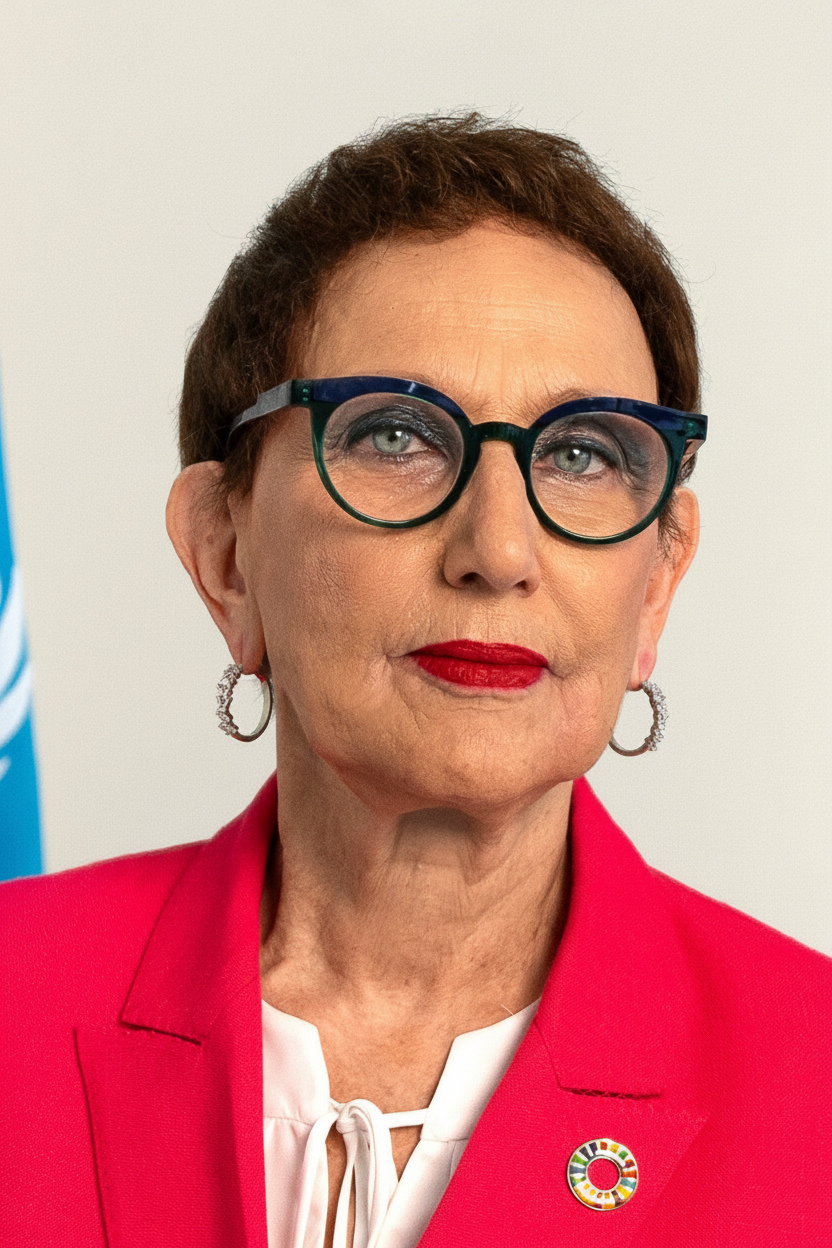
Rebeca Grynspan
A leading voice in global economic governance, sustainable development, and trade equity.
Rebeca Grynspan is a distinguished economist and advocate for sustainable development, poverty reduction, and gender equality. She previously served as the first woman Secretary-General of the Ibero-American General Secretariat (SEGIB) and as Under-Secretary-General of the United Nations and Associate Administrator of the United Nations Development Programme (UNDP). Her career spans high-level government positions in Costa Rica, including Second Vice-President and Minister of Housing and Urban Development.
Biography
Accomplishments
- 01Appointed the first woman and Central American Secretary-General of UNCTAD in September 2021, marking a significant leadership milestone in global economic governance.
- 02Served as the first woman Secretary-General of the Ibero-American General Secretariat (SEGIB) from 2014 to 2021, fostering enhanced cooperation and integration among 22 nations.
- 03Held the position of Under-Secretary-General of the United Nations and Associate Administrator of UNDP from 2010 to 2014, overseeing substantial development portfolios and operational reforms.
- 04As Second Vice-President of Costa Rica (1994-1998), she played a crucial role in national economic and social policy, including housing and urban development initiatives.
- 05Successfully negotiated and coordinated global initiatives on financing for development, debt relief, and technology transfer, impacting developing economies worldwide.
- 06Launched significant South-South cooperation programs during her tenure at SEGIB, generating tangible economic and cultural benefits for member states.
- 07Advocated for debt restructuring mechanisms, notably during the COVID-19 pandemic, to provide fiscal space for developing countries' recovery and resilience.
- 08Led UNCTAD's efforts to address the global supply chain crises and commodity price volatility, providing policy recommendations for international trade stability and resilience.
Lessons for Operators
Key Takeaways
Practical lessons distilled for operators, investors, C-levels, and capital allocators.
Holistic Development is Economic Strategy
Grynspan's career underscores that economic growth cannot be separated from social equity and environmental sustainability. Businesses and investors should integrate ESG principles not as a peripheral concern, but as a core component of their long-term strategic planning for resilience and market advantage.
Diplomacy Unlocks Value
Her ability to navigate complex geopolitical landscapes and secure consensus in multilateral organizations highlights that effective 'deal-making' in international trade and development relies heavily on patient diplomacy, cultural understanding, and persistent bridge-building. For operators, this means prioritizing stakeholder engagement and negotiation skills in global ventures.
Innovation in Financing
Grynspan's efforts to reform financial architectures for developing countries emphasize the necessity of creative financing solutions. Fund managers and capital allocators should actively seek out and develop innovative financial instruments tailored for sustainable development, climate action, and debt restructuring, recognizing these as emerging high-impact investment sectors.
Regional Blocs as Growth Engines
Her successful leadership at SEGIB demonstrates the power of regional cooperation to boost economic integration and confront shared challenges. Enterprise leaders should evaluate regional economic communities not just for market access, but as platforms for coordinated investment, infrastructure development, and policy harmonization.
Championing the Digitally Disconnected
Grynspan consistently advocates for digital inclusion and technology transfer as crucial for equitable development. This signals to investors and tech companies the vast untapped market potential and social impact opportunities in bridging the digital divide, particularly in emerging economies.
Leadership Through Crisis
Her response to global economic disruptions, from debt crises to supply chain shocks, illustrates that proactive, collaborative international leadership is paramount. C-level executives should foster organizational agility and invest in robust risk management frameworks that incorporate geopolitical and macroeconomic analyses.
Frameworks & Principles
Named frameworks and strategic principles they popularized or embodied.
Sustainable Development Goals (SDGs) Integration
Grynspan's work is deeply aligned with the UN SDGs, emphasizing an integrated approach to poverty, planet, and prosperity. She champions policies and initiatives that contribute to multiple SDGs simultaneously.
When to useApplicable for C-levels and enterprise leaders in developing comprehensive ESG strategies, aligning business objectives with global sustainability targets, and reporting on impact. Also relevant for investors evaluating ventures based on their contribution to global development agendas.
South-South Cooperation Model
Leveraging her experience at SEGIB, Grynspan promotes cooperation among developing countries as a powerful tool for knowledge sharing, technology transfer, and economic integration, reducing reliance on traditional North-South development aid models.
When to useOperators and investors involved in emerging markets should consider this framework for strategic partnerships, joint ventures, and market entries. It's particularly useful for identifying opportunities where developing countries can jointly solve common challenges and create new markets.
Debt Restructuring for Development
A core aspect of her advocacy is the need for timely and comprehensive debt restructuring mechanisms for developing countries to free up fiscal space for essential public services and green investments, rather than spiraling into chronic debt.
When to useRelevant for fund managers and capital allocators assessing sovereign risk, structuring impact investments, or evaluating opportunities in distressed debt markets within a development context. Also for financial institutions looking to engage in sustainable finance solutions.
Trade as an Enabler of Inclusive Growth
Grynspan views international trade not merely as an exchange of goods, but as a critical mechanism for development, poverty reduction, and technology diffusion when fair and inclusive rules are applied, addressing issues like non-tariff barriers and digital trade divides.
When to useEnterprise leaders in global trade, supply chain management, and e-commerce should evaluate their strategies through this lens, focusing on ethical sourcing, equitable value chain distribution, and leveraging digital platforms for broader market access in developing countries.
Sources & Further Reading
Profiles, interviews, podcasts, and articles used to compile and verify this entry. Each link opens at the original publisher.
Explore Related Titans
Other figures in the archive who share Rebeca Grynspan's domain, geography, or era.
More in Other








Contemporaries — born 1950s