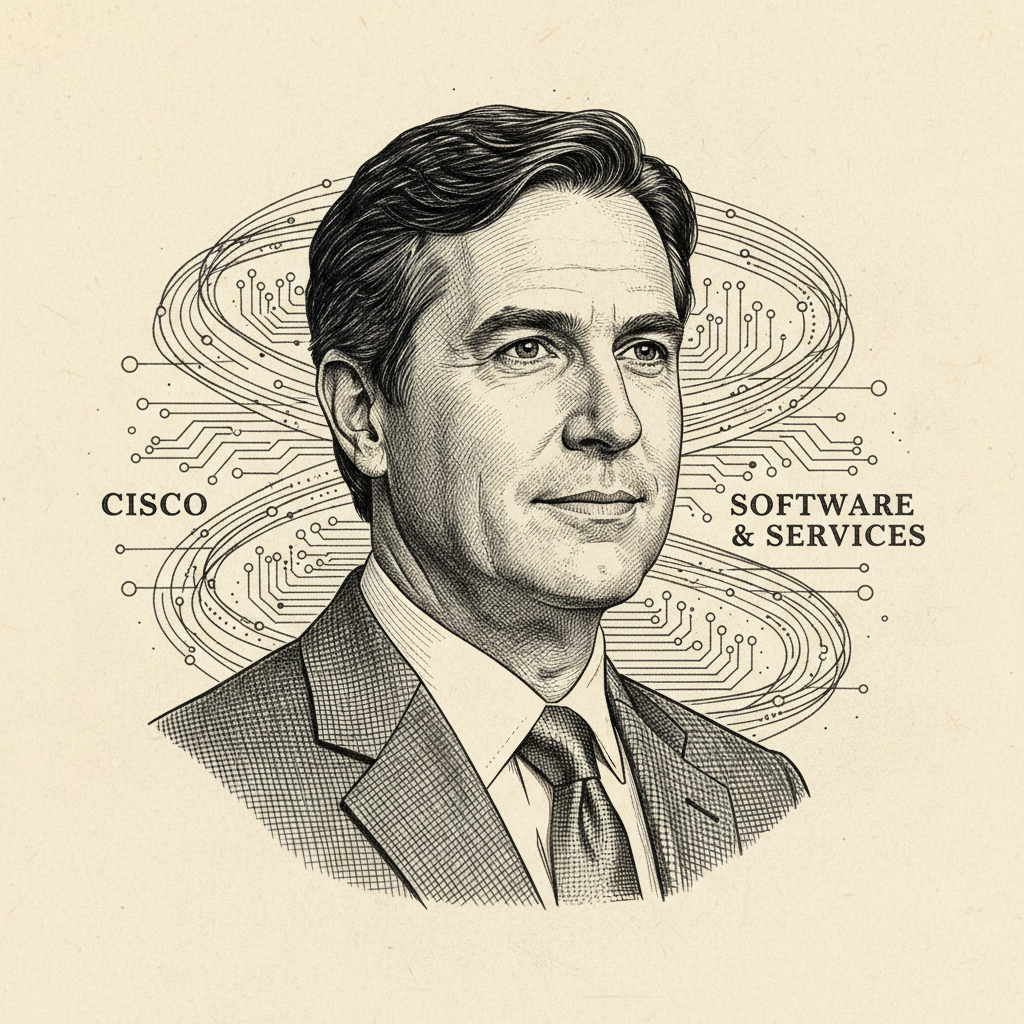
Jim Farley
Jim Farley: The architect driving Ford's electrification and software-defined vehicle transformation.
Jim Farley is the President and CEO of Ford Motor Company, leading its global operations since October 1, 2020. With a career spanning over three decades in the automotive industry, including a significant tenure at Toyota before joining Ford in 2007, Farley has spearheaded critical strategic shifts, notably the company's aggressive push into electric vehicles and digital services.
Biography
Accomplishments
- 01Orchestrated the 'Ford+ plan' (launched 2021), a fundamental reorganization separating Ford's electric (Model e), internal combustion (Ford Blue), and commercial (Ford Pro) vehicle businesses, aiming to accelerate EV transition and optimize legacy assets.
- 02Spearheaded Ford's aggressive electric vehicle offensive, including the successful launches of high-demand products like the Mustang Mach-E (2020), F-150 Lightning (2022), and E-Transit (2022), which quickly gained market traction.
- 03Initiated significant investments in EV and battery manufacturing capacity, including the BlueOval City complex in Tennessee and BlueOval SK battery plants in Kentucky (announced 2021), totaling over $11 billion in partnerships.
- 04Improved Ford's focus on commercial vehicle solutions through the establishment of Ford Pro (2022), which generated $1.3 billion in Q1 2023 EBIT and emphasizes software, charging, and service solutions for fleet customers.
- 05Drove an increased emphasis on software and connected services, aiming to generate recurring revenue streams and enhance customer experiences through features like FordPass and over-the-air updates.
- 06Successfully navigated significant supply chain disruptions, particularly during the semiconductor crisis (2020-2023), implementing strategies to prioritize high-margin products and manage production volatility.
Lessons for Operators
Key Takeaways
Practical lessons distilled for operators, investors, C-levels, and capital allocators.
Structural Agility is Paramount
Large, established corporations must be prepared to fundamentally reshape their internal structures to address market disruption effectively. Farley's splitting of Ford into Model e, Ford Blue, and Ford Pro reflects a proactive effort to grant autonomy and focus to distinct business models, which can accelerate decision-making and resource allocation in rapidly evolving sectors like EVs and connected services.
Beyond Product: The Service & Software Imperative
The automotive industry's future profitability lies not just in vehicle sales but increasingly in recurring revenue from software, connectivity, and commercial services. Ford Pro's focus on telematics, charging solutions, and uptime for commercial fleets exemplifies this shift, emphasizing the creation of an ecosystem around the core product to enhance customer stickiness and margin expansion.
Leadership by Example in Transition
Farley's leadership style, characterized by direct communication, a willingness to challenge conventions, and an emphasis on speed and competitiveness, is critical during periods of intense transformation. His active role in product development and market engagement sets a tone for the entire organization to embrace change and high performance.
Leveraging Brand Equity for Innovation
Introducing revolutionary products under revered brand names (e.g., F-150 Lightning) can significantly reduce market resistance to new technologies. This strategy capitalizes on existing trust and loyalty to bridge the gap between traditional consumer preferences and future-oriented offerings, making innovation more palatable and less risky.
The Importance of Manufacturing and Supply Chain Control
Farley's emphasis on partnerships for battery production and investments in domestic manufacturing (e.g., BlueOval City) underscores the strategic imperative of controlling critical aspects of the supply chain, particularly for new technologies. This reduces reliance on external entities and mitigates risks associated with geopolitical instability or supply shocks.
Frameworks & Principles
Named frameworks and strategic principles they popularized or embodied.
Ford+ Plan (Strategic Reorganization)
A comprehensive strategy to reorganize Ford into distinct, entrepreneurial business units: Ford Model e (leading EV development, software, and advanced technology), Ford Blue (optimizing iconic ICE vehicle portfolios), and Ford Pro (delivering commercial vehicles, software, and services). The goal is to accelerate transformation, improve financial reporting transparency, and capture value in new growth areas.
When to useApplicable for established enterprises facing disruptive technological shifts where legacy structures impede agility. Use when clarity on value drivers is needed, existing business models are becoming commoditized, or distinct operational models are required for emerging segments vs. mature ones.
EV First, Connected Second (Product Development Prioritization)
This framework prioritizes the development of compelling electric vehicle products leveraging Ford's deep brand heritage (e.g., F-150 Lightning) while simultaneously embedding advanced connectivity and software features as core differentiators, moving beyond hardware-centric thinking to embrace a holistic digital-physical product experience.
When to useRelevant for industries undergoing a transition to new technological platforms where traditional product attributes are being redefined. Use to ensure that innovation focuses on fundamental shifts in user experience and value proposition, rather than incremental improvements to legacy offerings, while still leveraging established brand strengths.
Ford Pro Model (Integrated Commercial Solutions)
A business model focused on delivering a complete ecosystem of products and services for commercial customers, including vehicles, software (telematics, fleet management), charging infrastructure, parts, and financing. It aims to maximize uptime, reduce total cost of ownership, and generate recurring revenue for fleet operators.
When to useApplicable for businesses serving B2B segments, particularly those involving asset-heavy operations. Use to transform a transactional product sale into a comprehensive service offering, driving higher customer lifetime value, market differentiation, and more predictable revenue streams through bundling and vertical integration.
Explore Related Titans
Other figures in the archive who share Jim Farley's domain, geography, or era.
More in Transportation & Logistics






From United States




Contemporaries — born 1960s