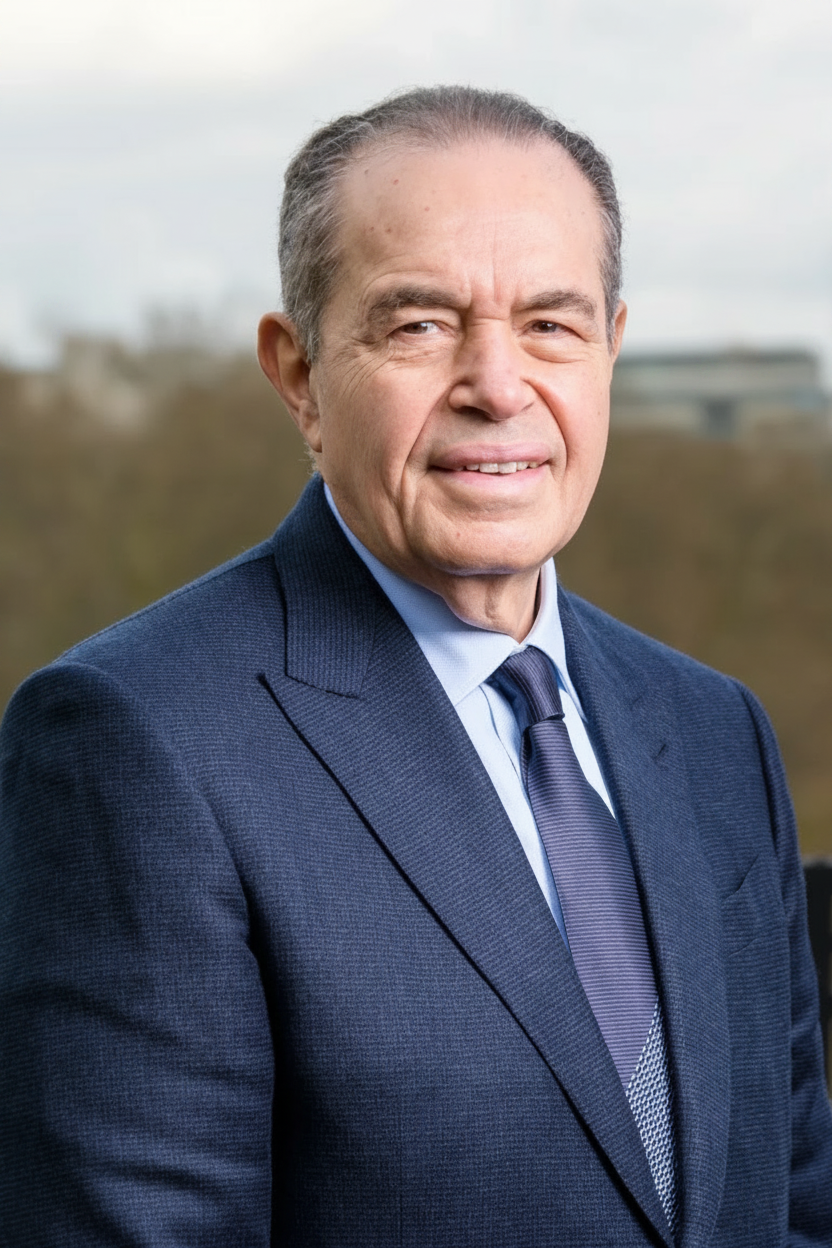
Hassan Abdalla
A banking veteran with extensive experience in navigating financial institutions through periods of economic transformation and market volatility.
Hassan Abdalla is an Egyptian banking executive currently serving as the Governor of the Central Bank of Egypt (CBE) since August 2022. Prior to his central banking role, he held leadership positions, most notably as the CEO and Vice Chairman of the Arab African International Bank (AAIB) for over two decades, transforming it into a prominent regional financial institution. He also founded and led the investment banking firm JSC Financial Advisory.
Biography
Accomplishments
- 01Transformed the Arab African International Bank (AAIB) into a leading regional financial institution during his tenure as CEO and Vice Chairman from 1999 to 2018, significantly expanding its market share and service offerings.
- 02Successfully navigated AAIB through multiple regional and global financial crises, maintaining profitability and stability.
- 03Founded and led JSC Financial Advisory, an investment banking firm, demonstrating entrepreneurial spirit and a continued commitment to shaping the financial landscape.
- 04Initiated and oversaw strategic partnerships and deals at AAIB that enhanced the bank's investment banking capabilities and facilitated cross-border transactions.
- 05Implemented a more flexible exchange rate regime at the Central Bank of Egypt in response to economic pressures, aiming to stabilize the currency and attract foreign direct investment (Q4 2022).
- 06Secured crucial support and loan packages from international financial institutions, including the IMF, to address Egypt's foreign currency liquidity challenges and support economic reforms (Q4 2022 - Q1 2023).
Lessons for Operators
Key Takeaways
Practical lessons distilled for operators, investors, C-levels, and capital allocators.
Institutional Renewal
Leaders must continuously evolve their organizations, challenging existing models and expanding capabilities to maintain competitive advantage. Abdalla successfully diversified AAIB's services and geographical reach, ensuring its long-term viability.
Crisis Leadership
In times of economic uncertainty, bold and decisive action is paramount. As CBE Governor, Abdalla's willingness to implement potentially unpopular but necessary economic reforms, like currency devaluation, demonstrates effective crisis management.
Strategic Partnerships
Building strong relationships with international financial bodies and sovereign partners is crucial for national economic resilience. His engagement with the IMF was critical for Egypt's stability.
Financial Diplomacy
For central bankers, effective communication and negotiation with global stakeholders are as important as domestic policy implementation to secure necessary capital and maintain confidence.
Market Adaptation
Understanding and responding to market signals, even when painful, is vital. His flexible exchange rate policy at the CBE aimed to realign the currency with economic fundamentals, a move necessitated by market pressures.
Frameworks & Principles
Named frameworks and strategic principles they popularized or embodied.
Institutional Growth and Diversification Model
A strategy focused on expanding an organization's offerings, market footprint, and revenue streams beyond its core business over an extended period. This involves identifying new markets, developing innovative products, and strategic acquisitions or partnerships.
When to useApplicable for long-term strategic planning in financial institutions seeking to build resilience, capture new customer segments, and mitigate reliance on single market or product lines. Exemplified by AAIB's transformation under Abdalla.
Crisis Monetary Policy Grid
A decision-making framework for central banks during periods of high economic stress, involving the rapid assessment of inflation, exchange rates, foreign reserves, and fiscal positions to determine optimal policy responses (e.g., interest rate adjustments, currency interventions, capital controls).
When to useEssential for central bank governors and finance ministers when facing severe currency crises, hyperinflationary pressures, or external shocks threatening economic stability, as demonstrated by Abdalla's actions at the CBE in late 2022.
International Financial Institution Engagement Strategy
A systematic approach to engaging with multilateral development banks (e.g., IMF, World Bank) and other international financial institutions to secure funding, technical assistance, and policy credibility. It involves articulating a clear reform agenda and negotiating terms.
When to useCritical for developing economies or nations facing balance of payments challenges, debt restructuring, or structural reform needs, as seen in Egypt's dialogue with the IMF under Abdalla's leadership.
Sources & Further Reading
Profiles, interviews, podcasts, and articles used to compile and verify this entry. Each link opens at the original publisher.
Explore Related Titans
Other figures in the archive who share Hassan Abdalla's domain, geography, or era.
More in Finance & Investing










From Egypt





Contemporaries — born 1960s