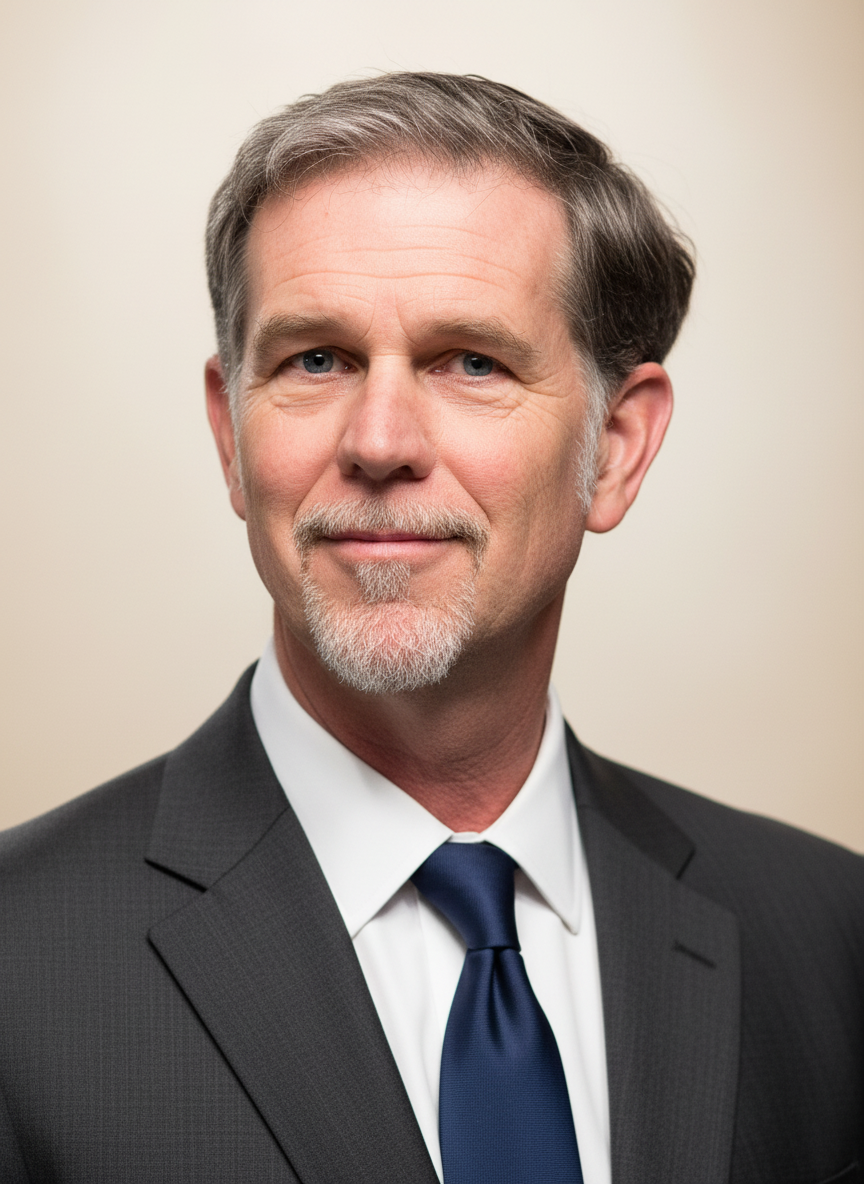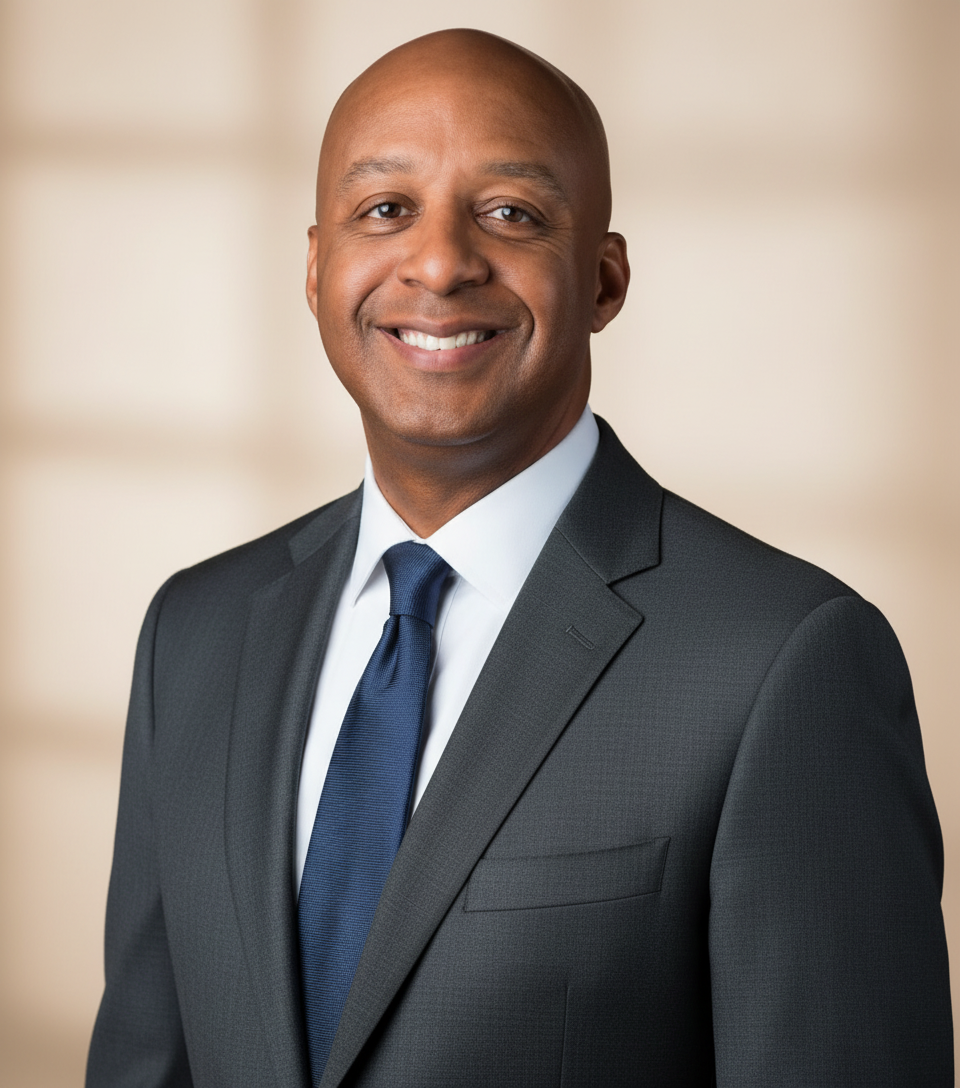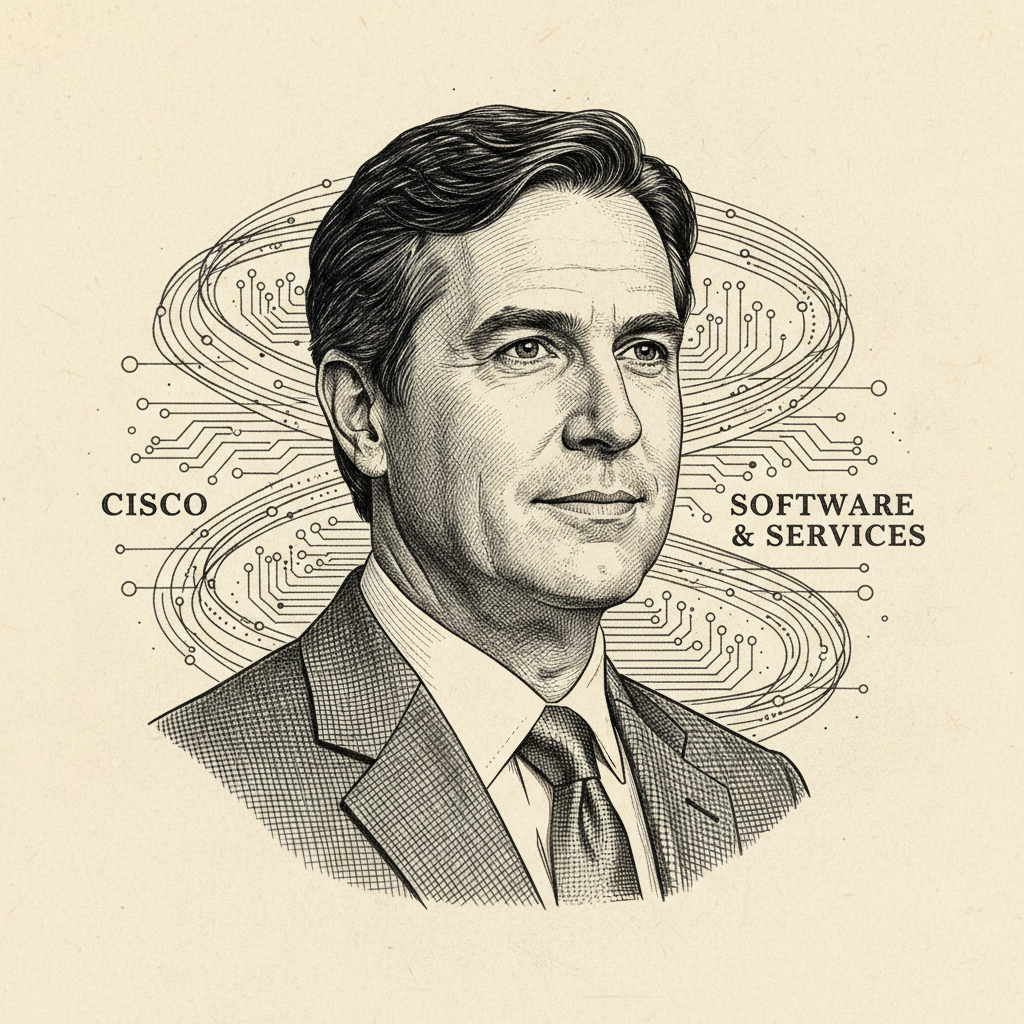
Dennis Muilenburg
Former Boeing CEO, whose tenure was marked by a strategic pivot towards services and defense, overshadowed by the 737 MAX crises.
Dennis Muilenburg is an American engineer and business executive. He spent his entire career at Boeing, rising from an internship in 1985 to become CEO in 2015. His leadership focused on operational efficiency and a services-led growth strategy, but his tenure ended amidst the global grounding of the 737 MAX fleet following two fatal crashes.
Biography
Accomplishments
- 01Successfully led Boeing Defense, Space & Security through a period of significant geopolitical change and defense budget shifts, maintaining its position as a leading defense contractor (2009-2015).
- 02Orchestrated the strategic shift to significantly grow Boeing's services business, including key acquisitions like the $4.25 billion purchase of KLX Aerospace Solutions, aiming to diversify revenue streams (2018).
- 03Oversaw the initial development and successful first flight of the 737 MAX in 2016, a critical commercial aircraft program for Boeing's future.
- 04Prioritized operational efficiency and cost cutting across the enterprise, contributing to record airplane deliveries and revenue figures in the initial years of his CEO tenure.
Lessons for Operators
Key Takeaways
Practical lessons distilled for operators, investors, C-levels, and capital allocators.
The Peril of Short-Termism
Muilenburg's tenure reflected pressure to compete with Airbus's A320neo, accelerating the 737 MAX development with existing airframe elements and focusing on efficiency. This hastened development, however, contributed to the technical and certification issues that eventually led to the global grounding. Investors and operators should scrutinize metrics like 'return on invested capital' alongside 'safety culture' and 'engineering integrity' when evaluating aerospace and defense firms. The recent Air India 787 incident, while different, underscores ongoing concerns about quality and regulatory vigilance across the industry, indicating that the lessons from the MAX are still being absorbed.
Accountability and Consequence
Muilenburg’s eventual dismissal underscored the demand for ultimate accountability from the CEO in times of catastrophic failure. The ongoing legal proceedings involving victims' relatives seeking to reject a deferred prosecution agreement related to the 737 MAX crashes highlight the sustained societal and legal consequences of corporate decisions. Leaders must understand that their decisions have far-reaching human and legal ramifications, influencing reputation and trust long after their departure. This is a critical factor for capital allocators evaluating long-term risk.
Cultural Drift Risk
Many analyses of the 737 MAX crisis pointed to a cultural shift at Boeing, moving from an engineer-led organization to one more influenced by financial imperatives. This 'copycat chaos' where companies prioritize market trends over core principles, as seen in other tech rivalries like Musk vs. Bezos, can lead to fundamental missteps. For C-levels, maintaining a robust internal culture that prioritizes safety, quality, and ethical conduct is a significant bulwark against future crises. Fund managers should assess cultural health as a non-financial indicator of potential operational risk.
Investor Scrutiny on Governance
Post-Muilenburg, investor focus on corporate governance, especially regarding safety and regulatory compliance in aerospace, has intensified. Boards are now expected to demonstrate greater oversight of engineering processes, risk management, and crisis communication strategies. This informs capital allocation decisions, as investors increasingly weigh ESG factors, including robust governance structures, as indicators of long-term sustainable value. The recent trend of Silicon Valley taking an interest in defense, as noted in various podcasts, might bring new capital but also new scrutiny on established defense contractors and their operational integrity.
The Interconnectedness of Supply Chains
The 737 MAX crisis was not solely a Boeing issue; it involved suppliers and complex software development. Muilenburg's leadership implicitly highlighted the challenges of managing intricate global supply chains. For enterprise leaders, this emphasizes the need for comprehensive vendor due diligence, clear performance metrics, and accountability frameworks extending deep into the supply ecosystem. This is particularly relevant for tech companies evolving into hardware, like Space data center developer Starcloud, securing significant funding, where integrating diverse technologies and ensuring robust systems across a distributed production model is paramount.
Frameworks & Principles
Named frameworks and strategic principles they popularized or embodied.
Triple Constraint Theory (Project Management)
This theory posits that every project operates under three interdependent constraints: scope, time, and cost. Changing one constraint inevitably impacts the others. In the 737 MAX development, the push to deliver cost-effectively and quickly (time/cost) without fully redesigning the airframe (scope) led to critical compromises.
When to useApplicable for project managers and leaders evaluating new product development, particularly in high-stakes industries, to explicitly identify and manage trade-offs between scope, schedule, and budget, ensuring that no single constraint compromises safety or quality.
Bowtie Analysis (Risk Management)
A risk assessment technique that visualizes the causal links in a risk scenario, from threats to consequences, and the barriers in place to prevent the event and mitigate its impact. For the 737 MAX, this would map the MCAS design (threat), to the crashes (event), and the original reliance on dual sensors (preventive barrier, later removed/mismanaged) and post-crash software updates (mitigative barrier).
When to useUseful for operators and safety professionals to comprehensively identify potential failure points in complex systems, evaluate the effectiveness of existing controls, and pinpoint where additional barriers (technical, human, organizational) are needed to prevent major incidents.
Stakeholder Theory (Business Ethics)
Argues that a company's success depends on managing relationships with all stakeholders (employees, customers, suppliers, communities, governments, and shareholders), not just shareholders. Muilenburg's tenure faced criticism for an initial focus on shareholder value over a perceived disregard for customer/public safety and regulatory trust.
When to useEssential for C-levels and fund managers to assess the long-term sustainability and ethical standing of an enterprise. It guides decisions to balance competing interests and build enduring value by fostering trust across all stakeholder groups, preventing reputation-damaging crises.
Recent Appearances
Latest interviews, keynotes, and press from the past half year.
 m.youtube.com
Sources & Further Reading
Profiles, interviews, podcasts, and articles used to compile and verify this entry. Each link opens at the original publisher.
- podcastSpace data center company Starcloud secures $170 million Series Adatacenterdynamics.com→
- podcast#spotwise #funding #outlastfund #adtech #startup - LinkedInlinkedin.com→
- podcastSilicon Valley has taken an interest in defense recently, a shift from ...facebook.com→
- podcastStewart Butterfield • 350+ reels on Instagraminstagram.com→
- podcast#FirstpostAmerica: Copycat Chaos: Musk Vs Bezos Elon ... - Facebookfacebook.com→
- podcastCEO's company evaluated for two billion dollar investment - Facebookfacebook.com→
- podcastWard took no responsibility last Thursday for the failure of their ...facebook.com→
- podcastI ripped an airplane in half (really). - Instagraminstagram.com→
- podcastBoeing spent a century building the most powerful story ...instagram.com→
- podcastBranson was on a trip to the British Virgin lslands when his flight got ...instagram.com→
- podcastTony Xu • 1.5K reels on Instagraminstagram.com→
Explore Related Titans
Other figures in the archive who share Dennis Muilenburg's domain, geography, or era.
More in Transportation & Logistics









From United States









Contemporaries — born 1960s