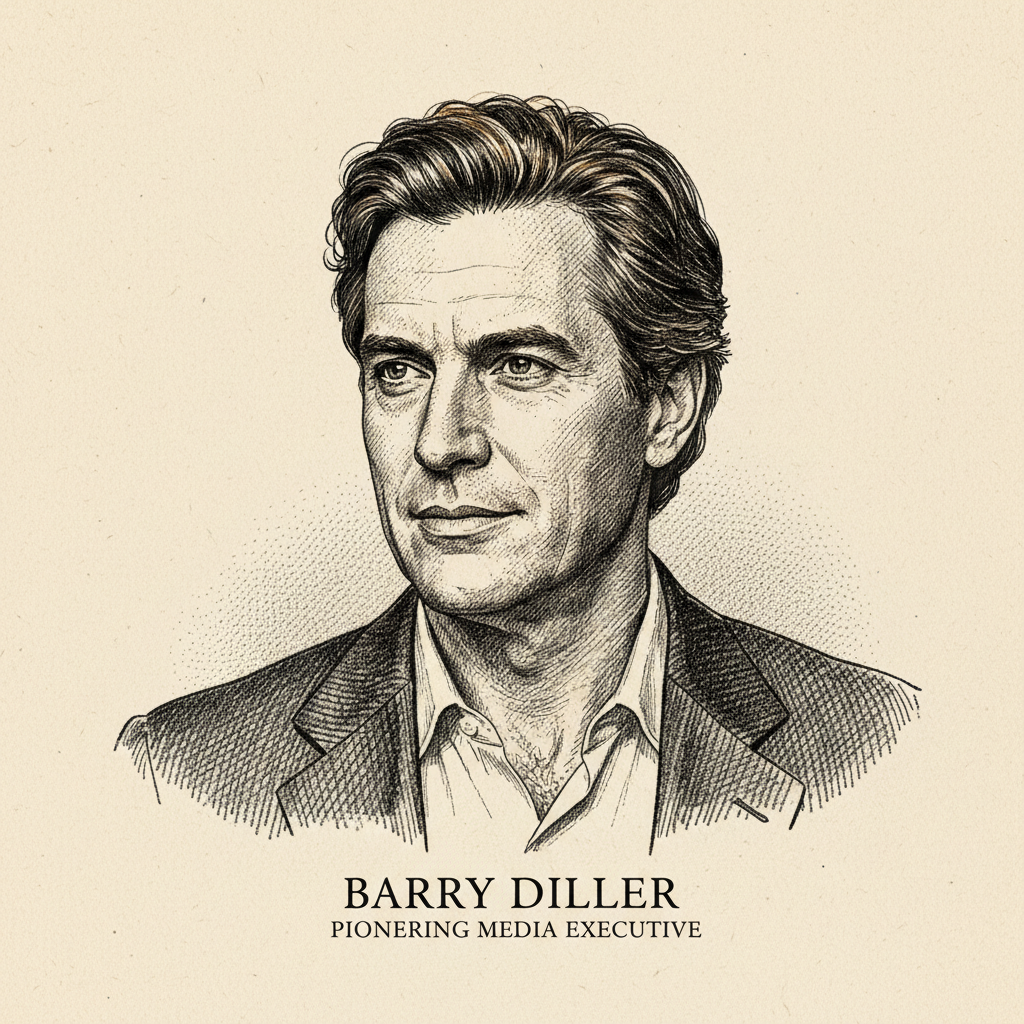
Barry Diller
The architect of modern media conglomerates and digital commerce, known for identifying and scaling lucrative ventures.
Barry Diller is an American business executive, widely recognized for his transformative leadership in the entertainment and internet industries. He has held pivotal roles at ABC, Paramount Pictures, and Fox, before founding IAC (formerly InterActiveCorp), a diversified internet company that has spun out several major entities.
Biography
Accomplishments
- 01Pioneered the 'movie of the week' concept and developed the miniseries format at ABC in the 1970s, significantly impacting television programming.
- 02Revitalized Paramount Pictures as Chairman (1974-1984), overseeing iconic films like 'Saturday Night Fever,' 'Grease,' 'Raiders of the Lost Ark,' and 'Terms of Endearment,' establishing a dominant position in Hollywood.
- 03Co-founded and launched the Fox Broadcasting Company (1986) with Rupert Murdoch, creating the first successful fourth major television network in the United States since the 1950s.
- 04Built InterActiveCorp (IAC) into a diversified internet conglomerate, strategically acquiring and spinning off major online brands including Expedia (spun off 2005), LendingTree (spun off 2008), Ticketmaster (merged with Live Nation 2010), and Vimeo (spun off 2021).
- 05Successfully adapted from traditional media leadership to becoming a savvy investor and operator in the nascent and evolving internet landscape, demonstrating remarkable foresight and adaptability.
Lessons for Operators
Key Takeaways
Practical lessons distilled for operators, investors, C-levels, and capital allocators.
Value Creation Through Strategic Spinoffs
Diller's IAC demonstrated that acquiring promising assets, nurturing their growth, and then spinning them off as independent public companies can unlock significant shareholder value. This 'incubate and liberate' model allows focus for the new entity while providing returns for the parent.
Disruptive Entry into Mature Markets
The launch of Fox Broadcasting challenged the long-standing 'Big Three' network dominance. This illustrates that with a differentiated strategy (e.g., targeting younger demographics with edgier content), new entrants can carve out substantial market share, even in saturated industries.
Adaptability Across Industry Paradigms
Diller's transition from traditional entertainment (film, broadcast TV) to digital commerce and internet services highlights the importance of executive adaptability. Leaders must be willing to shed old paradigms and embrace new technologies and business models to remain relevant and generative.
The Importance of Deal-Making Prowess
Diller's career is marked by a series of shrewd acquisitions and divestitures. Understanding valuation, negotiation, and integration is critical for executives looking to drive growth and restructure portfolios effectively.
Frameworks & Principles
Named frameworks and strategic principles they popularized or embodied.
Acquire, Incubate, Spin Off (AISO) Model
A strategic framework where a parent company acquires early-stage or undervalued assets, provides capital and operational support for growth, and then spins them off as independent public entities once they reach maturity and scale.
When to useApplicable for diversified holding companies, venture builders, or private equity firms seeking to maximize value from a portfolio of disparate, high-growth businesses. Ideal for identifying and scaling promising ventures in rapidly evolving sectors.
Fourth Network Strategy
A market entry approach focused on identifying unmet audience needs or underserved demographics within an established industry dominated by a few large players, and launching a competitive offering tailored to that niche.
When to useUseful for startups or challenger brands aiming to disrupt an oligopolistic market. Requires strong differentiation, a clear target audience, and often, a willingness to challenge conventional content or product distribution models.
Media Convergence & Diversification
A strategy involving the integration of different forms of media (e.g., film, television, internet, e-commerce) within a single corporate entity or holding company, leveraging synergies and shared competencies.
When to useRelevant for companies operating in the broader entertainment, content, or technology sectors aiming to build resilient business models. It's particularly effective when technological shifts blur the lines between traditional media and digital platforms.
Recent Appearances
Latest interviews, keynotes, and press from the past half year.
 youtube.com
 youtube.com
 youtube.com
 youtube.com
 youtube.com
 youtube.com
 youtube.com
 youtube.com
 youtube.com
 youtube.com
 youtube.com
 youtube.com
 youtube.com
 youtube.com
 youtube.comyoutube.com
 youtube.com
 youtube.com
![Barry Diller [Full Episode] - YouTube](https://i.ytimg.com/vi/ZpTMfrOx10Q/hqdefault.jpg) youtube.com
youtube.com youtube.com
 youtube.com
 youtube.com
 youtube.com
 youtube.com
 youtube.com
 youtube.com
 youtube.com
 youtube.com
 youtube.com
 youtube.com
 youtube.com
 youtube.com
![Barry Diller [Preview] - YouTube](https://i.ytimg.com/vi/N2KgqCAeH0s/hqdefault.jpg) youtube.com
youtube.com youtube.com
 youtube.com
 youtube.com
 youtube.com
 youtube.com
 youtube.com
 youtube.com
 youtube.com
 youtube.com
 youtube.com
 youtube.com
 youtube.com
 youtube.com
 youtube.com
 youtube.com
 youtube.com
 youtube.com
 youtube.com
 youtube.com
 youtube.com
 youtube.com
 youtube.com
 youtube.com
 youtube.com
 youtube.comyoutube.com
 youtube.com
 youtube.com
 youtube.com
 youtube.com
 youtube.comyoutube.com
 youtube.com
 youtube.com
 youtube.com
 youtube.com
 youtube.com
 youtube.com
 youtube.com
 youtube.com
 youtube.com
 youtube.com
 m.youtube.com
 youtube.com
 youtube.com
 youtube.com
 m.youtube.com
 youtube.com
 youtube.com
 youtube.com
 youtube.com
 youtube.com
 youtube.com
 youtube.com
 youtube.com
 youtube.com
 youtube.com
 youtube.com
 youtube.com
 youtube.com
 youtube.com
 youtube.com
 youtube.com
 youtube.com
 youtube.comyoutube.com
 m.youtube.com
 youtube.com
 youtube.com
 youtube.com
 youtube.com
 youtube.com
 youtube.com
 youtube.com
 youtube.com
 youtube.com
 youtube.com
 youtube.com
 youtube.com
 youtube.com
 youtube.com
 m.youtube.com
 youtube.com
 youtube.com
 youtube.com
 youtube.comyoutube.com
Sources & Further Reading
Profiles, interviews, podcasts, and articles used to compile and verify this entry. Each link opens at the original publisher.
Explore Related Titans
Other figures in the archive who share Barry Diller's domain, geography, or era.
More in Technology










From United States




Contemporaries — born 1940s