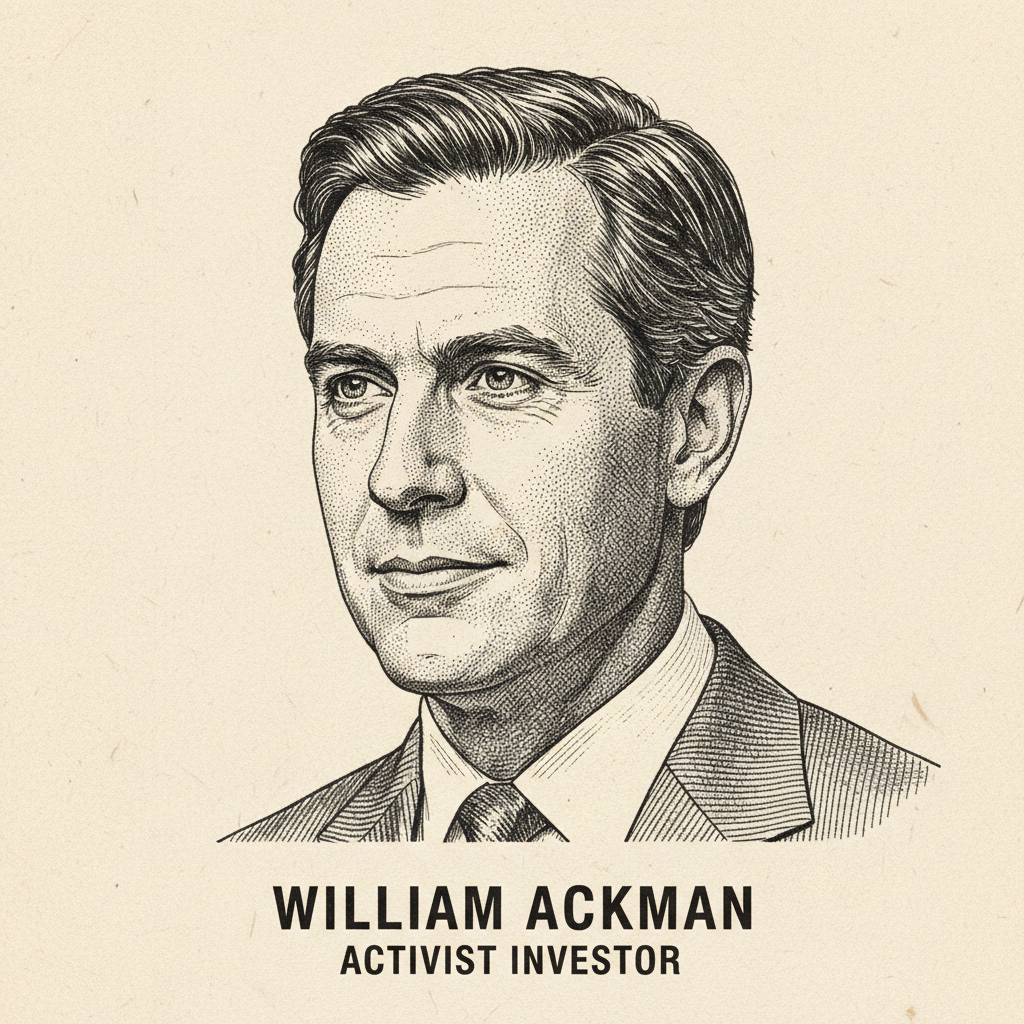
William Ackman
A prominent activist investor known for detailed research, concentrated portfolios, and aggressive engagement with target company management.
William A. Ackman is an American hedge fund manager and founder/CEO of Pershing Square Capital Management. He is known for his highly-concentrated, event-driven, value-oriented investment strategy, often involving activist campaigns against perceived underperforming companies.
Biography
Accomplishments
- 01Founded Pershing Square Capital Management in 2004, building it into a prominent activist hedge fund.
- 02Successfully led an activist campaign against Canadian Pacific Railway (2011-2016), resulting in a change of CEO and significant share appreciation.
- 03Generated substantial returns by shorting MBS market during the 2008 financial crisis via a bet on bond insurer MBIA (initiated 2002).
- 04Engineered a highly profitable "hedging against the pandemic" trade in March 2020, generating $2.6 billion on a $27 million investment.
- 05Facilitated the direct listing of Universal Music Group (2021) onto Euronext Amsterdam, where Pershing Square held a significant stake.
- 06Consistently outperformed market benchmarks at times, showcasing the effectiveness of his concentrated activist strategy.
Lessons for Operators
Key Takeaways
Practical lessons distilled for operators, investors, C-levels, and capital allocators.
The Power of Active Ownership
Ackman's career exemplifies how significant shareholder stakes combined with detailed analysis and persistent engagement can drive substantial corporate change and unlock value. This is a model for investors who believe in proactively shaping their investments rather than passively holding them.
Conviction Over Diversification
While traditional investing often emphasizes diversification, Ackman's highly concentrated portfolio strategy suggests that, for those with a proven research edge and operational insight, deep conviction in a few opportunities can lead to superior alpha.
Due Diligence as a Competitive Advantage
His firm's reputation for exhaustive research before taking positions highlights that intellectual rigor and forensic analysis are powerful tools in identifying mispriced assets and developing actionable theses, regardless of market sentiment.
The Importance of Communication and Persuasion
Ackman's public campaigns, detailed presentations, and direct engagement with boards and shareholders underscore that investment success, especially in activism, often depends on the ability to clearly articulate a vision and persuade others of its merits.
Adapting to Market Conditions
The profitable pandemic hedge in 2020 demonstrates a willingness and ability to pivot and capitalize on short-term market dislocations, even for a long-term value investor, showcasing tactical flexibility within a broader strategic framework.
Frameworks & Principles
Named frameworks and strategic principles they popularized or embodied.
Value Investing with an Activist Edge
Identify fundamentally sound companies trading below their intrinsic value due to operational inefficiencies, poor capital allocation, or suboptimal management. Acquire a significant stake and then actively advocate for changes (e.g., divestitures, cost cutting, management overhaul) to realize that intrinsic value.
When to useWhen identifying companies with clear, actionable pathways to unlock significant shareholder value that current management is unwilling or unable to pursue. Requires substantial capital, detailed operational knowledge, and a willingness to engage publicly.
Deep Dive Forensic Research
Employ exhaustive due diligence, including financial statement analysis, industry structure review, competitive analysis, management assessment, and sometimes even regulatory filings or expert interviews, to form a high-conviction investment thesis. This goes significantly beyond typical sell-side research.
When to useApplicable to any significant capital allocation decision, from private equity to public market investing. Essential when evaluating complex businesses, anticipating market disruptions, or identifying hidden risks/opportunities not apparent in surface-level analysis.
Public Advocacy and Shareholder Engagement
Utilize various public channels (investor presentations, shareholder letters, media interviews) to build consensus around an investment thesis or activist agenda. This framework is about influencing public and shareholder opinion to pressure management or boards into desired actions.
When to useWhen internal negotiations with company management or the board prove insufficient. Most effective when supported by compelling, data-driven arguments and a clear, value-additive alternative strategy. Requires strong communication skills and credibility.
Recent Appearances
Latest interviews, keynotes, and press from the past half year.
 youtube.com
 youtube.com
 youtube.com
![[13F] The Ackman-Buffett Synthesis: Pershing Square Q3 ... - YouTube](https://i.ytimg.com/vi/Az5n5HHE2wU/hqdefault.jpg) youtube.com
youtube.com youtube.com
 youtube.com
 youtube.com
 youtube.com
 youtube.com
 youtube.com
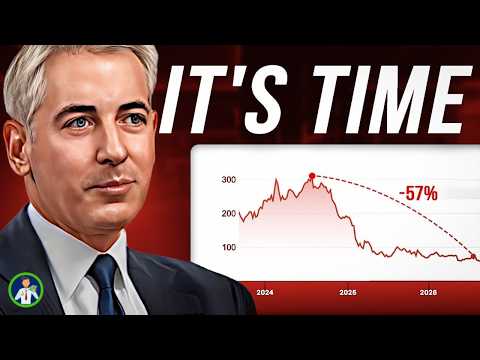 youtube.com
 youtube.com
 youtube.com
 youtube.com
 youtube.com
 youtube.com
 youtube.com
 youtube.com
 youtube.com
 youtube.com
 youtube.com
 youtube.com
 youtube.com
Sources & Further Reading
Profiles, interviews, podcasts, and articles used to compile and verify this entry. Each link opens at the original publisher.
Explore Related Titans
Other figures in the archive who share William Ackman's domain, geography, or era.
More in Finance & Investing








From United States





Contemporaries — born 1960s