Sanjay Mehrotra
A visionary leader in semiconductor memory, driving innovation and strategic growth in dynamic global markets.
Sanjay Mehrotra is an Indian-American business executive and electrical engineer, currently serving as President and CEO of Micron Technology. He is best known for co-founding SanDisk in 1988, leading it as President and CEO until its acquisition by Western Digital in 2016. Under his leadership, SanDisk became a global leader in flash storage solutions. At Micron, Mehrotra has steered the company through periods of significant industry transition, emphasizing R&D, strategic partnerships, and diversifying its product portfolio.
Biography
Accomplishments
- 01Co-founded SanDisk (1988): Established SanDisk as a pioneer and leader in flash memory solutions, growing it into a multi-billion dollar enterprise.
- 02Led SanDisk as CEO (2011-2016): Drove significant revenue growth and market expansion, culminating in its $19 billion acquisition by Western Digital.
- 03Appointed CEO of Micron Technology (2017): Successfully transitioned to lead another major semiconductor company, overseeing substantial product portfolio diversification and market capitalization growth.
- 04Strategic Expansion into High-Growth Markets: Orchestrated Micron's increased focus on AI, 5G, data center, and automotive segments, positioning the company for future demand.
- 05Advanced Technology Leadership: Accelerated Micron's R&D efforts, resulting in the commercialization of industry-leading memory technologies like HBM3 and DDR5, crucial for advanced computing.
- 06Navigated Geopolitical and Supply Chain Complexities: Steered Micron through significant trade tensions and global supply chain disruptions, maintaining operational stability and strategic direction.
Lessons for Operators
Key Takeaways
Practical lessons distilled for operators, investors, C-levels, and capital allocators.
Sustained Innovation in Core Technology
Mehrotra’s career exemplifies the power of continuous, deep investment in fundamental technology. Both SanDisk and Micron thrived by pushing the boundaries of flash and DRAM, even when it required significant capital expenditure and R&D risk. The lesson for leaders is to never compromise on foundational technological leadership, as it underpins all future product and market expansion.
Strategic Pivot to High-Growth End Markets
While SanDisk targeted consumer electronics, Mehrotra at Micron explicitly re-aligned the company's focus towards emerging, high-growth sectors like AI, 5G infrastructure, and data centers. This strategic foresight ensures that a company’s technological capabilities are matched to future demand curves, avoiding over-reliance on mature or cyclical markets. Leaders should regularly audit and adjust their market focus based on macro trends.
Resilience Through Cyclical Markets
The semiconductor industry is notoriously cyclical. Mehrotra's leadership has been marked by calm and strategic decision-making through both boom and bust periods. This includes maintaining R&D spend and strategic investments during downturns, positioning the company for rapid recovery and market share gains when the cycle turns upwards. This requires a long-term perspective and financial discipline.
Ecosystem and Supply Chain Mastery
Mehrotra understands that semiconductor success is not just about isolated product excellence but deep integration within a complex global ecosystem. His efforts at Micron have focused on strengthening relationships with customers, suppliers, and even geopolitical stakeholders to ensure resilient supply chains and early insight into market needs. Leaders must view their enterprise as part of a larger interconnected system and manage those interdependencies proactively.
Value Creation through M&A and Integration
His experience with SanDisk's acquisition by Western Digital and subsequently leading Micron shows a deep understanding of value creation through strategic M&A and effective post-merger integration. This includes recognizing when a company is ripe for acquisition or when acquiring complementary capabilities is necessary. For operators, this highlights the importance of building a company with clear strategic value and being prepared for potential M&A scenarios.
Frameworks & Principles
Named frameworks and strategic principles they popularized or embodied.
Long-Term R&D Investment Strategy
A framework for committing significant, sustained capital to research and development, even through market downturns, to secure future technological leadership. This strategy focuses on foundational science and advanced engineering rather than short-term product iterations.
When to useApplicable for industries with long technology development cycles (e.g., semiconductors, pharmaceuticals, aerospace) where incremental improvements are insufficient, and breakthrough innovations are critical for competitive advantage. Use when you have a strong balance sheet and conviction in future market demand.
Strategic Market Diversification (End-Market Re-alignment)
A framework for systematically analyzing and shifting a company's product and sales focus towards emerging, high-growth end markets to mitigate risks associated with over-reliance on mature or cyclical sectors. This involves identifying adjacencies and developing tailored solutions.
When to useWhen a company's primary revenue streams are becoming stagnant, highly competitive, or overly dependent on a single industry. Ideal for organizations seeking to future-proof their business model and capitalize on macro-economic and technological shifts (e.g., AI, IoT, electric vehicles).
Ecosystem Partnership Development
A strategic approach to cultivate deep, collaborative relationships with key customers, suppliers, and complementary technology providers across the value chain. This extends beyond transactional dealings to co-development and mutual strategic alignment.
When to useEssential in complex, interdependent industries where product development requires interoperability and seamless integration (e.g., hardware/software ecosystems, advanced manufacturing). Use to accelerate market adoption, share development costs, and create barriers to entry for competitors.
Cyclical Industry Navigation (Counter-Cyclical Investment)
A framework for managing businesses operating in highly cyclical markets by making counter-cyclical decisions, such as increasing R&D or capital expenditures during market downturns to gain market share and be prepared for the subsequent upturn.
When to useApplicable in industries characterized by boom-and-bust cycles (e.g., commodities, semiconductors, construction). Requires strong financial discipline, accurate market forecasting, and the courage to invest against prevailing sentiment.
Recent Appearances
Latest interviews, keynotes, and press from the past half year.
 youtube.com
 youtube.com
 youtube.com
 youtube.com
 youtube.com
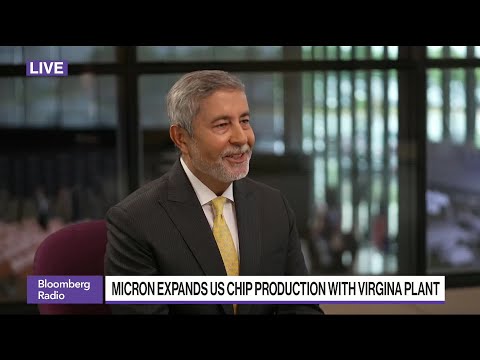 youtube.com
 youtube.com
 youtube.com
 youtube.com
 youtube.com
 youtube.com
 youtube.com
 youtube.com
 youtube.com
 youtube.com
 youtube.com
 youtube.com
 youtube.com
 youtube.com
 youtube.com
 youtube.com
 youtube.com
 youtube.com
 youtube.com
 youtube.com
 youtube.com
 youtube.com
Sources & Further Reading
Profiles, interviews, podcasts, and articles used to compile and verify this entry. Each link opens at the original publisher.
Explore Related Titans
Other figures in the archive who share Sanjay Mehrotra's domain, geography, or era.
More in Technology










From United States




Contemporaries — born 1950s