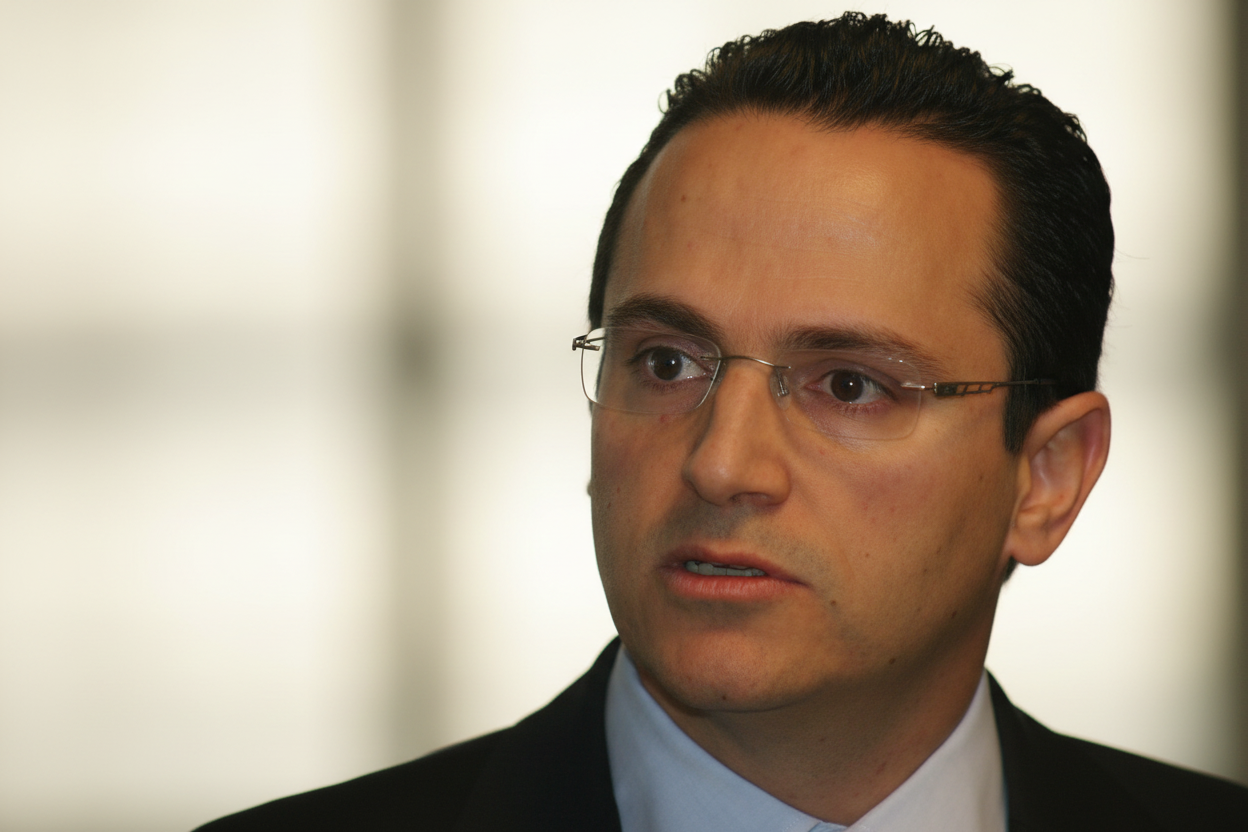
Olivier Pomel
Olivier Pomel is a co-founder and CEO of Datadog, a leading observability and security platform for cloud applications. He is recognized for scaling complex software systems and building a dominant SaaS enterprise.
Olivier Pomel co-founded Datadog in 2010 and has served as its CEO, leading the company through its IPO in 2019 and establishing it as a critical player in cloud monitoring, observability, and security. His career spans significant roles in software development and architecture.
Biography
Accomplishments
- 01Co-founded Datadog in 2010 and scaled it into a publicly traded, multi-billion-dollar enterprise (IPO in September 2019).
- 02Pioneered and popularized the unified observability platform model, integrating infrastructure monitoring, APM, and log management.
- 03Successfully expanded Datadog's product portfolio into security monitoring, RUM (Real User Monitoring), and synthetic monitoring, establishing a comprehensive cloud-native offering.
- 04Achieved global market leadership in cloud monitoring and observability, serving a customer base that includes major enterprises.
- 05Navigated and scaled a SaaS business through rapid technological shifts, including the widespread adoption of containers, Kubernetes, and serverless architectures.
Lessons for Operators
Key Takeaways
Practical lessons distilled for operators, investors, C-levels, and capital allocators.
Problem-led Innovation
Datadog didn't create a market; it identified a widespread, complex problem (cloud monitoring fragmentation) and built an elegant solution. Enterprises should look for genuine operational friction points, not just incremental improvements.
Platform Over Point Solution
While initial success can come from a niche, sustainable enterprise value often arises from building a cohesive platform that solves multiple, related problems. This increases switching costs and average revenue per user (ARPU).
Technical Depth and Business Acumen
Pomel's background as a software architect gave him deep insight into the technical challenges facing customers, enabling Datadog to build highly effective products that resonate with engineering teams. Leaders need to marry technical understanding with strategic market vision.
Iterative Expansion & M&A
Datadog's growth wasn't a single big bang; it was a continuous process of adding new features and functionalities, both in-house and through strategic acquisitions. This allowed the company to keep pace with an evolving cloud landscape.
Frameworks & Principles
Named frameworks and strategic principles they popularized or embodied.
Unified Observability Model
Integrating infrastructure metrics, application traces (APM), and log data into a single platform for a holistic view of system health and performance.
When to useWhen managing complex, distributed, or cloud-native applications to reduce operational blind spots and accelerate troubleshooting.
Product-Led Growth (PLG) for B2B SaaS
Focusing on the product itself as the primary driver of customer acquisition, expansion, and retention, often through freemium tiers, self-service onboarding, and intuitive user experience.
When to useApplicable for SaaS companies targeting technical users where clear product value can be demonstrated early, minimizing reliance on heavy sales cycles for initial adoption.
Land and Expand Strategy
Initially acquiring customers with a foundational product (land) and then growing revenue by cross-selling or upselling additional features, products, or expanding usage within the same organization (expand).
When to useCommon in enterprise SaaS, particularly when the core product provides immediate value and subsequent offerings address related, scalable needs (e.g., from monitoring to security).
Explore Related Titans
Other figures in the archive who share Olivier Pomel's domain, geography, or era.
More in Technology










From France








Contemporaries — born 1970s