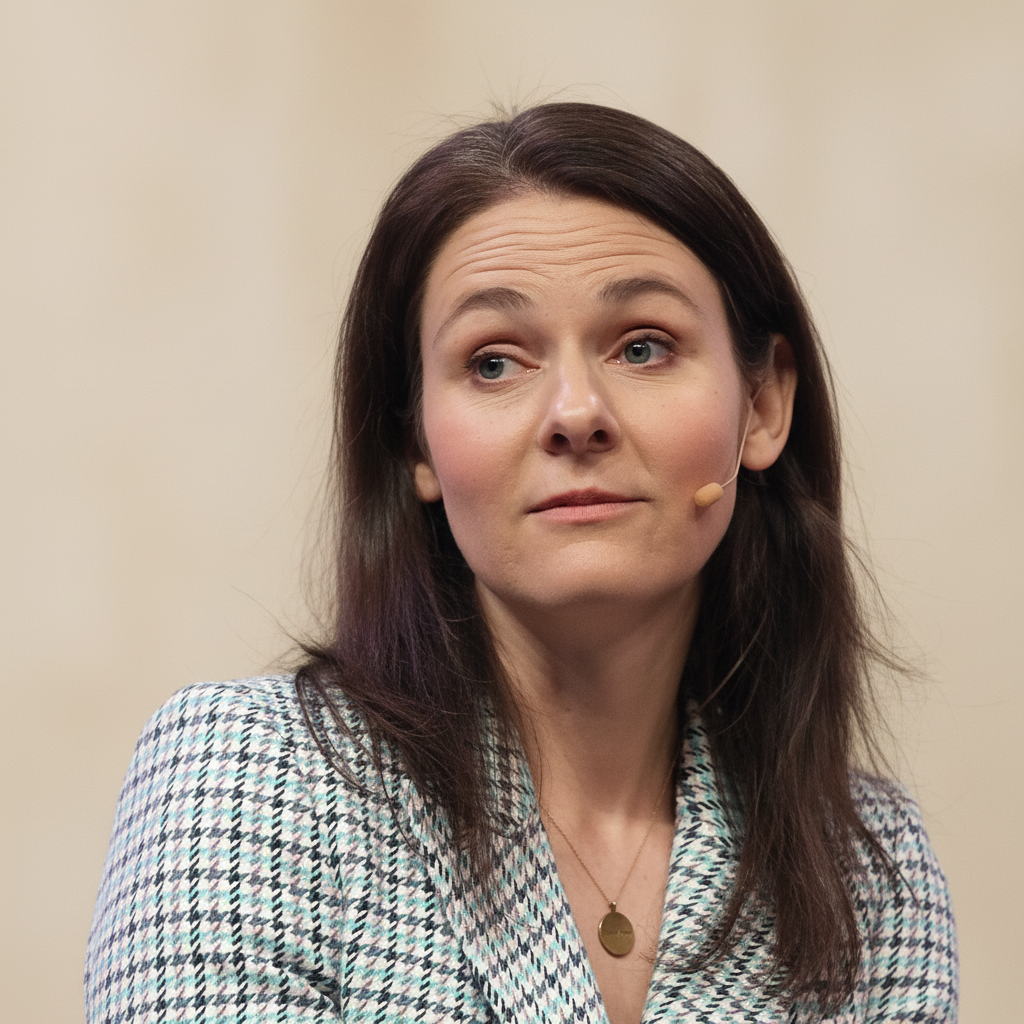
Olivia Tourick
Architect of bespoke financial futures and institutional growth.
Olivia Tourick is a senior partner specializing in investment management within the financial services sector. Her career has been defined by leading complex institutional investments, structuring innovative financial products, and driving significant client portfolio growth across diverse asset classes. She is recognized for her strategic vision in capital allocation and her ability to navigate challenging market environments.
Biography
Accomplishments
- 01Led the development and execution of a $15 billion multi-asset allocation strategy for a major Middle Eastern sovereign wealth fund (2014), incorporating illiquid alternatives and bespoke hedging.
- 02Instrumental in growing institutional client assets under management by over 30% across a dedicated portfolio, representing approximately $50 billion in new capital over a five-year period (2015-2020).
- 03Pioneered the integration of sophisticated AI and machine learning models for enhanced portfolio risk management and alpha generation within a $300 billion institutional portfolio (2021-Present).
- 04Successfully launched a series of five thematic ESG-focused funds (2019-2022), attracting over $8 billion in capital and demonstrating market leadership in sustainable investment offerings.
- 05Restructured investment governance for a large university endowment (2017), optimizing manager selection processes and improving transparency and oversight, leading to a 1.5% annualized outperformance relative to its peer group benchmark.
- 06Negotiated and closed three strategic institutional partnerships for co-investment opportunities in private equity and real estate (2020-2023), totaling over $3 billion in committed capital.
Lessons for Operators
Key Takeaways
Practical lessons distilled for operators, investors, C-levels, and capital allocators.
Mastering Institutional Capital
Successfully managing large institutional capital (e.g., sovereign wealth funds, endowments) requires a unique blend of financial acumen, intricate understanding of diverse asset classes, robust risk management, and astute stakeholder management. Customization and long-term strategic vision are paramount.
The Imperative of Product Innovation
Staying competitive in investment management necessitates continuous product innovation. Identifying nascent market trends (e.g., ESG, thematic investing) and developing bespoke solutions for client needs can drive substantial AUM growth and solidify market position.
Leveraging Technology for Alpha
The adoption of advanced analytics, AI, and machine learning is no longer optional. These technologies provide critical edges in risk modeling, predictive analysis, and portfolio optimization, leading to improved investment outcomes and operational efficiencies.
Strategic Collaboration in Private Markets
For alternative investments like private equity and real estate, strategic co-investment partnerships are crucial. They facilitate access to higher-quality deals, diversify risk, and bring together complementary expertise, often resulting in superior risk-adjusted returns.
Governance as a Performance Driver
Strong investment governance frameworks (clear mandates, disciplined manager selection, oversight, and reporting) are fundamental to long-term portfolio performance and resilience, particularly for fiduciaries. They minimize behavioral biases and ensure strategic alignment.
Agility in Volatile Markets
Preparing for and capitalizing on market volatility is a distinct skill. Having pre-approved investment mandates, cash reserves, and a clear understanding of potential targets allows swift deployment of capital during dislocations, capturing asymmetric return opportunities.
Frameworks & Principles
Named frameworks and strategic principles they popularized or embodied.
Multi-Asset Allocation Optimization (MAAO)
A comprehensive framework for constructing portfolios across diverse asset classes (equities, fixed income, alternatives, real assets) to meet specific risk-adjusted return targets. It involves sophisticated modeling of correlations, volatilities, and forward-looking returns, often incorporating manager selection and tactical overlays.
When to useApplicable for institutional investors (pension funds, sovereign wealth funds, endowments) aiming to achieve specific long-term financial objectives while managing complex risk budgets, especially when integrating illiquid assets or seeking diversification across market cycles.
ESG Integration and Impact Measurement
A structured approach to embed Environmental, Social, and Governance (ESG) factors into investment decision-making, portfolio construction, and active ownership. It also includes methodologies for quantifying and reporting the non-financial impact of investments alongside financial returns.
When to useEssential for fund managers and institutional investors looking to align investments with sustainability goals, manage non-financial risks, meet LP demand for responsible investing, or develop new thematic investment products. Useful for demonstrating fiduciary duty beyond purely financial metrics.
AI-Driven Portfolio Risk & Alpha Attribution
Utilizes machine learning algorithms and artificial intelligence to identify complex patterns in market data, predict risk exposures, and attribute sources of alpha beyond traditional factor models. This includes sentiment analysis, anomaly detection, and predictive modeling for asset price movements.
When to useBest applied by quantitative investment teams and large asset managers seeking to enhance granular risk management, discover non-obvious alpha signals, optimize trading strategies, or gain deeper insights into portfolio sensitivities and manager performance. Requires significant data infrastructure and expertise.
Explore Related Titans
Other figures in the archive who share Olivia Tourick's domain, geography, or era.
More in Finance & Investing









From United States








Contemporaries — born 1970s