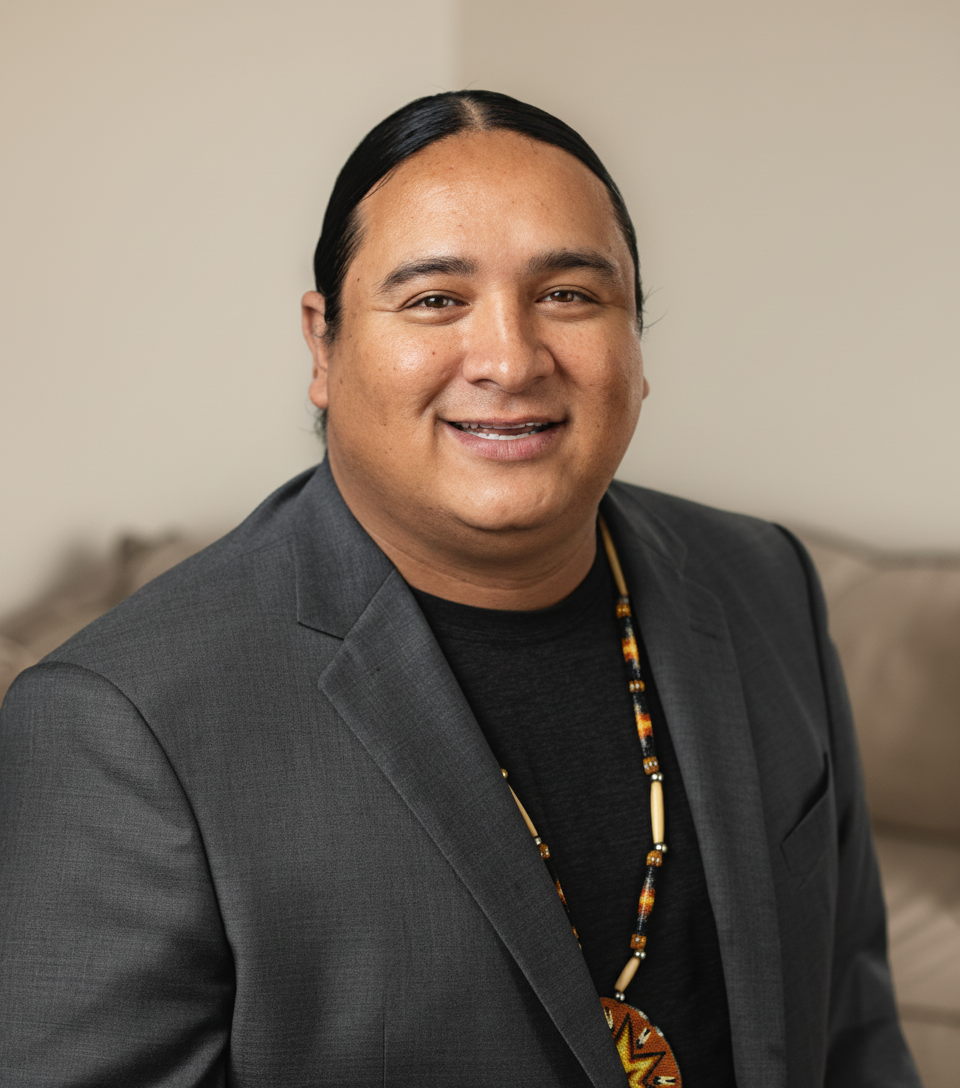
Nick Tilsen
Architect of Indigenous economic self-determination through innovative enterprise and impact capital.
Nick Tilsen is an Oglala Lakota entrepreneur and activist renowned for founding and leading significant Indigenous-led initiatives focused on economic development, land repatriation, and cultural preservation. He is best known as the President and CEO of NDN Collective, an organization driving Indigenous power building through impact investing, grantmaking, and organizing.
Biography
Accomplishments
- 01Co-founded and led Thunder Valley Community Development Corporation (TVCDC) from 2005-2016, developing a 34-acre regenerative community on Pine Ridge Reservation.
- 02Founded NDN Collective in 2018, rapidly scaling it into a prominent Indigenous-led organization with multi-million dollar annual operations and significant philanthropic and investment funds.
- 03Established and oversees the NDN Fund, an Indigenous-led CDFI that had deployed over $50 million in capital to Indigenous-led projects by 2023, directly supporting economic self-determination.
- 04Initiated and leads the 'LANDBACK' campaign, a significant movement advocating for the return of Indigenous lands, demonstrating bold advocacy for systemic change.
- 05Secured substantial philanthropic and investment capital from major foundations and impact investors (e.g., Bezos Earth Fund, Margaret A. Cargill Philanthropies) for Indigenous-led initiatives.
- 06Successfully integrated Indigenous cultural values and traditional ecological knowledge into modern economic development and climate justice frameworks.
Lessons for Operators
Key Takeaways
Practical lessons distilled for operators, investors, C-levels, and capital allocators.
Empower Local Leadership
Directly funding and trusting Indigenous-led organizations like NDN Collective and TVCDC generates higher impact outcomes. Operators and investors should seek out and invest in local leaders who intimately understand their community's needs and assets.
Integrate Impact Investing with Advocacy
Tilsen's model demonstrates that economic empowerment is intrinsically linked to systemic change and advocacy. Impact investors and enterprise leaders should consider how their economic activities can support broader social justice and policy goals, and vice-versa.
Build Ecosystems, Not Just Projects
Rather than single projects, Tilsen constructs comprehensive ecosystems (e.g., Thunder Valley Regenerative Community, NDN Collective's multi-pronged approach) that address interlinked challenges and foster holistic community resilience. This systemic thinking creates more durable and impactful solutions.
Decolonize Capital
The success of the NDN Fund highlights the need to critically reassess traditional capital deployment mechanisms. Fund managers should explore models that redistribute power in funding decisions and directly allocate resources to historically oppressed communities, fostering true self-determination.
Cultural Competence is Economic Competence
Tilsen's work proves that deep respect for and integration of Indigenous cultural values and traditional knowledge are not tangential but central to building sustainable and innovative economic models. This applies broadly to recognizing the distinct assets of diverse communities.
Frameworks & Principles
Named frameworks and strategic principles they popularized or embodied.
Indigenous Self-Determination Model
A framework for economic development where Indigenous communities define, design, and control their own development processes and outcomes, leveraging traditional knowledge, cultural values, and local assets. It prioritizes sovereignty, land stewardship, and collective well-being over purely profit-driven motives.
When to useApplicable for developers, investors, and policymakers working with Indigenous communities or any marginalized group. Use when seeking long-term, community-driven, and culturally appropriate solutions. Requires a commitment to relinquishing control and empowering local leadership.
Holistic Community Development (HCD)
An integrated approach to community building that simultaneously addresses multiple interconnected challenges such as housing, economic opportunity, food security, education, health, and cultural preservation. It recognizes that these issues are not isolated and require comprehensive, synergistic interventions.
When to useManagers and urban planners can apply HCD when tackling complex socio-economic challenges in a defined geographic area. Ideal for initiatives aiming for systemic change rather than addressing single symptoms, such as developing new sustainable communities or revitalizing distressed neighborhoods.
Decolonized Capital & Impact Investing
A paradigm shift in impact investing that challenges traditional power dynamics, biases, and structures within financial systems. It emphasizes direct capital flows to Indigenous and other marginalized communities, trusts local leadership, provides patient capital, and defines 'return' beyond solely financial metrics to include social, cultural, and environmental impacts.
When to useRelevant for fund managers, philanthropists, and capital allocators looking to maximize genuine social impact, address historical inequities, and empower underserved populations. Use when traditional investment models prove insufficient or perpetuate systemic disadvantages, and when seeking to build long-term, equitable wealth.
Explore Related Titans
Other figures in the archive who share Nick Tilsen's domain, geography, or era.
More in Finance & Investing







From United States






Contemporaries — born 1980s