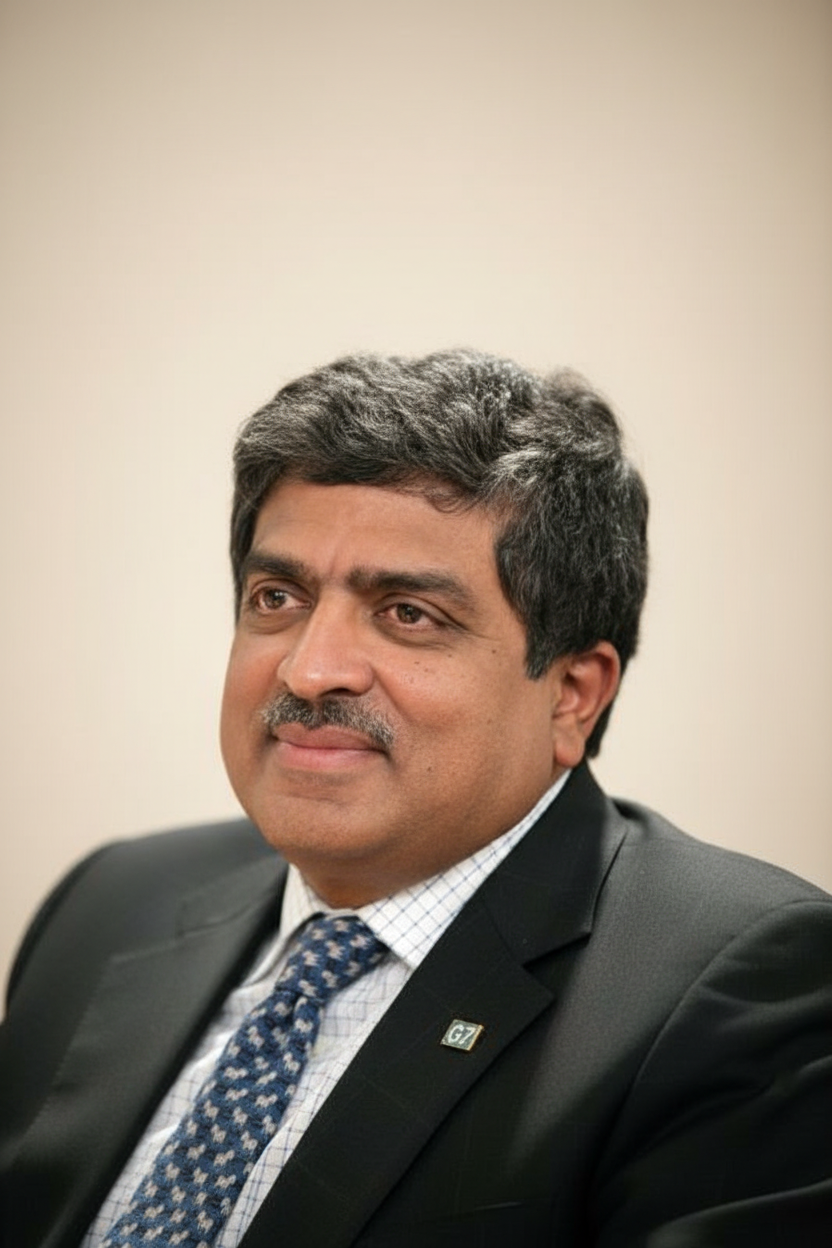
Nandan Nilekani
Architect of Digital India: From co-founding Infosys to spearheading Aadhaar, Nandan Nilekani redefined scale and public digital infrastructure.
Nandan Nilekani is an Indian entrepreneur, bureaucrat, and politician. He co-founded Infosys in 1981, serving as CEO from 2002 to 2007 and then as co-chairman. His most significant public service role was as head of the Unique Identification Authority of India (UIDAI), where he oversaw the implementation of Aadhaar, the world's largest biometric identity system. He has been instrumental in conceptualizing and driving India's digital public infrastructure initiatives.
Biography
Accomplishments
- 01Co-founded Infosys (1981): Played a pivotal role in establishing one of India's most successful IT companies, which became a global leader in software services and a NASDAQ-listed entity. This demonstrated how to build a world-class enterprise from scratch in emerging economies.
- 02CEO of Infosys (2002-2007): Led Infosys through a period of explosive growth, expanding its global footprint and services portfolio, achieving significant revenue and profit milestones.
- 03Chairman of UIDAI (2009-2014): Successfully conceptualized and implemented Aadhaar, the world's largest biometric identity program, enrolling over 1.3 billion people. This established a foundational digital ID layer for an entire nation.
- 04Architect of India Stack: Instrumental in envisioning and promoting the India Stack components (Aadhaar, UPI, DigiLocker, etc.), which collectively form a paradigm-shifting digital public infrastructure facilitating digital payments, identity verification, and data exchange at massive scale.
- 05Return to Infosys as Non-Executive Chairman (2017-Present): Provided critical leadership stability and strategic direction during a period of internal challenges, underscoring his deep corporate governance expertise and long-term commitment.
- 06Author of 'Imagining India' (2008) and 'Rebooting India' (2015): Penned influential books analyzing India's future, technology's role, and public policy, shaping national discourse on these topics.
Lessons for Operators
Key Takeaways
Practical lessons distilled for operators, investors, C-levels, and capital allocators.
Visionary Public Digital Infrastructure
Nilekani's work on Aadhaar and India Stack illustrates how a well-designed, scalable digital public infrastructure can serve as an operating system for an economy, accelerating financial inclusion, governance, and business innovation. This model is being emulated globally.
The Power of Scale in Emerging Markets
His initiatives targeted universal reach in a diverse country like India, proving that technology can be a powerful equalizer and enabler for billions. Enterprises serving emerging markets must design solutions with inherent scalability and inclusivity.
Bridging Business and Governance
Nilekani's career exemplifies the impactful fusion of entrepreneurial zeal, technological expertise, and public service. Leaders should recognize opportunities to apply business innovation principles to societal challenges for systemic change.
Open Systems and Ecosystem Creation
The success of UPI, built on Aadhaar and other India Stack components, demonstrates that open, interoperable digital frameworks foster vibrant innovation ecosystems more effectively than closed, proprietary systems. Design for openness.
Resilience in Leadership
His ability to navigate complex organizational challenges, both at Infosys and in government, and to return to leadership roles when needed, highlights a profound sense of responsibility and strategic foresight essential for navigating long-term endeavors.
Frameworks & Principles
Named frameworks and strategic principles they popularized or embodied.
India Stack Model
A set of open APIs, digital public goods, and identity, payment, and data frameworks (e.g., Aadhaar, UPI, DigiLocker) designed to unlock the economic potential of a nation by creating a seamless digital infrastructure. It's built on a 'present value of future cash flow on steroids' premise by digitizing economic interactions.
When to useApplicable for governments or large enterprises aiming to create foundational digital infrastructure that can be leveraged by an entire ecosystem for innovation, financial inclusion, and efficient service delivery. Focus on interoperability, open standards, and 'layered' innovation.
Big-Bet Public Project Execution
Nilekani's approach to Aadhaar involved defining a clear, impactful problem (lack of universal identity), leveraging technology for a scalable solution, building cross-functional teams, and navigating complex political and social landscapes to deploy a massive public utility. It emphasizes clarity of purpose and relentless execution.
When to useUseful for leaders undertaking large-scale, high-impact projects (public or private) with significant social, economic, or logistical challenges. Focus on strong program management, stakeholder alignment, and incremental deployment with a long-term vision.
The 'Nilekani Doctrine' of Digital Transformation
This involves leveraging technology not just for efficiency but for fundamental societal transformation: democratizing access, building trust through verifiable digital identities, and reducing friction in economic transactions. It prioritizes inclusivity and systemic change over mere digitization.
When to useFor strategists and leaders aiming for truly transformative digital initiatives beyond simple process automation. It encourages thinking about how technology can fundamentally alter market dynamics, social structures, and citizen engagement for broad-based benefit.
Sources & Further Reading
Profiles, interviews, podcasts, and articles used to compile and verify this entry. Each link opens at the original publisher.
Explore Related Titans
Other figures in the archive who share Nandan Nilekani's domain, geography, or era.
More in Technology









From India



Contemporaries — born 1950s